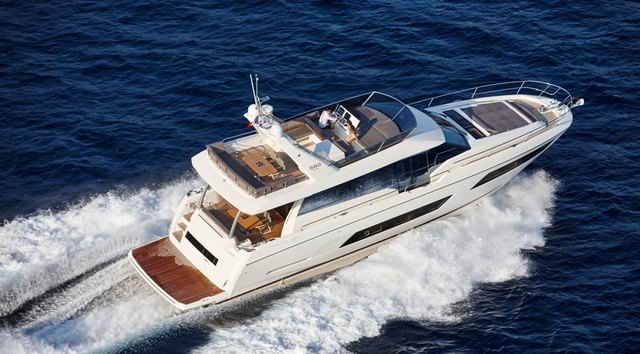
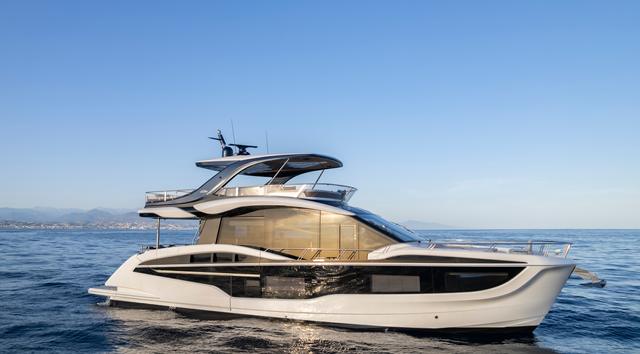
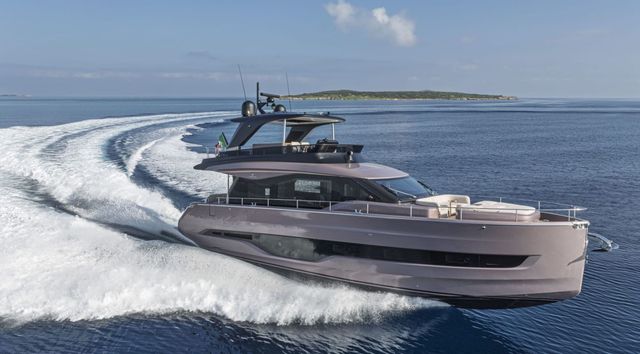
There's no shortage of very good boats in the 20m flybridge market, and Prestige would quite like to pinch a few customers from the likes of Princess, Azimut, Absolute and Galeon. The F6.7 has some interesting ideas of its own, though, with a kitchen island in the middle of the saloon, an enormous amount of outdoor space and a full-beam VIP cabin that could quite happily be the master.
Some of it is really clever, but this was the very first F6.7, and Prestige hadn't quite finished fiddling with all the details when it arrived at Cannes.
Prestige F6.7
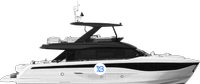
- LOA 20.45m
- Model Year 2026
- Cabins 4
- Crew 2
- Max Speed 33 knots
- Status In Production
- Yacht Type Flybridge
- Use Type Weekending
Test & Review Video
At Sea
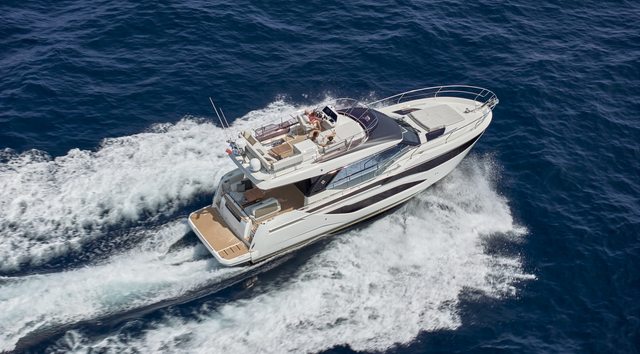
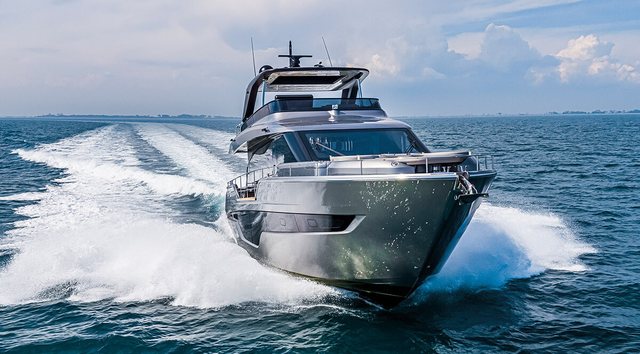
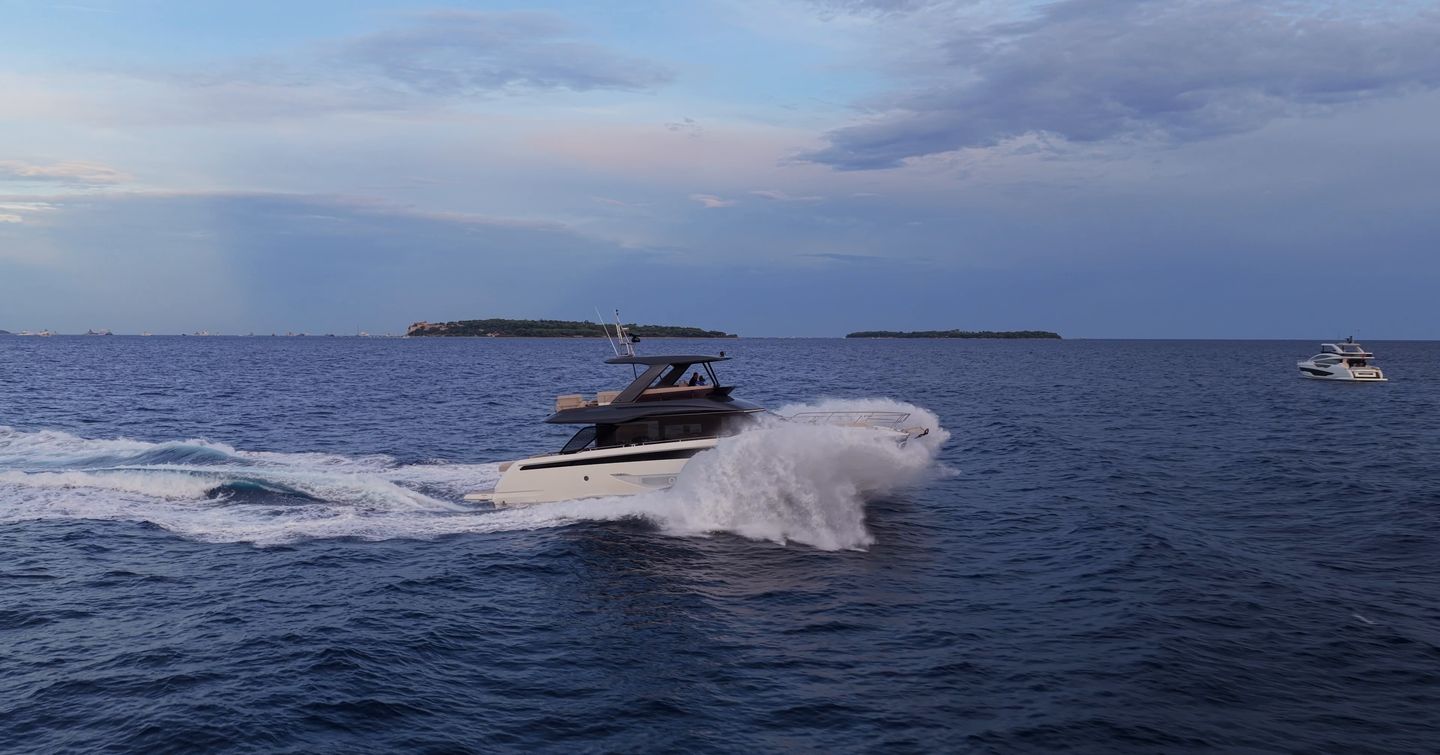
The Bay of Cannes was in a pretty foul mood for the F6.7's sea trial, with plenty of wind, short chop and a sizeable swell. Not the easiest conditions for a new boat, especially one that's still a prototype, but a good chance to see what the hull could do. And it made a very good impression.
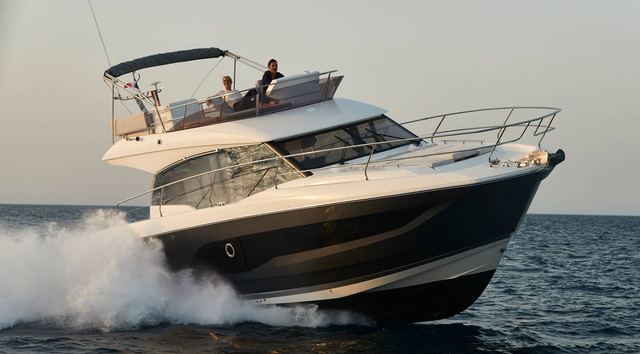
Heading straight into the swell at 20 knots, the Prestige felt surprisingly comfortable. The bow cut through the chop without any nasty impacts, and despite the breeze, there was very little spray coming over the top. Even at 25 knots, it was going through the waves really nicely, without any harsh thumps from the hull. There was the odd squeak from the interior, but the ride itself was very good, especially from the lower helm, where there's a much better sense of what the boat is doing beneath you. The engines were remarkably quiet down there, too.
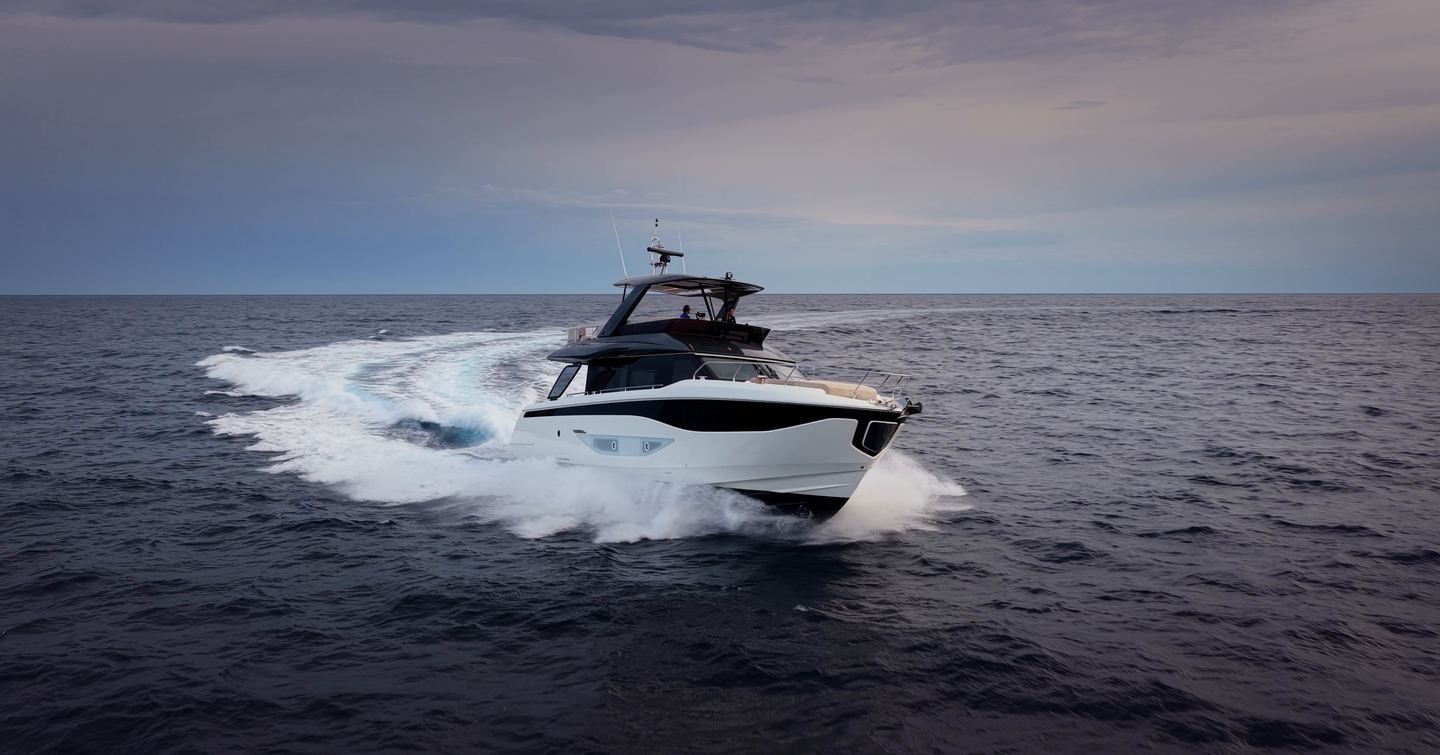
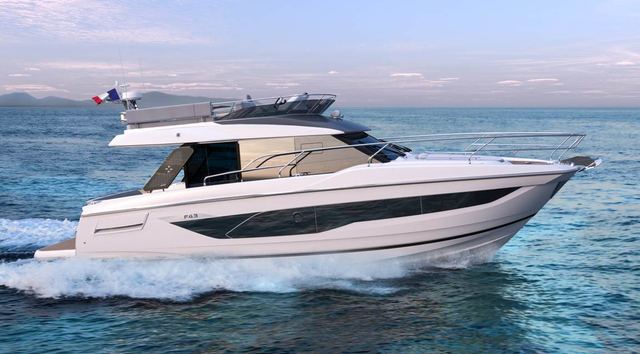
The F6.7 comes with twin Volvo Penta D13 IPS1200s as standard, each with 900hp, but this boat had the larger IPS1350s with 1,000hp per side. There's certainly no shortage of shove. Once the boat turned downwind into slightly calmer water, it reached 32.5 knots before nudging 33 knots flat out. That's pretty impressive for a substantial flybridge yacht in warm water and less-than-ideal conditions. At 25 knots, the engines were using around 260 litres per hour combined, while a comfortable cruise of about 23 knots should give a range in the region of 300 nautical miles. Prestige also quotes an economical range of 424nm at 11.7 knots, although that wasn't verified during this test.
The steering is typical IPS, light, safe and predictable, though the turns are quite wide and a little laborious. There's no great sharpness to it, but this is hardly a sports boat. More impressive was the way the F6.7 handled a following sea. At around 22 knots, the broad bow felt secure as the yacht ran down the waves, with no obvious tendency to bury itself in the next one. Turn back into the weather and a little more care was needed with the throttles, but the hull continued to go through the chop really nicely.
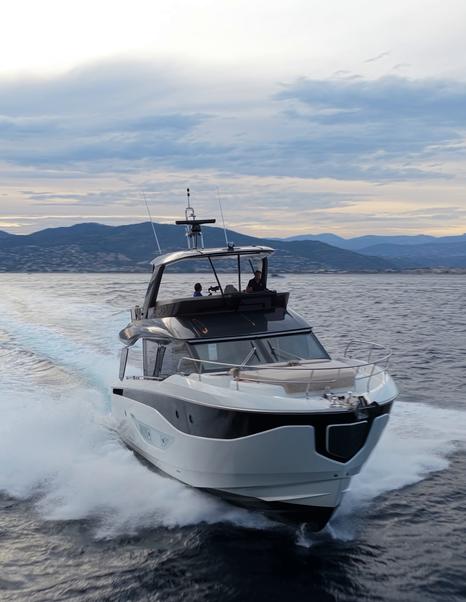
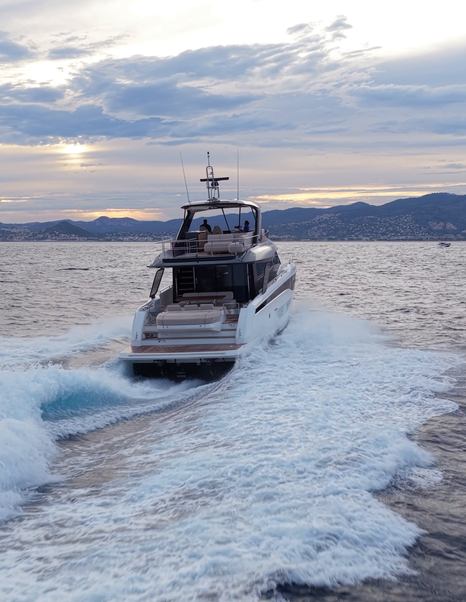
There are a couple of questions about the trim, too. Quite a bit more spray found its way onto the lower windscreen later in the test, and the automatic interceptor system didn't seem quite as well sorted as it could be. Whether the two were connected is difficult to say, given how windy it was. This was hull number one, so there's room for some adjustment, but it would be interesting to try the boat again in calmer conditions and see how much difference that makes.
The F6.7 also has the usual close-quarters advantages of IPS propulsion, with joystick controls at the helms and a bow thruster. An additional cockpit joystick can be specified, which would be handy for a skipper who wants a better view aft when coming alongside.
There's a slightly odd fact about the new Prestige F6.7. It's a metre shorter than the old Prestige 690, but it has a bigger flybridge. At 20.45m (67ft 1in) long and 5.17m (17ft) wide, the F6.7 is actually a little smaller in both dimensions, but its 26m² (280ft²) flybridge is 4m² (43ft²) larger than the 690's. Prestige has always been pretty good at making the most of the space available, and that's clearly still a priority.
The F6.7 completes the latest generation of the F-Line range, which began with the F4.9 in 2023 and now includes the F4.3 and F5.7. There's a nice bit of history behind the design, too. Garroni and J&J Design were both involved in the original Prestige 41 back in 1989, and nearly four decades later, they're still associated with the brand. Garroni Design is responsible for the F6.7's concept and design, J&J for the naval architecture, and Prestige Engineering for the interior decoration.
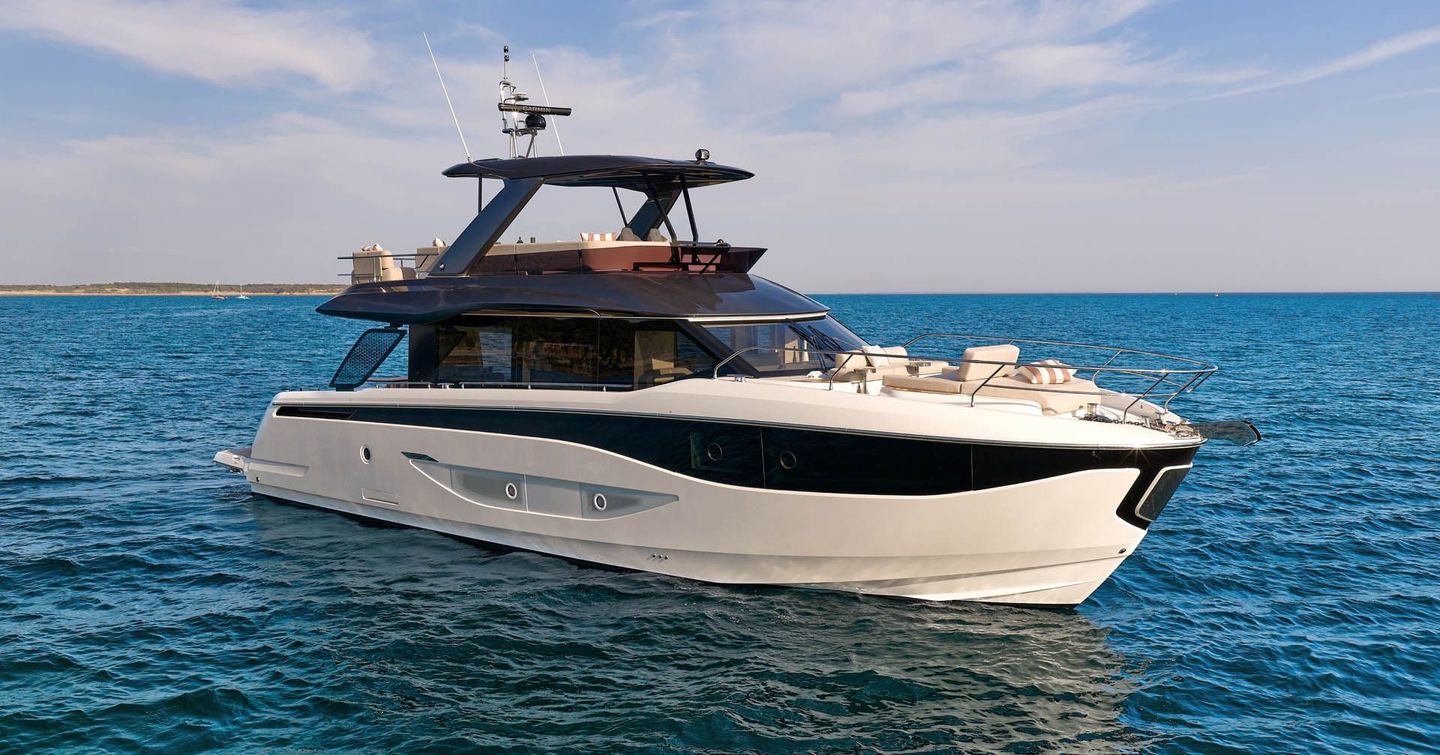
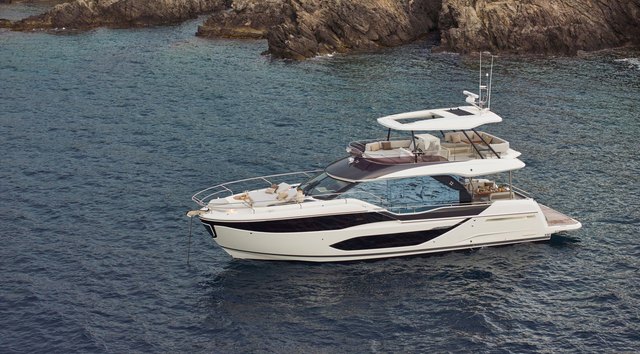
Built at Les Herbiers in France, the F6.7 has an infused GRP hull and deck, with infused longitudinal stringers. The exterior carries the family look of the newer F-Line models, with large hull windows and a dark fashion plate that incorporates the Prestige logo.
But it's the quality of the finish where Prestige has made the biggest effort. The brand has always offered a lot of boat for the money, though it hasn't necessarily had the finesse of Princess or Azimut. There are some lovely details on the F6.7, from the big varnished teak tables outside to the coloured GRP and wood-faced cabinetry on the flybridge. Even the lower dashboard has been covered in a smart, soft material that looks good and doesn't reflect light onto the windscreens.
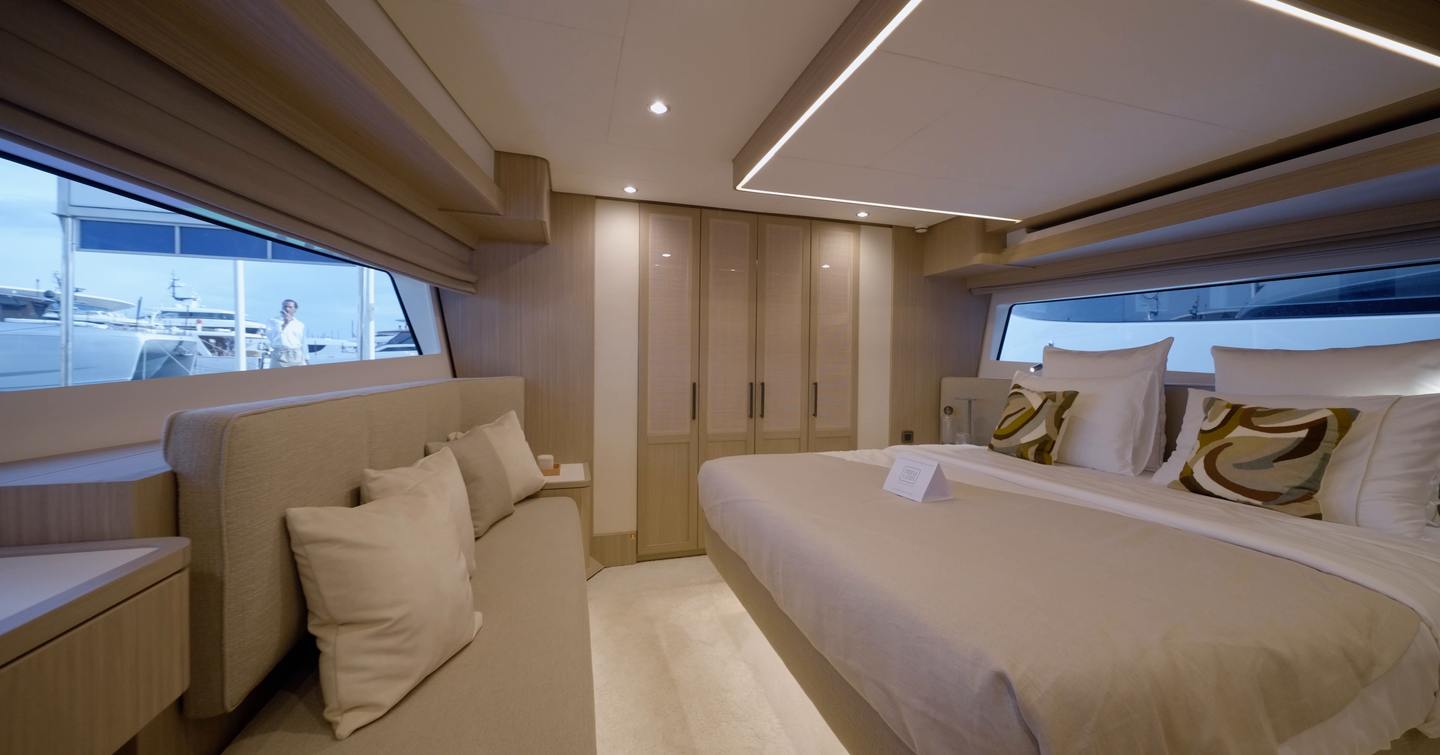
One of the nicest touches is the handmade rattan on the wardrobe doors in the owner's cabin. It's quite amusing that Groupe Beneteau, which is so good at mechanised boat production, should be doing something like this by hand. Prestige says it has a dedicated team of 25 specialists working on the F6.7 at Les Herbiers, with traditional craftsmanship still part of the process.
There are places where you feel the difference, of course. Some of the black plastic around the helm displays is fairly ordinary, and the optional stone-effect galley worktop, convincing though it looks, isn't real stone. But they've clearly worked hard on the perceived quality, and the gap between this and its more expensive rivals is nowhere near as obvious as it used to be.
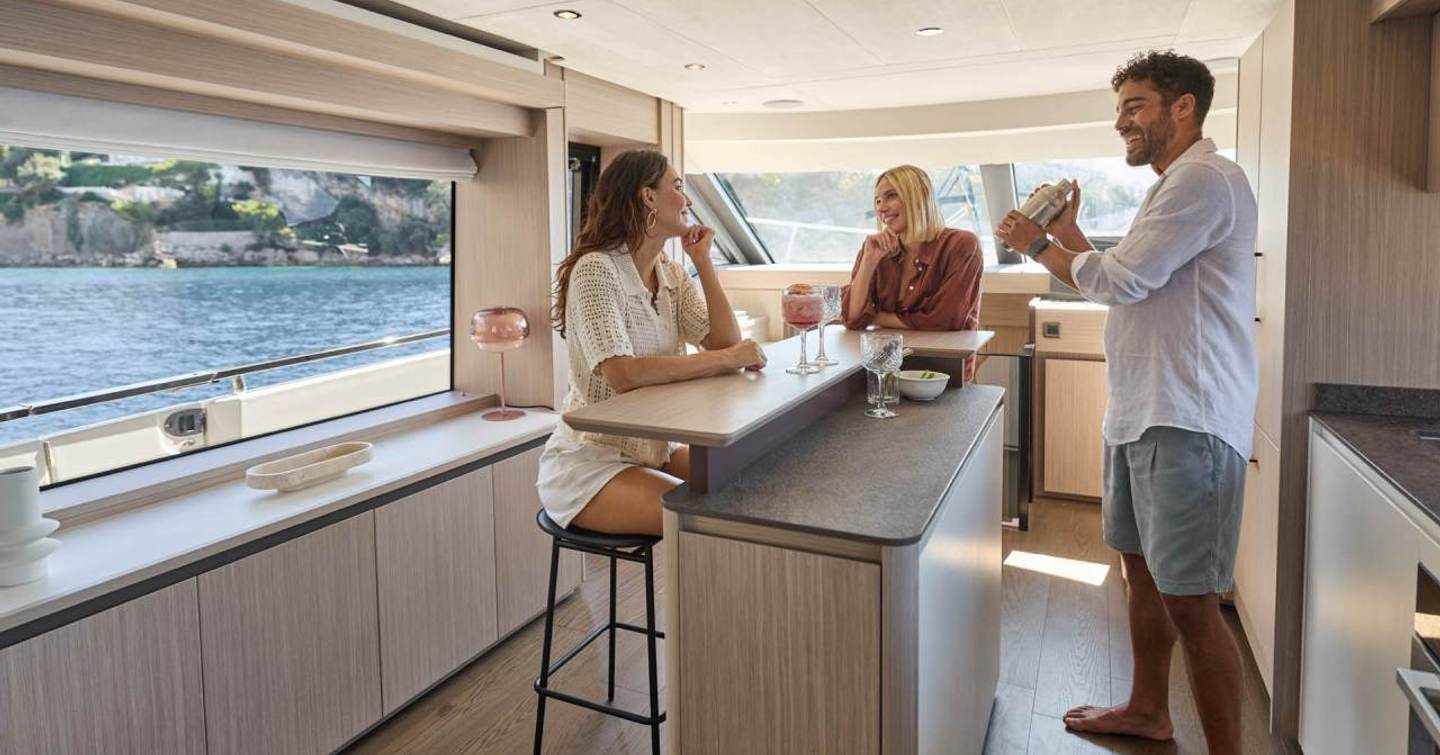
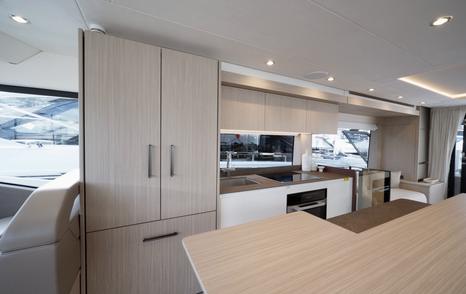
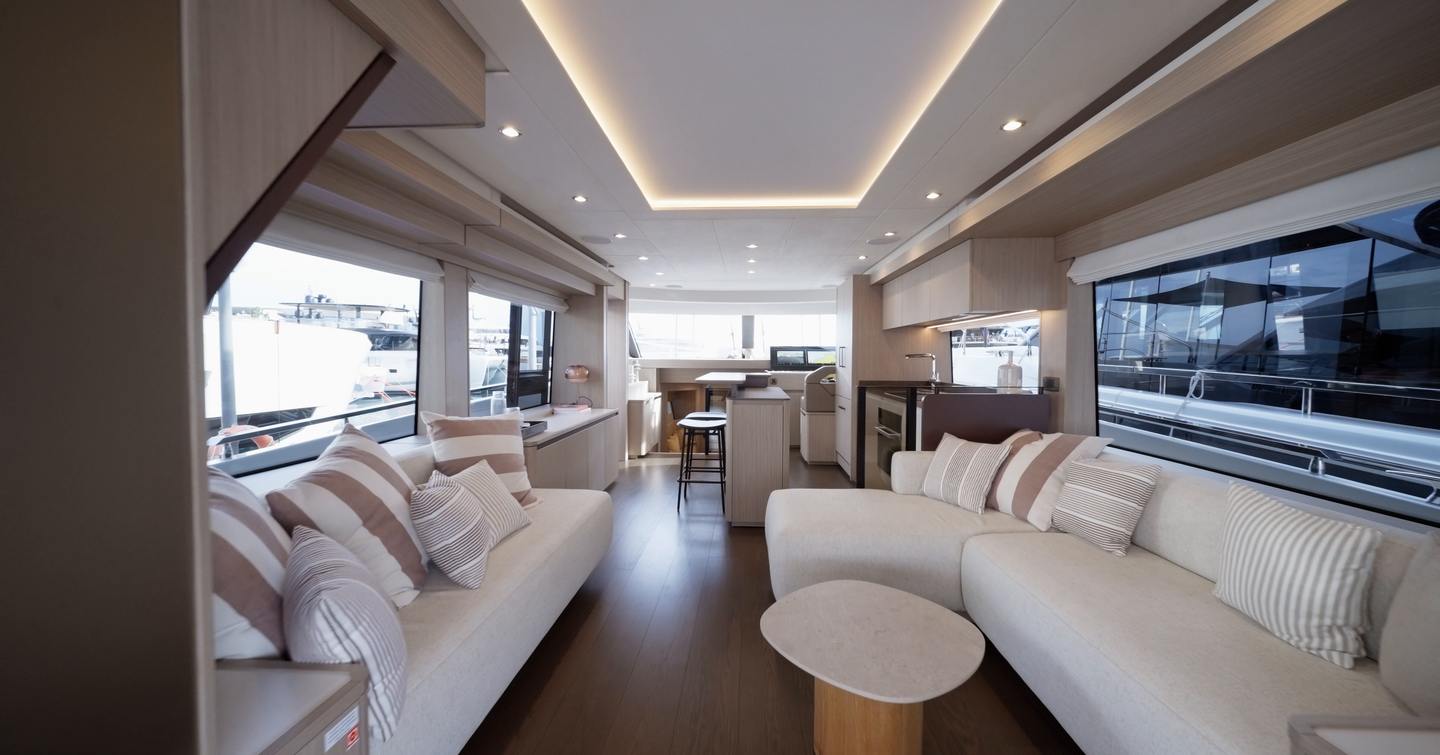
The galley is probably the most interesting part of the F6.7's interior, mainly because it isn't where most builders would put it. Prestige has gone for a midships arrangement, with a large central island and stools, instead of the aft galley that's become so common on flybridge yachts of this size. It's a really good decision, and one that gives the main deck quite a different feel.
The island is the clever bit. Guests can pull up a stool, have a coffee and chat while someone's preparing food, so the galley becomes a proper social space. It's quite home-like, actually, and much more inviting than having the kitchen tucked away from everyone else. Prestige has made good use of the extra room, too, with plenty of cupboards, a hob with extraction, space for a dishwasher and an optional wine cooler. There's a good amount of worktop space, and all the cupboards have fiddles to stop things flying out when the boat's underway.
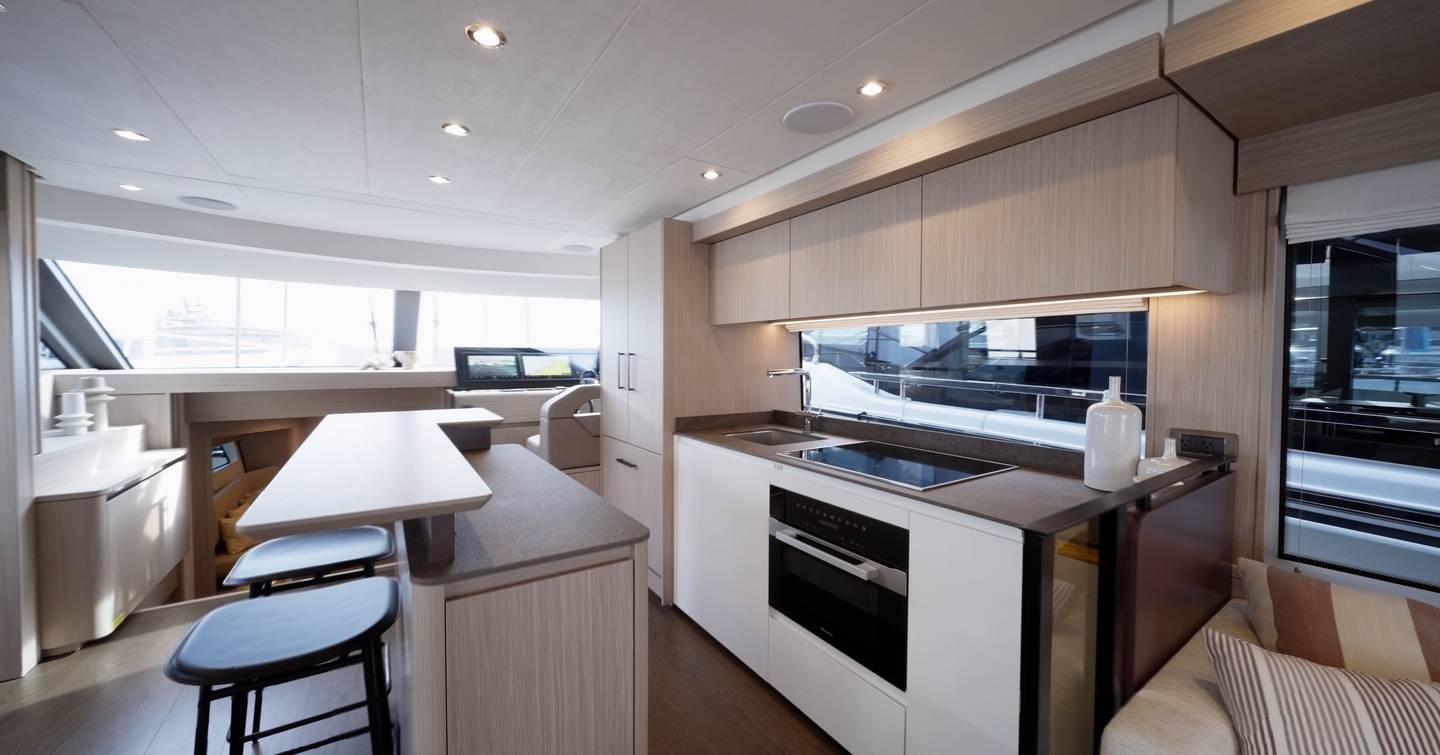
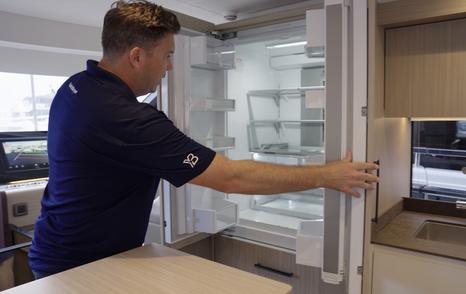
And there's the fridge freezer, which is absolutely vast. It's a nAmerican-style unit with two large doors and a huge lower drawer, and it's hard to imagine why anyone would specify the smaller European-style alternative. For a boat designed to spend long periods away from home, having this much cold storage is brilliant.
The compromise is the saloon seating aft of the galley. It's a nice, fresh space with large windows and a good view of the television, but there isn't masses of sofa room, and the test boat had no proper indoor dining table. Clearly, Prestige expects people to eat outside much of the time, though there's the option of an adjustable table to turn the aft seating into a dinette. Another layout adds a small dining area to port, which could be a useful middle ground if a full dinette isn't needed.
For a production boat, there's quite a bit of choice in how the main deck is arranged, and the island galley makes a strong case for itself. The hardwood floors look lovely, too, although they were surprisingly slippy!
Owner's Cabin
The 20m² (215ft²) owner's suite sits forward on a slightly raised section of the lower deck, with a few steps separating it from the guest accommodation. It's quite an interesting layout, particularly the king-size bed, which runs across the cabin and faces the large hull windows. That means there's a proper view of the sea from bed, which isn't always the case, and a television pops up from the cabinetry when required.
There's no overhead skylight, but the windows provide plenty of natural light. Storage is particularly good, with a huge illuminated wardrobe, drawers and more cupboards tucked behind the entrance door. There's almost enough room to call it a walk-in wardrobe. A bench beside the bed offers somewhere to sit, although the backrest is a little upright. It can also be specified with extra storage.
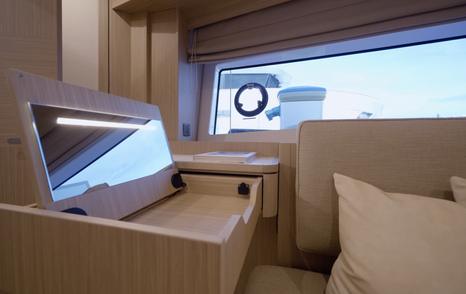
One of the cleverest details is the vanity, which is completely hidden until it's pulled out from the cabinetry. The bench doubles as a stool, so there's no need for another piece of furniture to take up space. It's very neatly done.
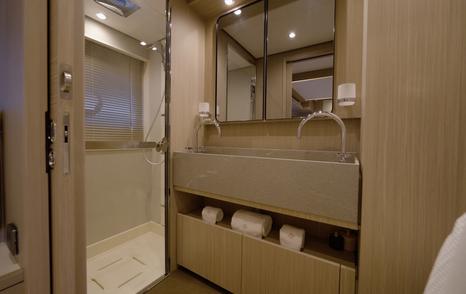
The ensuite has a pocket door that slides into the wall, twin basins with taps at either end of the counter, and a decent separate shower with a rainfall head, window and opening port. The arrangement makes good use of the available room.
The one thing worth considering is the cabin's position. Up in the bow, there's more chance of hearing hull slap when the boat is at anchor or on a mooring. The upside is that the owner is further away from the engines and machinery aft.
Guest Accommodation
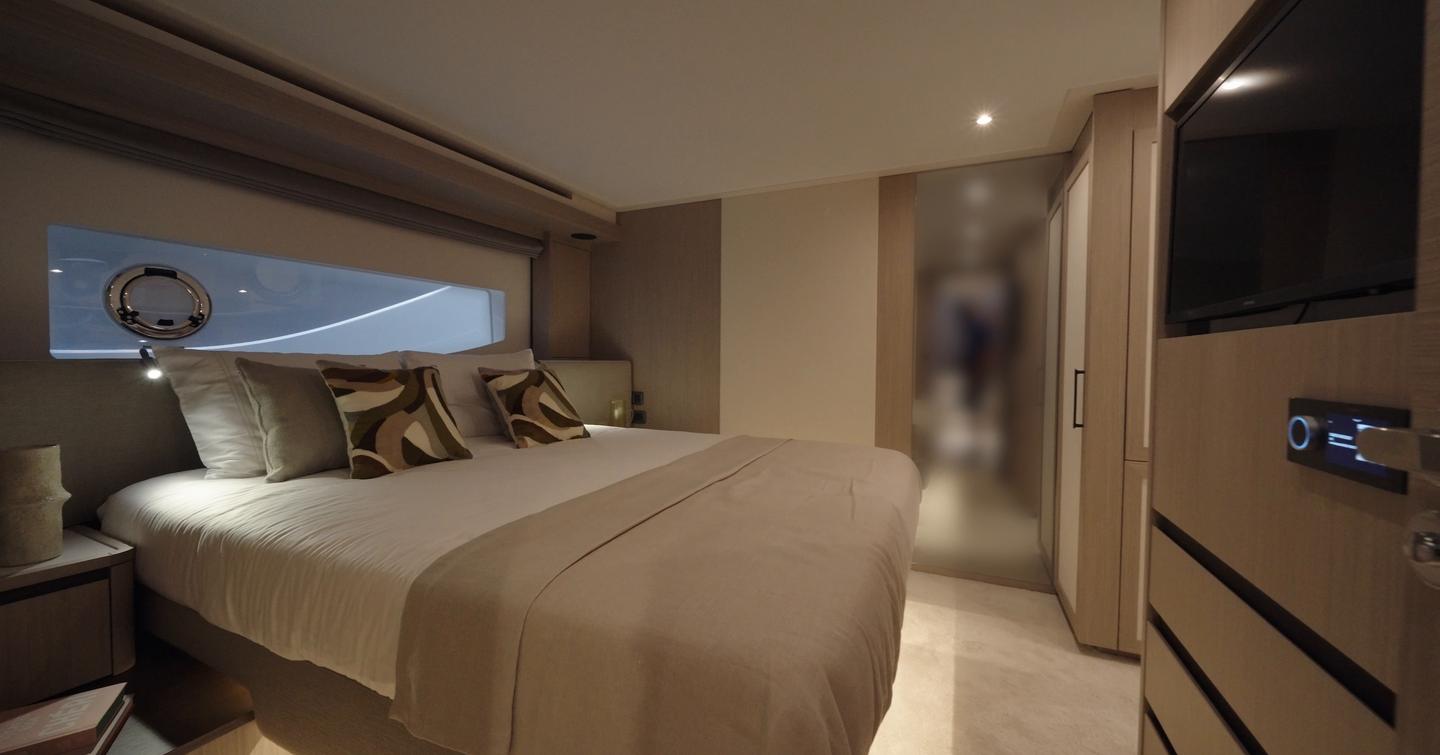
The full-beam VIP amidships is so good that there's a reasonable argument for calling it the owner's cabin. It's up to you, really. There's a large double bed, lovely squishy carpet, good headroom and plenty of wardrobe space, with more storage either side of the passage to the ensuite. The bathroom isn't huge, but it has a proper separate shower, and there's enough room to move about comfortably.
One particularly smart detail is how Prestige has separated this cabin from the machinery. The fuel tank and crew compartment sit between the VIP and engine room, creating a useful noise barrier. The cabin was remarkably quiet during the inspection, although the effectiveness of that arrangement wasn't tested from here while underway. It did feel a little dark, despite the hull windows, but Prestige confirmed that more interior lights would be fitted to later boats.
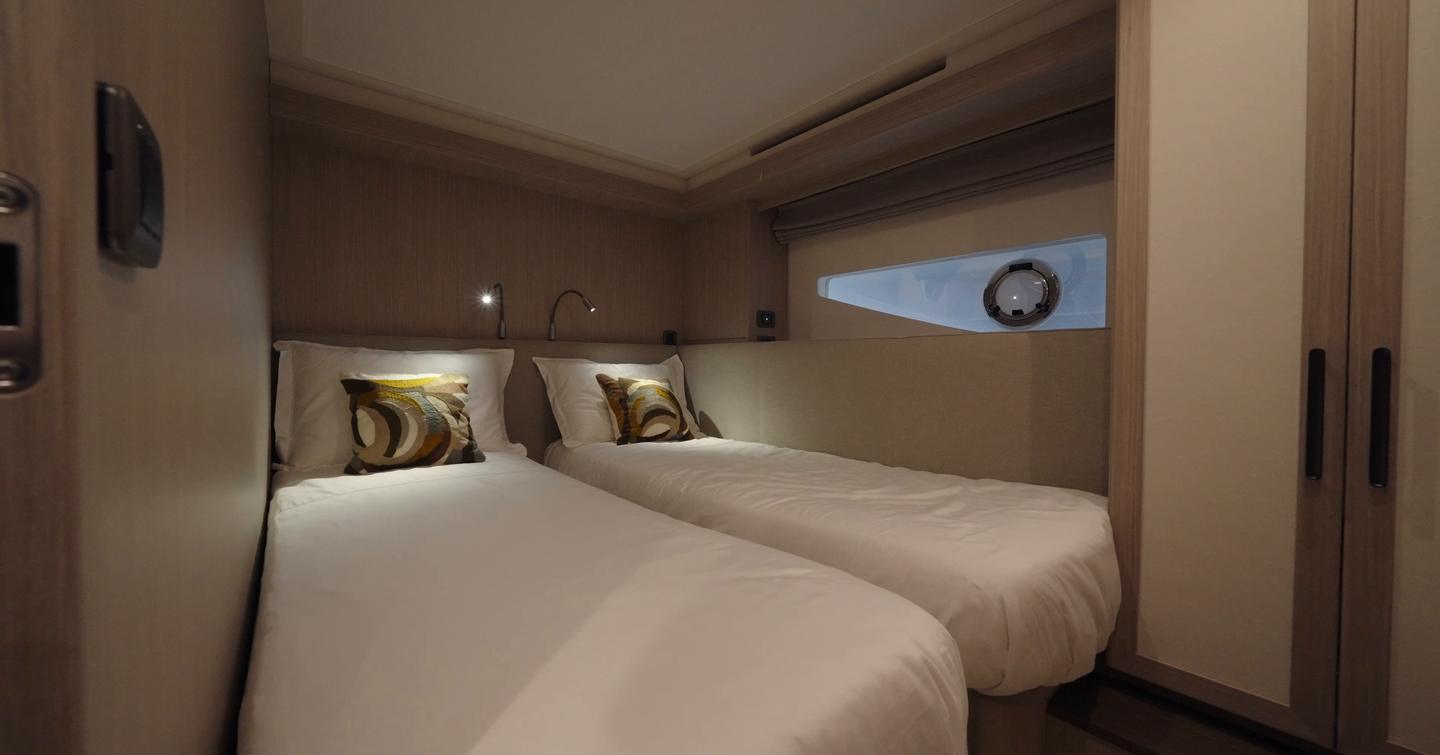
The twin cabin is a decent size, with excellent headroom and beds that slide together to make a double. It's a manual arrangement, unlike the electric system available on some Princess models, and there's just about enough space to shuffle between the beds when they're separated. This cabin felt rather dark as well, although the yacht was berthed close alongside another boat, which didn't help matters. The air conditioning was certainly doing its job.
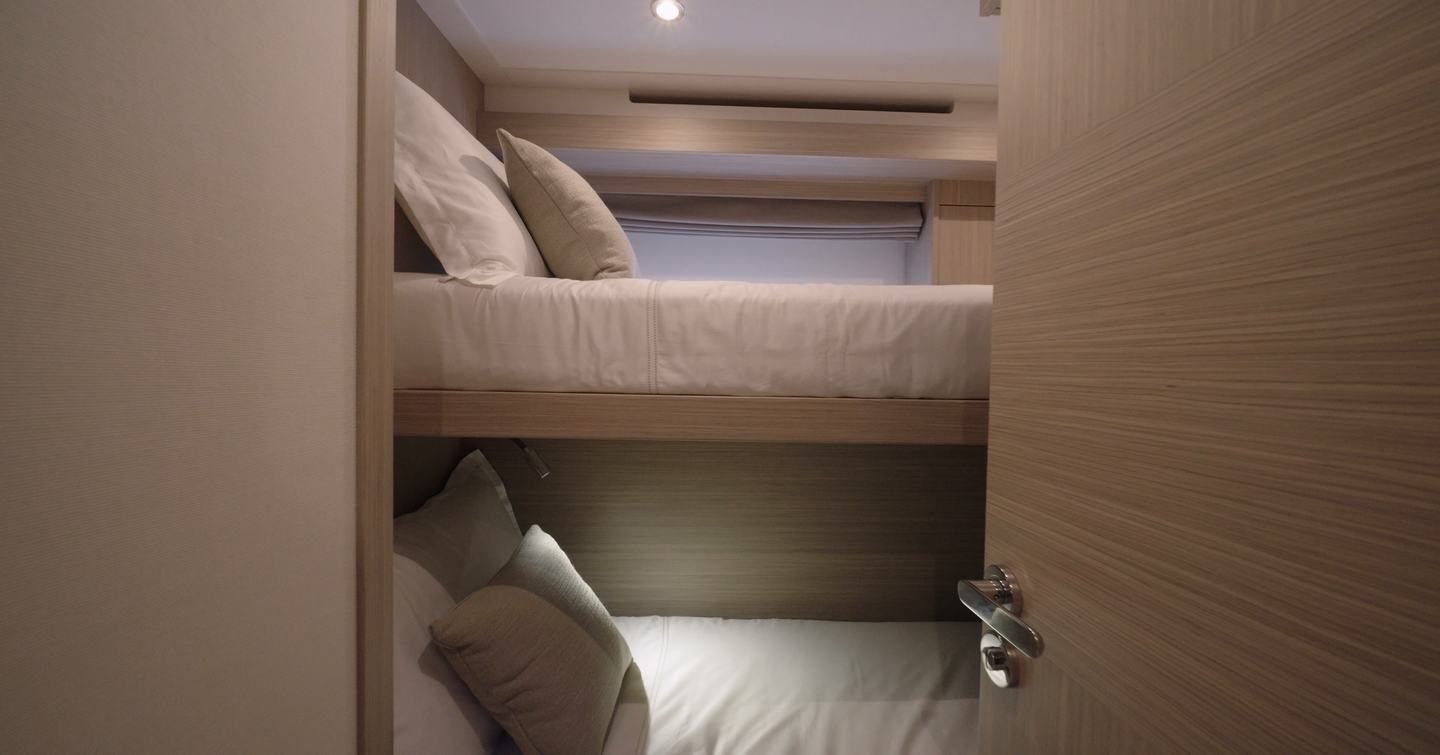
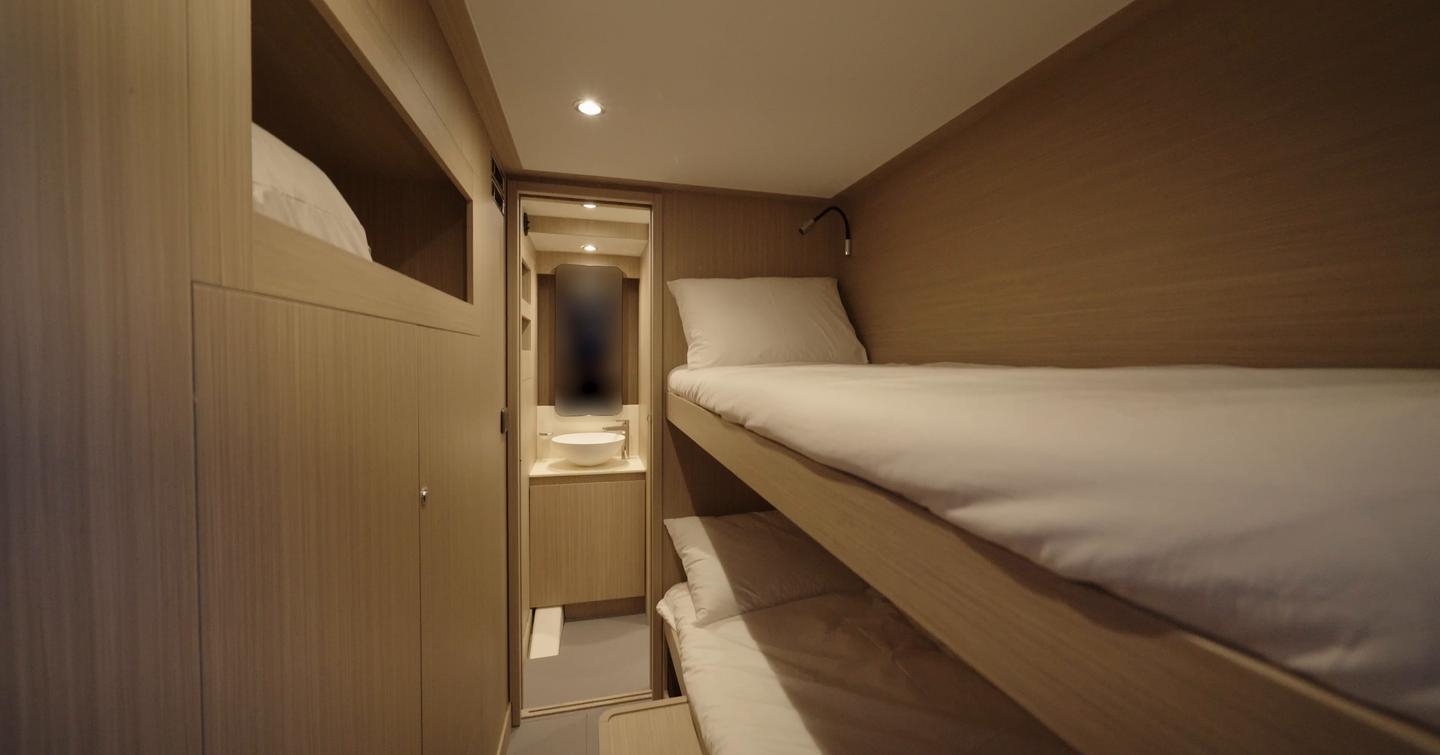
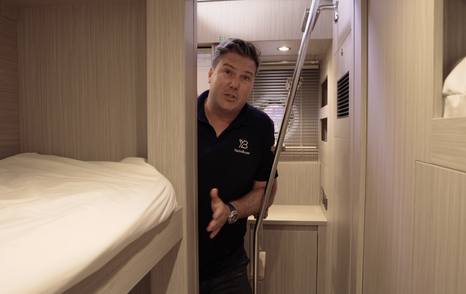
The fourth cabin is an interesting option because it doesn't have to be a cabin at all. As standard, Prestige uses this space as a utility room, but buyers can specify bunks or turn it into a small study. The latter wouldn't be a bad choice for someone who needs to work aboard, and there's enough natural light, a porthole and useful storage to make it practical.
The bunk arrangement takes the F6.7 from six to eight guest berths, although this room doesn't have an ensuite. The day head is just along the corridor, with a decent-sized separate shower, so it's not much of a hardship.
Crew Accommodation
The F6.7 has a large lazarette at the stern as standard, but Prestige does have the option of a crew cabin with berths for two, a small shower room and some storage. Most of these boats will probably be run by their owners, though having the extra beds could be quite handy even without permanent crew.
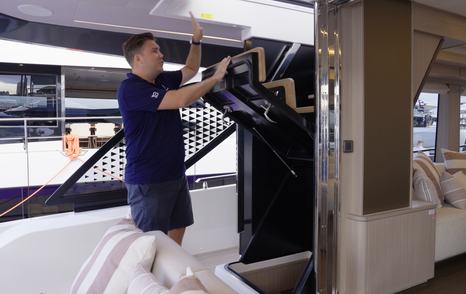
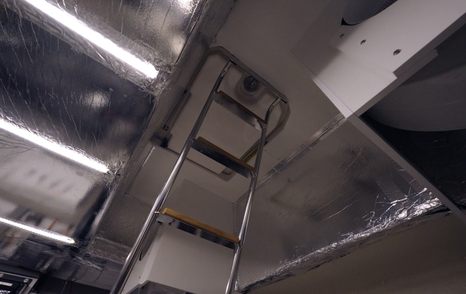
Access is a bit of a funny one. The hatch lifts up directly beneath the flybridge staircase and blocks the steps completely. If anyone's still on the flybridge when it's opened, they're effectively trapped up there until it's lowered again. You have to make absolutely sure everyone is downstairs before opening it, which isn't a particularly clever arrangement.
And there's the ladder. It's perfectly useful for getting down into the crew space, but once you're there, it blocks the entrance to the engine room. You have to move it out of the way to get through, which is a little bit of a faff. Fortunately, there's a separate engine room hatch beneath the aft sunpad, so you can avoid the whole thing if you only need to check the machinery.
There's a slightly frustrating contrast between the F6.7's two helm stations. Upstairs, the driver sits a bit too high. Downstairs, the seat is too low. Neither position felt quite right during the test, which is a shame because there's plenty to like about the equipment and the way the dashboards are laid out.
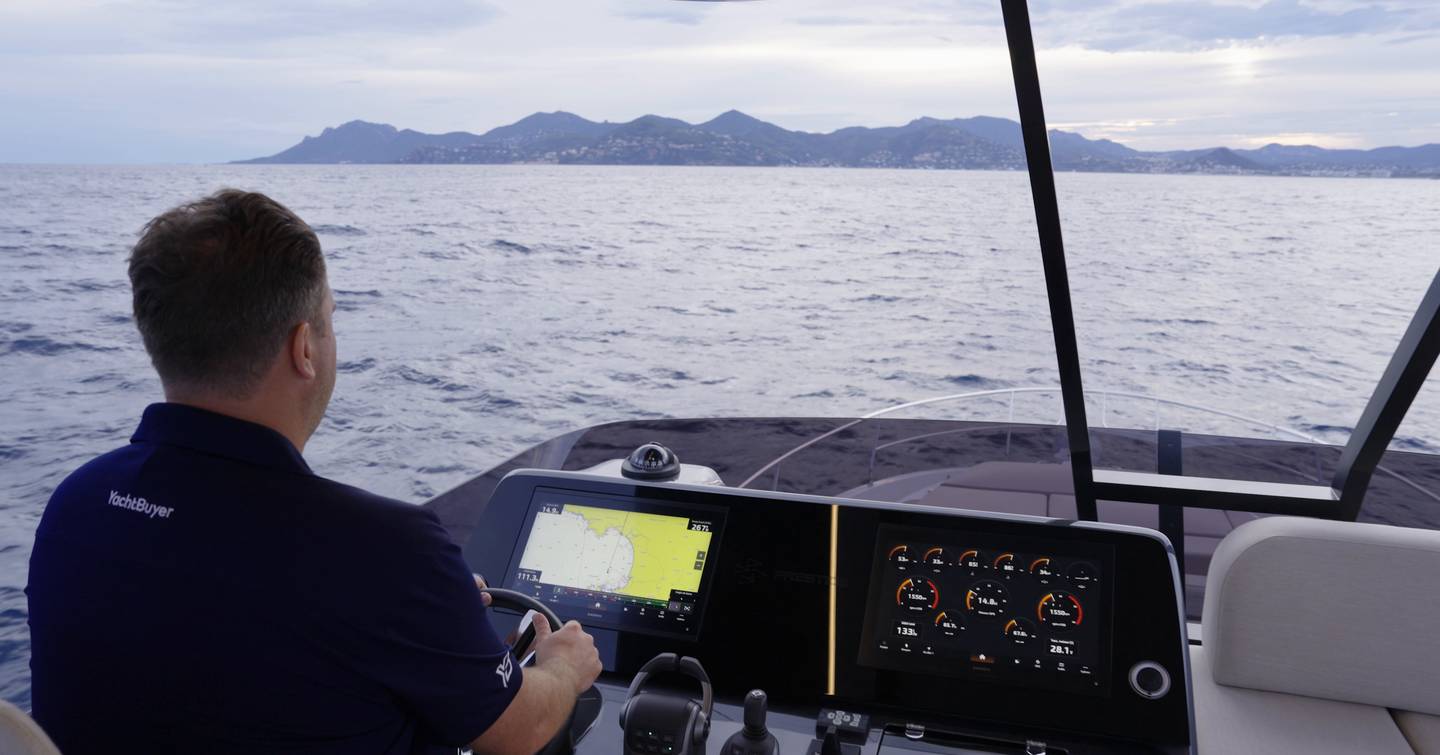
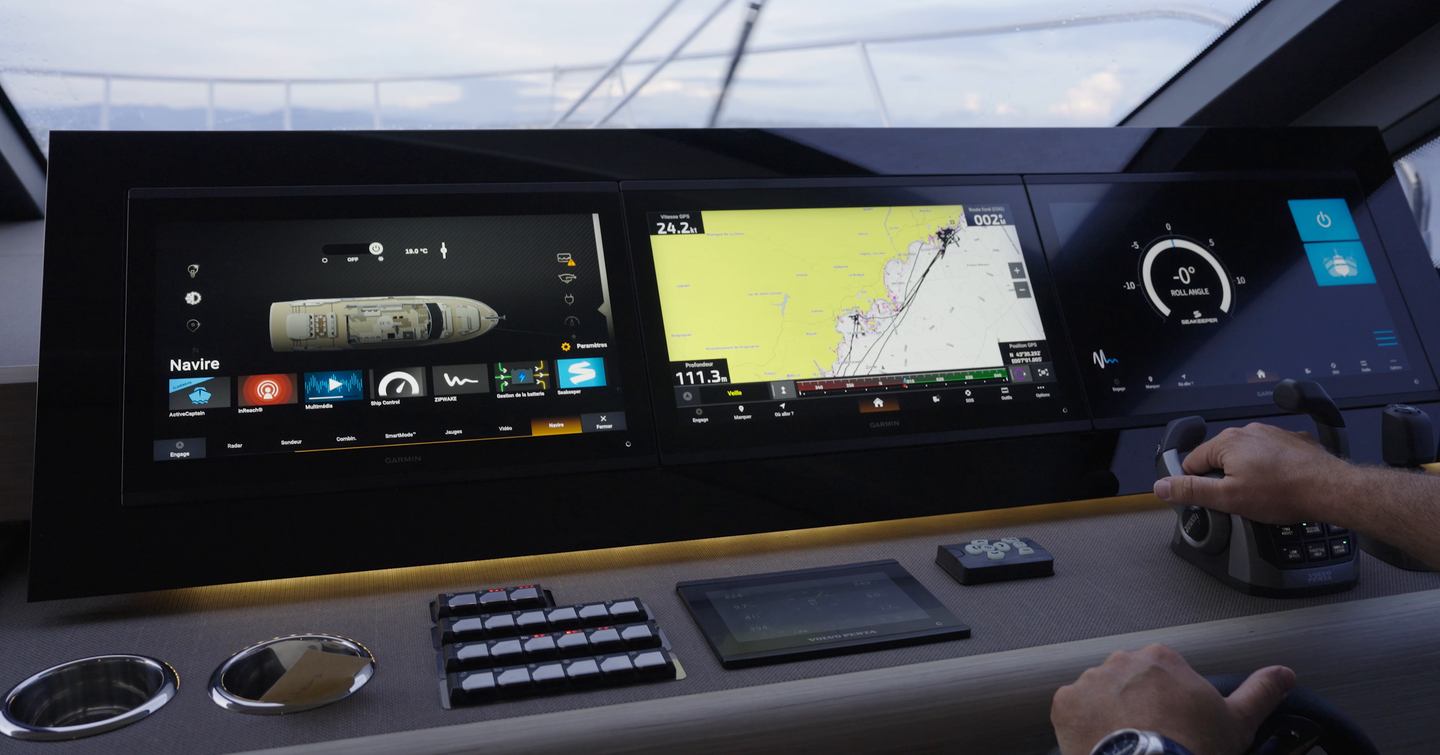
The upper helm has a pair of lovely Recaro seats, which look particularly smart on a Prestige. They're comfortable, with bolsters that allow the driver to perch or stand, and the two large Garmin displays are easy to read. Visibility ahead is very good, too. The trouble is that the seats place the driver quite high above the console, and the relatively low windscreen doesn't provide much shelter from the breeze. It feels as though you're sitting on top of the helm, and in the conditions off Cannes, that meant an awful lot of wind in the face. Absolute has used a clever pop-up wind deflector on some of its boats, and something similar would be really welcome here.
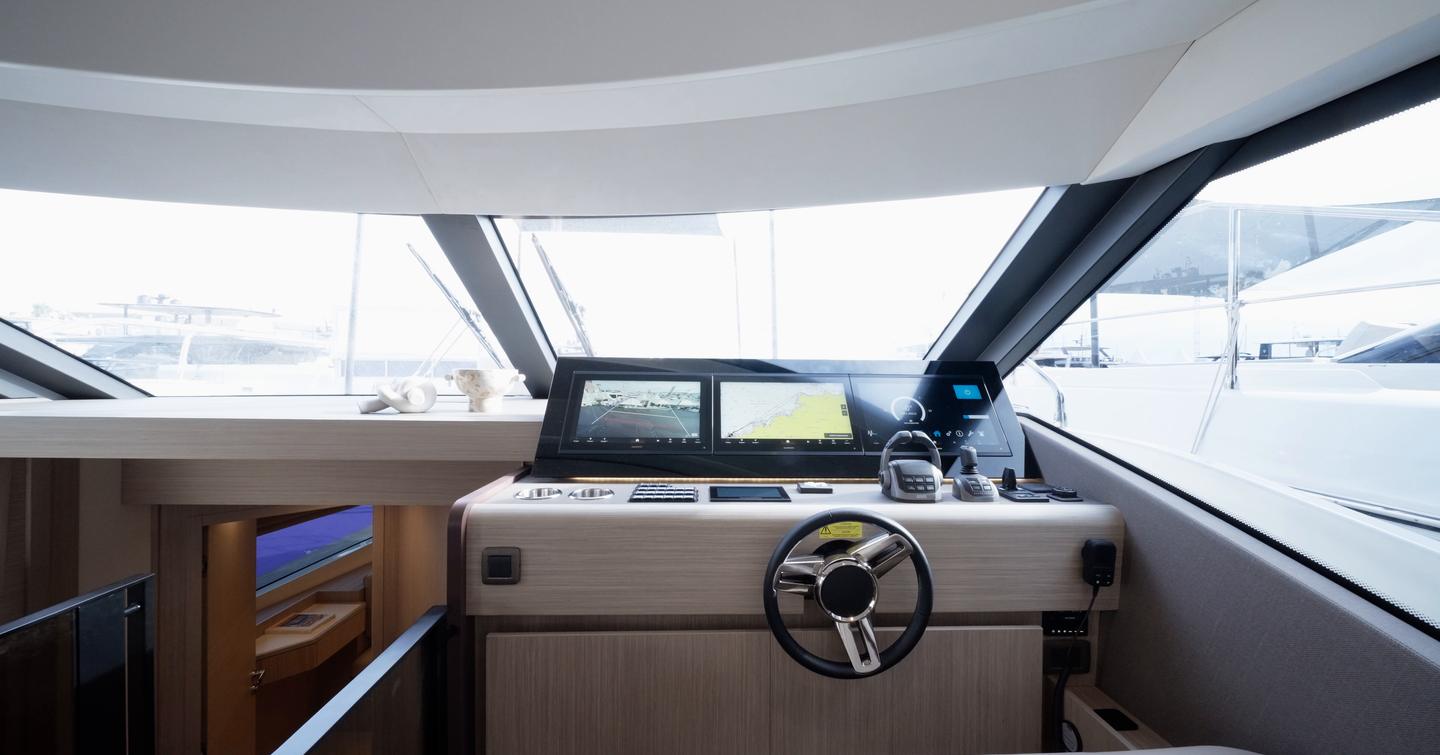
Downstairs, the driving position needs a little more work. The bench is set low behind the dashboard, which means the driver has to peer over the top to get a comfortable view forward. On hull number one, there wasn't a footrest either, so your feet were left dangling rather awkwardly. Prestige has confirmed that a footrest will be added, which should help, but the bolster isn't ideal either. It sits too far back, so perching on it means having to grip the seat with the backs of your legs. It improves the view, but it's not especially comfortable.
The actual dashboard is very nicely done. The navigation package provides three large Garmin displays at the lower helm, plus a separate Volvo Penta screen, and the important functions have proper switches. It's good to have physical controls for things like the windscreen wipers, especially on a day when they're getting plenty of use. There's room for another person to sit alongside the driver as well.
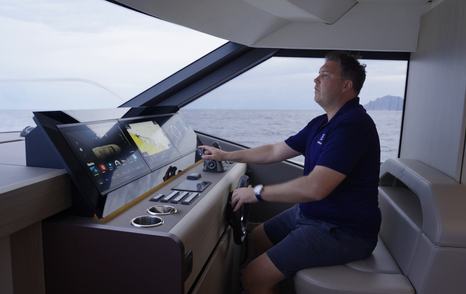
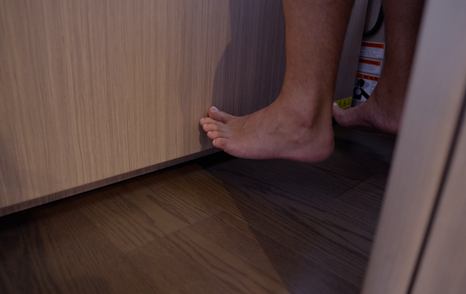
Visibility aft is reasonably good thanks to the long side windows, even with the large fridge unit directly behind the helm. The foredeck seat backrest can also fold flat to clear the forward view, which is useful when underway. Less successful is the position of the side door, which is some way aft of the helm. It's a bit of a shame on a boat that seems so well suited to owner operation, as there's no quick step straight onto the side deck. Nor is there an opening window beside the driver, so getting some fresh air into this part of the saloon isn't particularly easy.
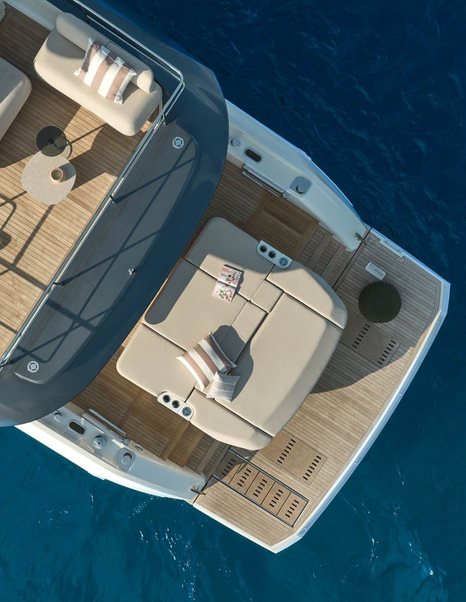
It's funny how long boatbuilders stuck with the traditional cockpit bench, where everyone sat with their backs to the sea. Prestige has gone for a much more open arrangement on the F6.7, with the main seating facing aft across a really good-sized dining table, and it works brilliantly. Absolute uses opposing benches on some of its models, but the Prestige manages to provide a lovely view out over the water without sacrificing a decent place to eat.
The sunpad behind the table is quite clever, too. Instead of fixed backrests, Prestige has a set of weighted cushions that can be moved about the boat. They work as backrests when you want to sit upright, or headrests if you'd prefer to lie out in the sun. Each weighs around 14kg, so they're substantial things, and the weight should help keep them in place at sea, although that wasn't tested. The downside is that there's no fixed backrest, and shifting these cushions about won't suit everyone. They're surprisingly effective, though.
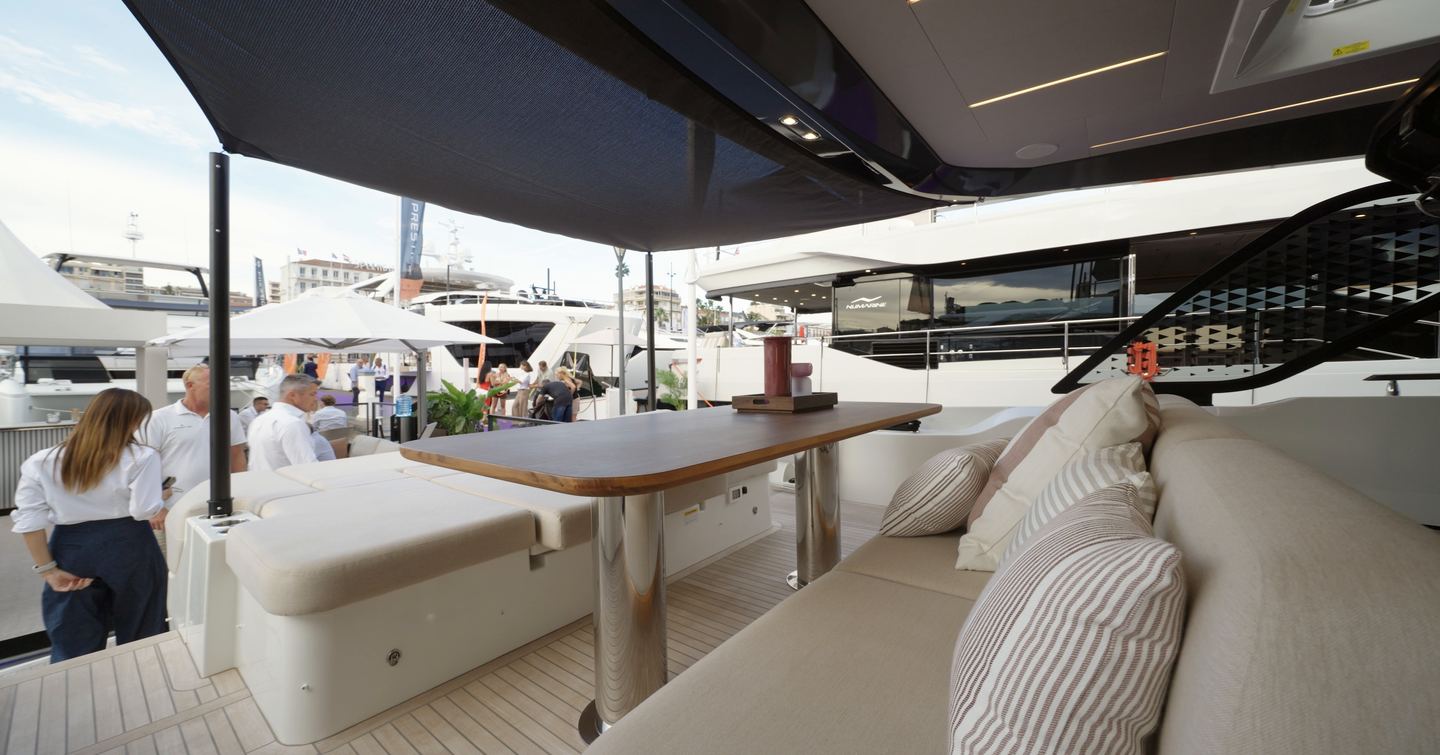
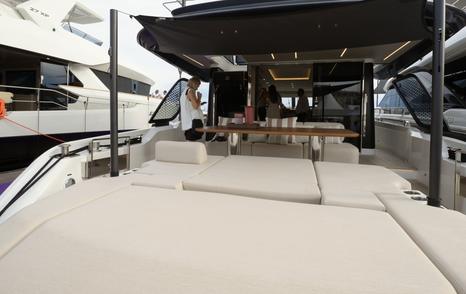
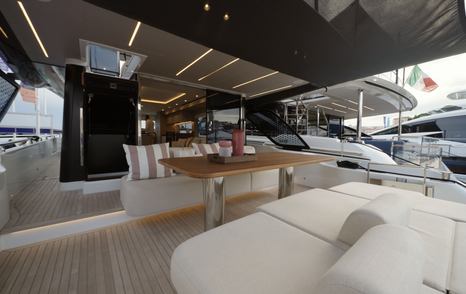
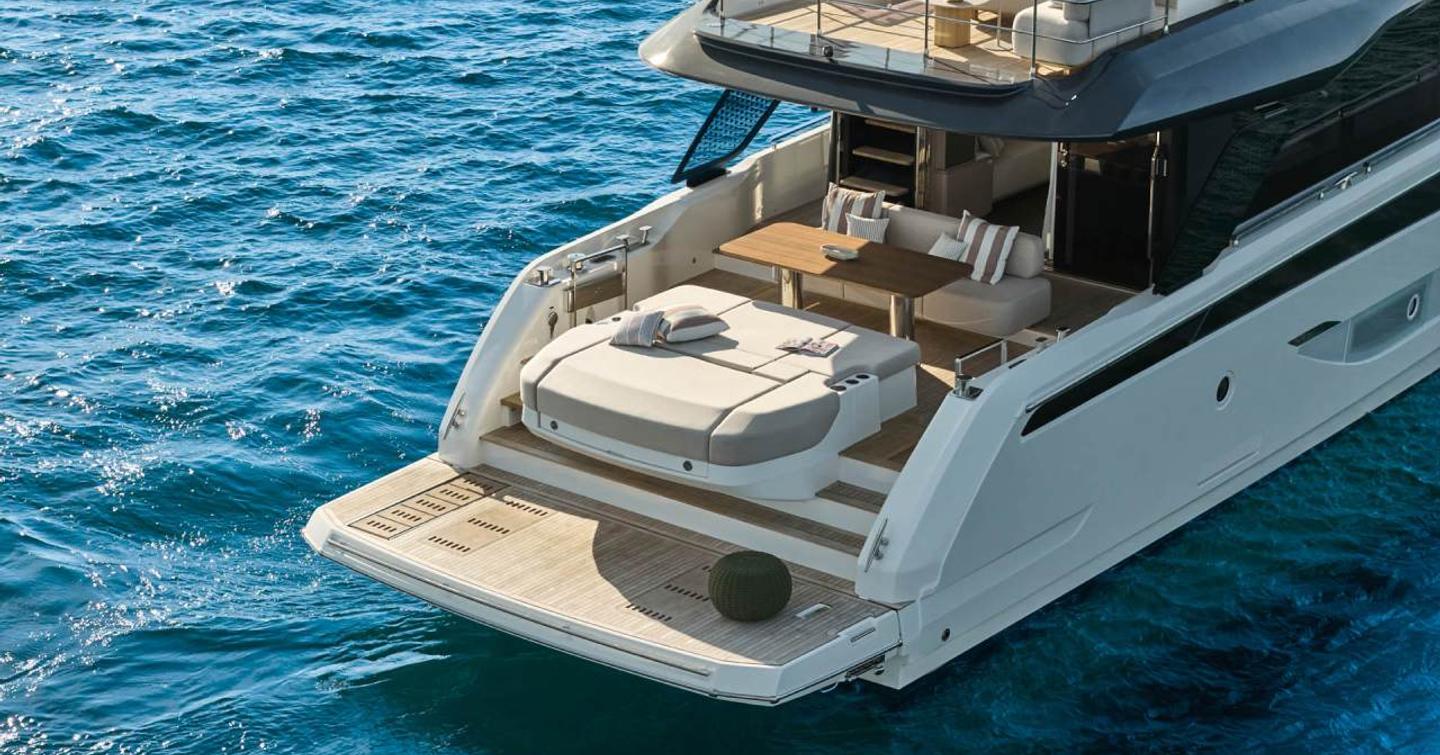
Prestige calls this two-level stern the pool terrace. At the waterline is a hydraulic bathing platform with built-in steps that provide a useful route into the sea. It has a quoted load capacity of around 300kg, so something like a Williams 245 tender should be possible, subject to its weight and equipment. There's no tender garage, however, so the tender has to travel on the platform.
Beneath the sunpad is a huge storage compartment, effectively a big boot, although there's an optional beach club arrangement with a bench and dedicated storage for watersports equipment, including Seabob charging. That would be quite handy for a family that spends plenty of time in the water. There's also a shower, passerelle and the usual shore-power connections tucked away down here.
Flybridge
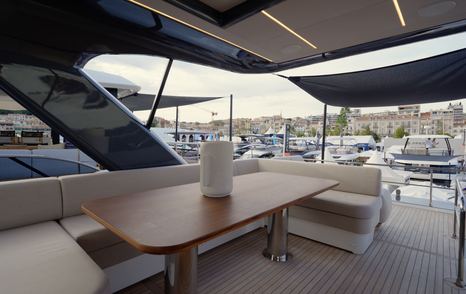
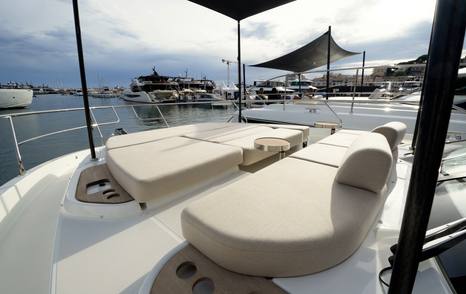
The 26m² (280ft²) flybridge is enormous for a boat of this size, but it's the furniture arrangement that makes it work so well. Prestige offers three layouts aft: a fixed double sunpad, a pair of loungers or the two sofas and coffee table fitted to this boat. The latter is probably the nicest option. Sunloungers are a bit limited in use, whereas this feels like somewhere to sit with a drink in the evening and enjoy the view over the stern. The sofas are lovely and squidgy, and the whole arrangement feels quite grown-up, a bit more superyachty, dare I say it. Prestige was due to fit a larger coffee table on later boats, which would be welcome.
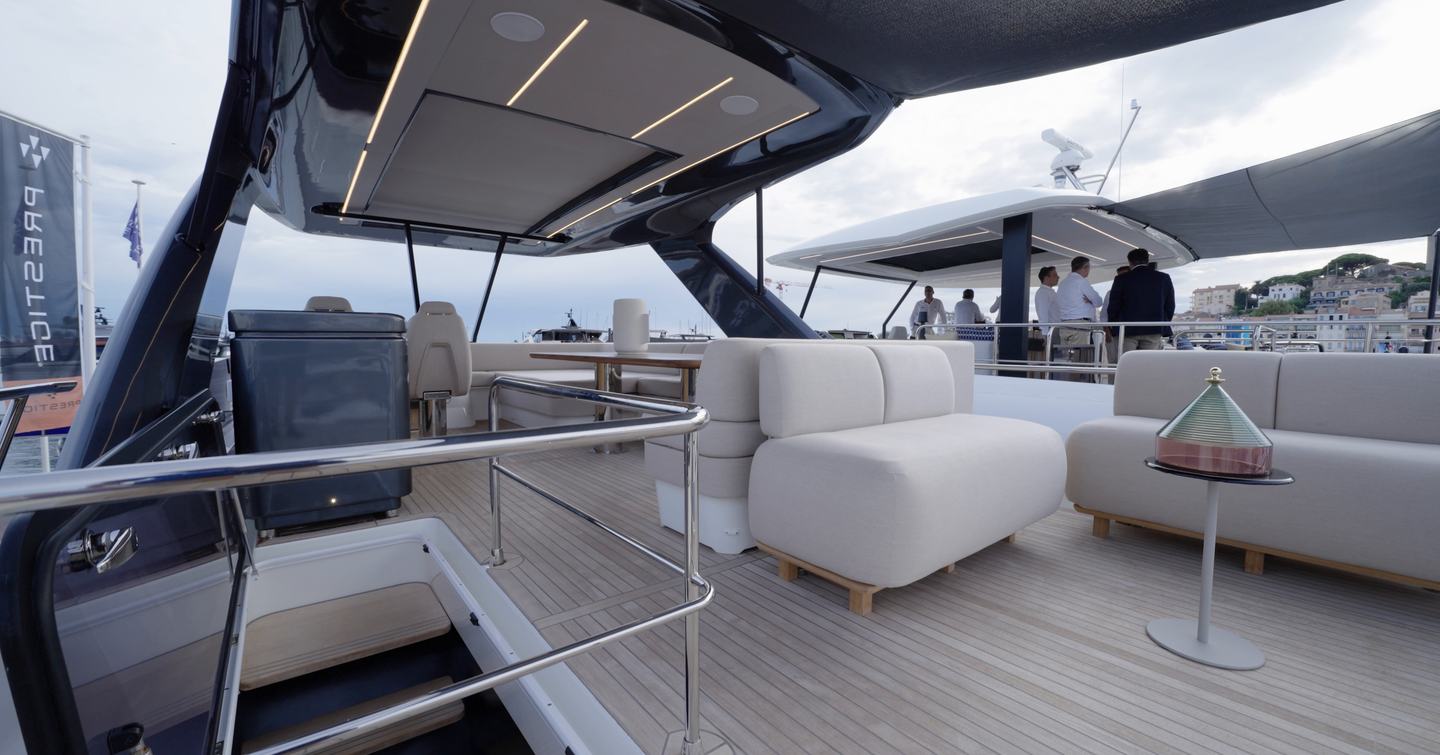
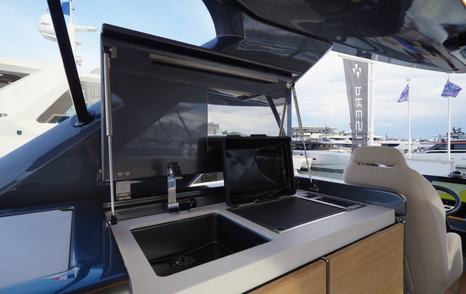
Further forward is another large seating area around a fixed varnished teak table. There's room to add director's chairs, although the built-in seating is generous enough that they're hardly essential. Opposite, the wet bar has a Kenyon grill beneath a large lid, a sink, fridge and ice maker, so there's no need to head downstairs every time someone wants a drink or a bite to eat. There's also a useful amount of storage beneath the aft furniture, though getting to it involves lifting one hatch and then another underneath. A little bit of a faff, but it's a good place to keep the covers.
The hardtop is technically optional, although it's difficult to imagine many buyers doing without it. The test boat had a fixed roof, but Prestige also offers one with a fabric sunroof, which would be the preferred choice. In Northern Europe, where a bit of sunshine is often rather welcome, the option to open up the roof makes a lot of sense.
Side Decks & Foredeck
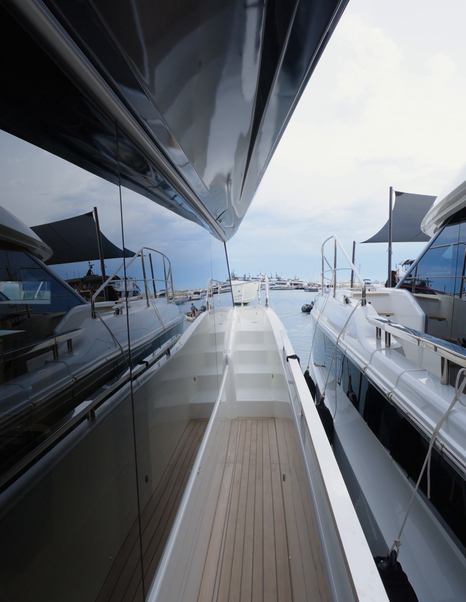
With the likelihood that many F6.7s will be run by their owners, it's good to find wide, well-protected side decks and high boarding gates on both sides. The square-section guardrails look and feel lovely, although they're a little more awkward for tying fenders than conventional round rails. It's a small detail, but one worth knowing about.
Hull #1 is destined for the United States, and its owner has chosen not to have teak on the foredeck. That's quite a sensible decision in a hot climate, as the moulded surface should stay cooler underfoot and be easier to look after.
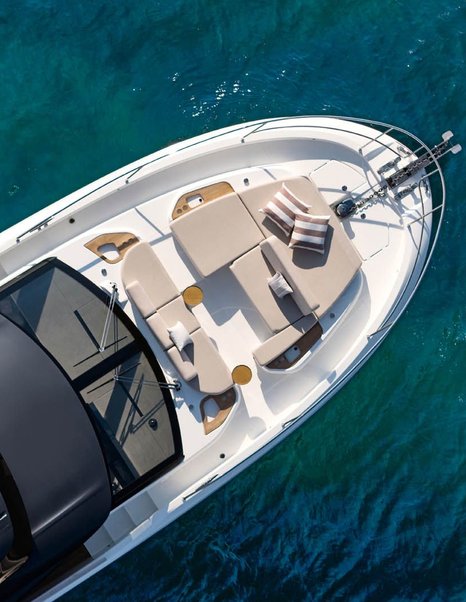
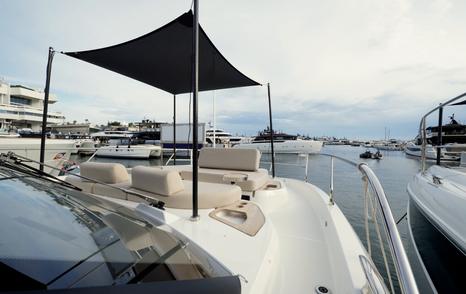
The foredeck itself is a clever space, with a seating area that faces back towards the boat and converts into a completely flat sunpad. Two of those weighted backrests from the cockpit had been brought up here, and they provide a useful bit of support. There are also small swivelling tables, cup holders, a place to charge devices and stereo controls. The raised mouldings around the seating make it feel nice and secure, too.
Right forward, the sunpad extends towards the bow, with a pair of chain lockers and the usual anchor gear, cleats and fairleads within easy reach.
Engine Room
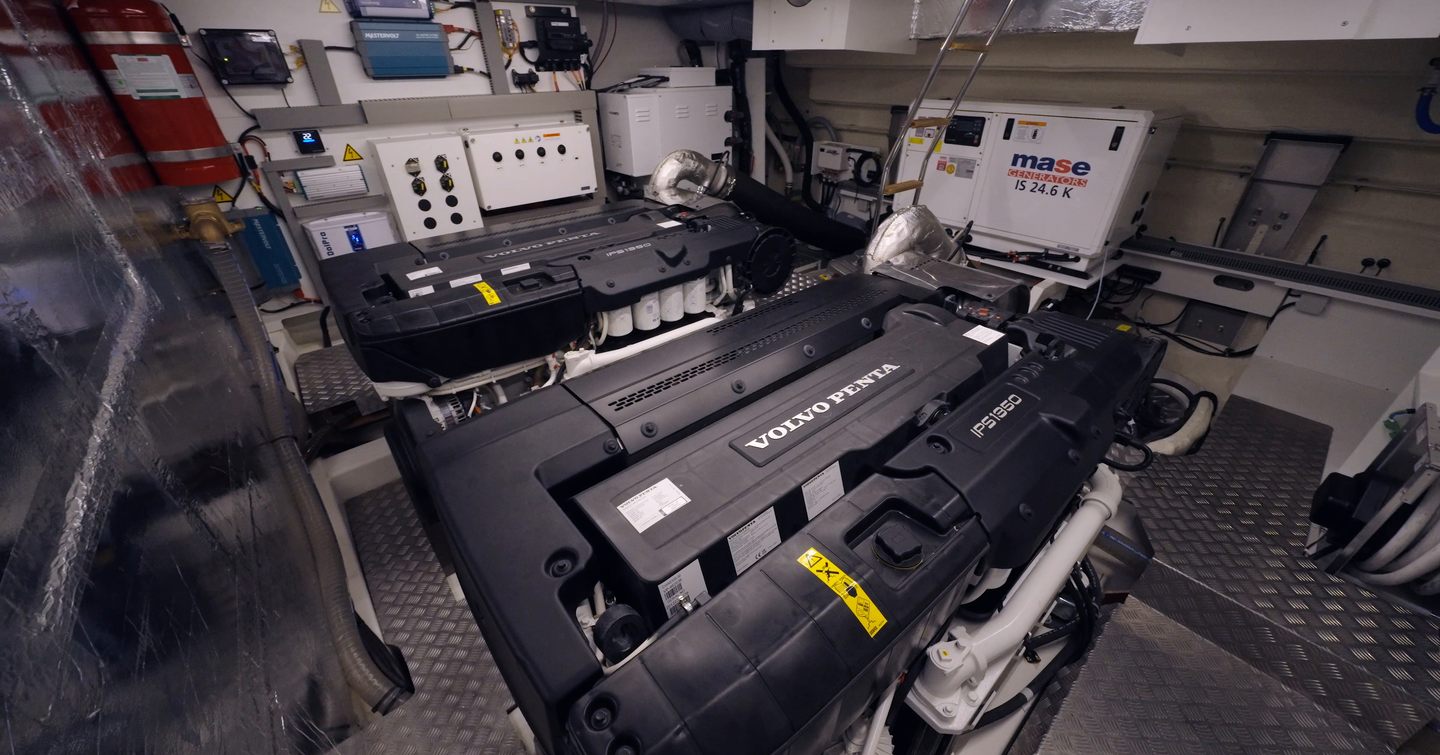
The engine room is really quite impressive, especially for a 20m (66ft) flybridge yacht. There's good standing headroom and plenty of space to get around the two Volvo D13s, with access to the various service points. Even the IPS pods are easy to reach, which isn't always the case on boats of this size. Prestige has done a very good job of leaving room to work.
Both engine options use the same basic D13 block, so the larger IPS1350s don't take up any more space than the standard motors. There's a generator mounted with plenty of clearance around it, and the test boat also had a Seakeeper gyroscopic stabiliser fitted. Everything looked pretty neat and tidy, with no obvious problems getting to the important machinery.
There are two routes into the compartment. One is through the optional crew quarters, while the other is a direct hatch beneath the aft sunpad. The latter is particularly handy because it avoids the more awkward crew access, where a movable ladder gets in the way of the engine room entrance.

The Prestige F6.7 has a published starting price of around €2.35 million excluding VAT, but that's some way from the cost of a yacht with all the desirable extras. Hull number one, tested at Cannes, was priced at approximately €3.1 million excluding VAT and had just about every option fitted.
The difference is worth bearing in mind because there's quite a lot on the options list. The twin 1,000hp IPS1350 engines, hardtop, Seakeeper stabiliser, fourth guest cabin and crew accommodation all add to the price. The hardtop is technically optional, though it's hard to imagine many buyers ordering a boat like this without one.
Prestige appears to undercut comparable Princess and Azimut models by around 10%, possibly a little more, depending on specification. That's an estimate rather than a matched quotation, but it's a useful difference at this level. There's an awful lot of boat here, with excellent outdoor space, flexible accommodation and a hull that performed really well during the test. The helm ergonomics still need work, especially for a yacht that many owners will want to drive themselves, but the overall package is a pretty convincing one.
Our Verdict
The bones of the F6.7 are really good, and what Prestige has done with the living space and deck areas is excellent. There's a lot of boat for its price tag, and the gap in perceived quality between this and its pricier rivals is much smaller than before. The hull impressed, too, especially in some pretty horrible conditions.
There's still some tweaking to do. Neither helm position was quite right, and the automatic trim system didn't seem entirely on point, although the strong wind certainly didn't help with the spray. The test boat was still a prototype, but Prestige has got an awful lot right here, and the F6.7 is a very convincing new flagship.
Reasons to Buy
- Excellent outdoor living spaces
- Much-improved quality of finish
- Unusually good VIP
- Clever central island galley
Things to Consider
- Both helm positions need work
- Automatic trim system needs a look
- Crew access hatch & ladder situation
Pricing
Price as reviewed: €3,100,000
The Prestige F6.7 had a published indicative starting price of €2.35 million excluding VAT at its September 2026 launch. Hull number one, tested by YachtBuyer at Cannes, was quoted at approximately €3.1 million excluding VAT with virtually every option fitted, including the larger IPS1350 engines and a Seakeeper stabiliser.
There's quite a difference between the base price and a fully equipped boat, so it's worth checking what's included. YachtBuyer MarketWatch tracks new and used Prestige F6.7 prices and yachts for sale worldwide, with duplicate listings removed and current asking prices in one place. Buyers can compare available boats, their specifications and what they're actually advertised for.
Looking to own a Prestige F6.7? Use YachtBuyer’s Market Watch to compare all new and used Prestige F6.7 Boats for sale worldwide. You can also order a new Prestige F6.7, customized to your exact specifications, with options for engine choice and layout configuration. Alternatively, explore our global listings of new and used boats for sale and find your perfect boat today!
Rivals to Consider
The Princess F65 is probably the closest rival, at 20.30m (66ft 7in), but it uses that space rather differently. The full-beam owner's cabin is amidships, the galley sits aft with a proper dinette opposite, and four guest cabins come as standard. Those eight berths need a little explaining, though, because the arrangement includes two doubles, a twin and a bunk cabin. It's a good family layout, while the Prestige's island galley is arguably the more sociable choice. The Princess also has a deep-V hull, conventional shaft drives and 4,100 litres of fuel against the Prestige's 3,400 litres. Interestingly, that extra fuel doesn't translate into a huge difference in published economical range: around 450nm at 11.9 knots against 424nm at 11.7 knots, although the reserve assumptions aren't directly comparable.
The Fairline Squadron 68 is a little larger at 21.12m (69ft 3in), with shaft drives, 4,177 litres of fuel and three- or four-cabin layouts. But two practical details are particularly worth considering. The updated Squadron has a side door immediately beside the lower helm, which would be very welcome on the Prestige, where the door is some way aft of the driving position. Fairline's hydraulic bathing platform is also rated to carry 500kg, against the F6.7's 300kg. That's a fair difference if a larger tender is on the shopping list. There's a lovely full-beam owner's cabin amidships, too, and the finish is very good indeed.
The Galeon 620 Fly takes a rather more adventurous approach to life on the water. At 19.68m (64ft 7in), it's shorter than the Prestige, but manages to squeeze in three fold-down terraces, including a private platform reached directly from the full-beam owner's cabin. That door can only be opened at anchor with the terrace lowered, but it's a brilliant idea. There are compromises. Galeon's asymmetric layout effectively loses the port side deck aft of the saloon, while the optional fourth cabin pushes the owner's bathroom into the sleeping area. The U-shaped galley also leaves a fairly narrow passage beside the dinette. The Prestige's island arrangement feels more sociable, and there's considerably less hydraulic machinery to worry about.
The Absolute 62 Fly is another interesting rival, particularly the new-generation model due in spring 2027. Absolute is promising two owner-grade cabins, with a VIP of similar size and finish to the master, which sounds remarkably close to what the F6.7 already offers. The bigger difference is outside, where Absolute claims a 30.1m² (324ft²) flybridge against the Prestige's 26m² (280ft²), plus an open cockpit of more than 15m² (161ft²) without fixed furniture. That gives owners plenty of freedom to arrange the space, although there's no finished boat to assess yet. It's worth distinguishing this from the previous Absolute 62 Fly, too. Built between 2019 and 2023, that was a smaller, 18.65m (61ft 2in) yacht with three principal cabins. The new model takes a familiar name in quite a different direction.
Considering a new boat? Explore Prestige's entire current range to find the model that best suits your needs, and compare it with alternatives from competitors to ensure you make the perfect choice.
Specifications
- Builder Prestige
- Range F-Line
- Model F6.7
- Length Overall 20.45m
- Beam 5.17m
- Draft 1.69m
- Hull GRP
- Cabins 4
- Berths 8
- Crew 2
- Yacht Type (Primary) Flybridge
- Use Type (Primary) Weekending
- Cruising Speed
- Max Speed
- Fuel Capacity 3,400 Litres
- Fresh Water Capacity 710 Litres
- Engine Model 2x Volvo Penta D13-IPS1350
- Engine HP 1000
- Engine economic speed 11.7 knots
- Engine max range (speed type) 424 (nm)
Prestige F6.7 Layout
-
Flybridge
-
Standard flybridge layout
![Flybridge Prestige F6.7]()
-
Optional aft seating
![Flybridge Prestige F6.7]()
-
Optional aft sun loungers
![Flybridge Prestige F6.7]()
-
Optional aft sunpad
![Flybridge Prestige F6.7]()


-
Main Deck
-
Standard midships galley layout
![Main Deck Prestige F6.7]()
-
Optional midships galley layout
![Main Deck Prestige F6.7]()


-
Lower Deck
-
Standard 3 cabin layout
![Lower Deck Prestige F6.7]()
-
Optional 4 cabin layout
![Lower Deck Prestige F6.7]()


Available Stock


Prestige
Prestige F6.720m | F6.7
2027 M/Y noname
2 x Volvo
Features: Stabilisers, Beach Club, Aircon, Joystick
Interested in a F6.7?
NEW Build
Find your local dealer for a personalised, no-cost consultation
or just request
Brochures & Pricing
Used & In Stock
Looking for a ready-to-go F6.7 or pre-owned options? Explore all inventory of the F6.7 available worldwide