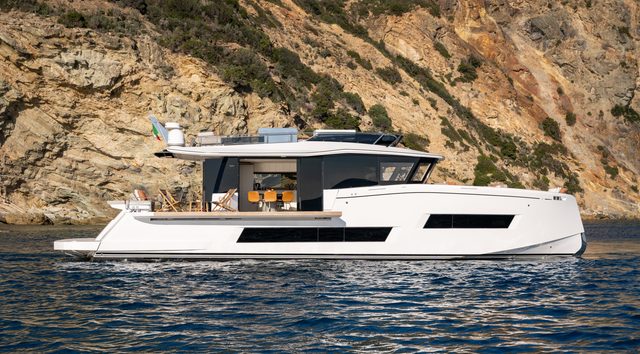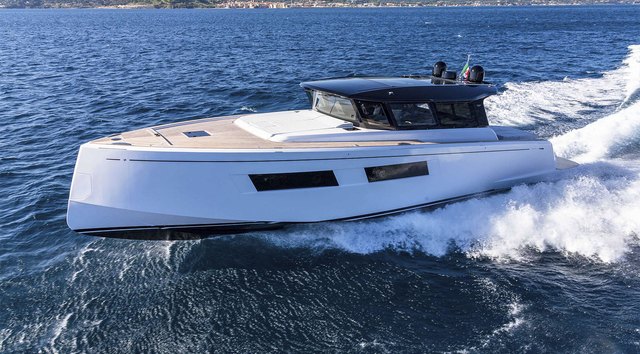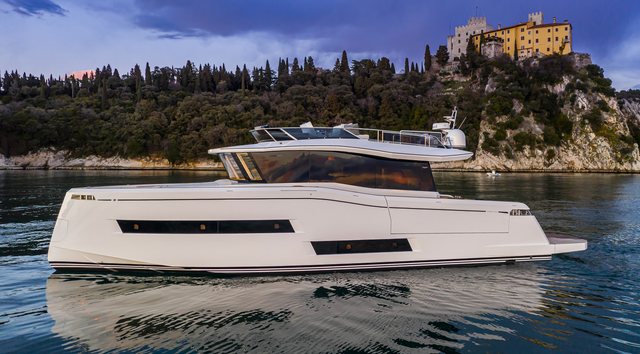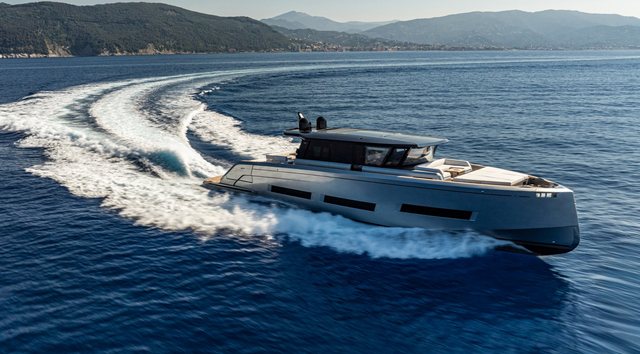
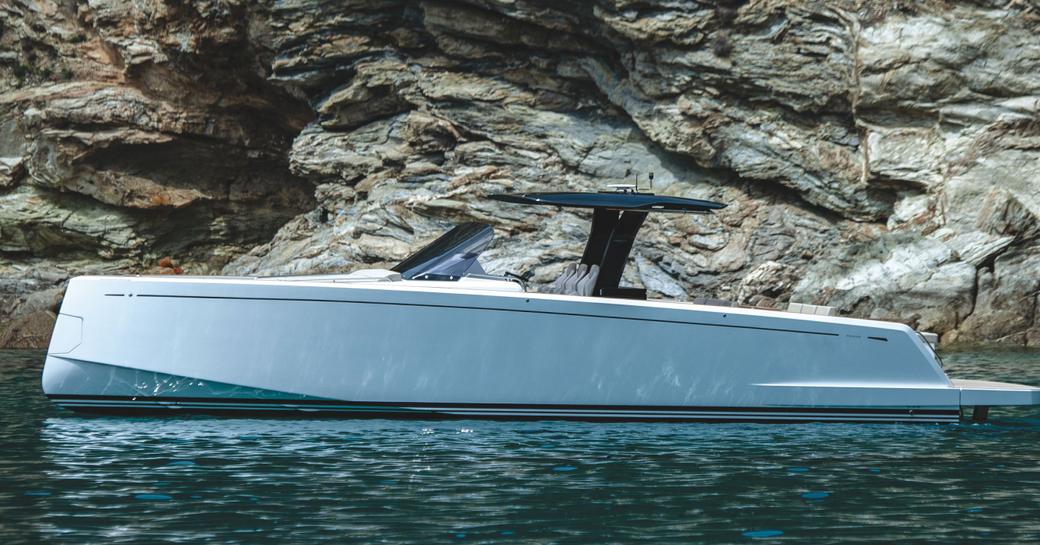
The original Pardo 43 sold in big numbers and became the reference point for what a modern walkaround day boat could be. It set the look, the layout, and the expectation, and plenty of other brands followed its lead.
This second-generation Pardo 43 remains a fast, open day boat with overnight ability, and the visual identity is instantly familiar. So what has changed? Read on to find out.
Pardo 43 (Mk2) Key Facts
- LOA 14m
- Model Year 2025
- Cabins 2
- Max Speed 38 knots
- Status In Production
- Generations 2
- Yacht Type Sportsboat
- Use Type Weekending
Review Video
The second-generation Pardo 43 keeps the same overall footprint as the original. Length remains 14m (45.9ft), beam 4.2m (13.8ft), and the boat still sits squarely in the spot between day boat and weekender.
Under the waterline, the fundamentals stay the same. Both generations use a deep-V hull with 16° of deadrise at the transom and a much steeper entry forward. Construction also follows the same method, with vacuum-infused vinylester resin, a monolithic bottom and keel, and high-density PVC sandwich structure for the hull sides and deck. The difference is not in the process itself, but in how the structure now supports additional systems, glazing, and layout flexibility.
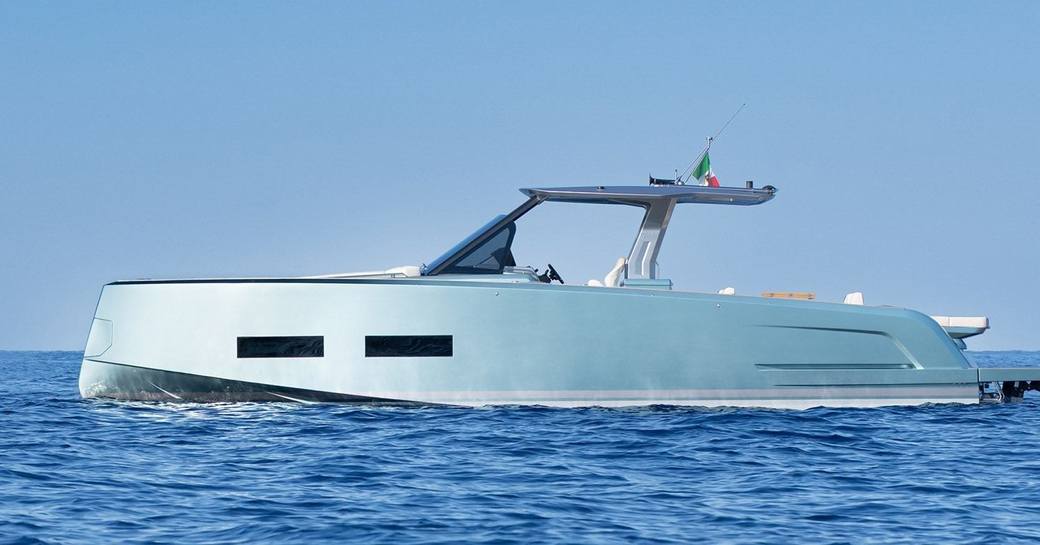
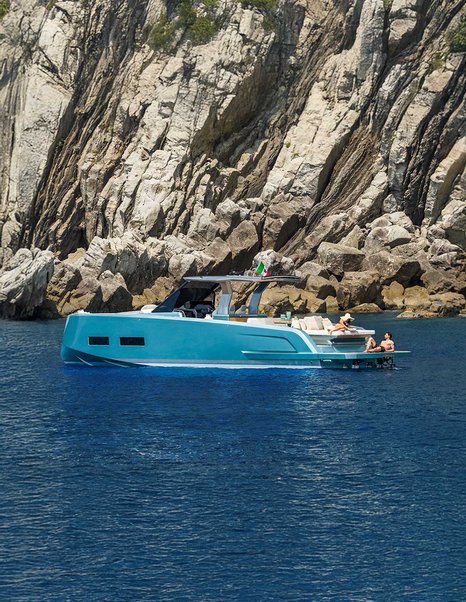
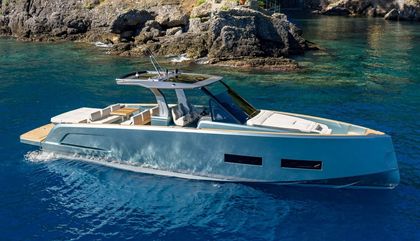
Visually, the first-generation boat established the Pardo look, with a straight sheerline, reverse bow, and clean topsides. The second generation revises that profile, lifting the bow slightly and adding much larger hull windows. From outside, those windows break up the slab sides, while inside, they lighten the feel of the lower deck. I can't help but think the new windows could have been more sympathetically incorporated into the design.
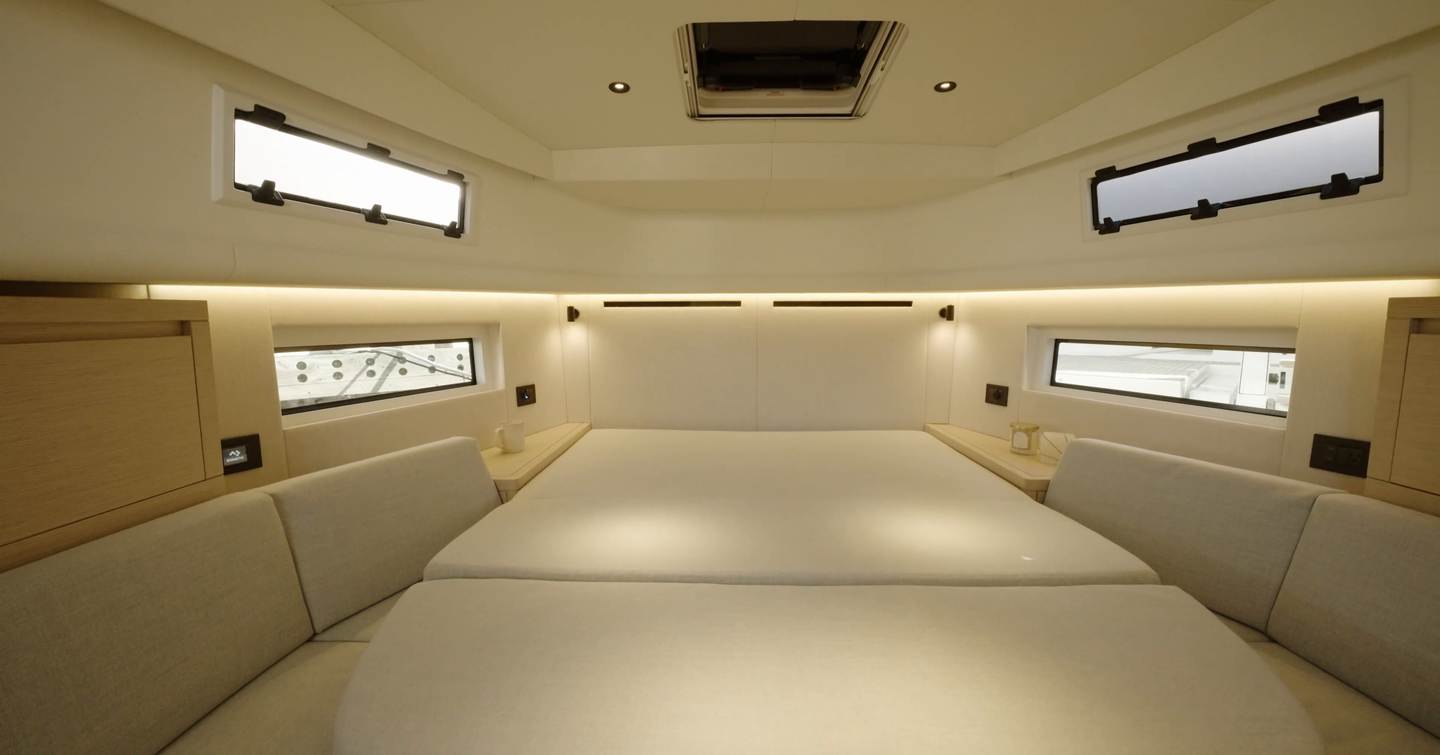
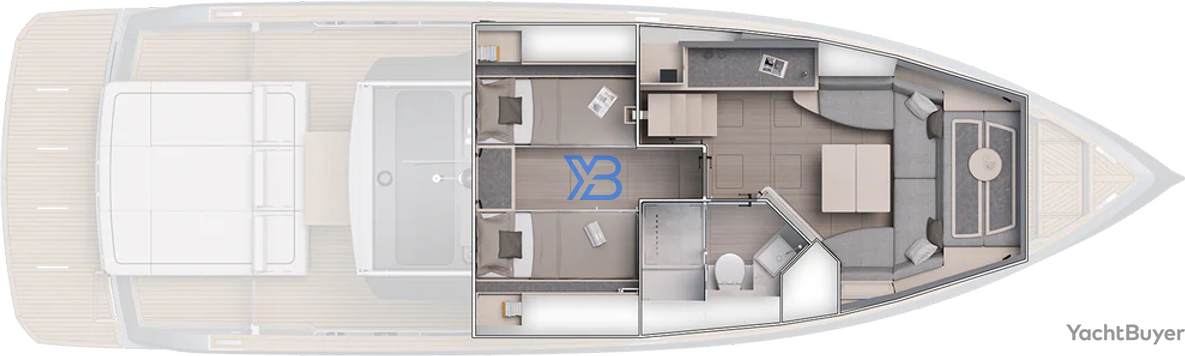
The original layout is simple and functional, with a fixed forward berth and a mid-cabin option beneath the cockpit. The newer boat adds a convertible forward dinette arrangement, allowing the space to work as seating or sleeping without loose cushions. The mid-cabin remains, but benefits from better light and smarter use of height.
On deck, the original cockpit works well as a dining and lounging area, but it is largely fixed in its layout. The new boat introduces a hydraulic table that lowers to form a larger sunbed, giving the cockpit more than one usable mode throughout the day.
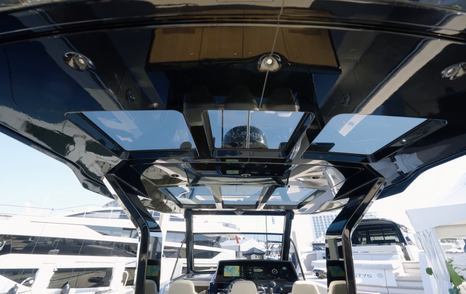
The wet bar also grows in scale and usefulness, with more surface area and better appliance options. Both boats use carbon fibre on the T-top, but the second-generation structure is larger and integrates more cleanly into the windscreen. That makes it feel more solid at speed and reduces visual clutter around the helm, rather than relying on separate supports.
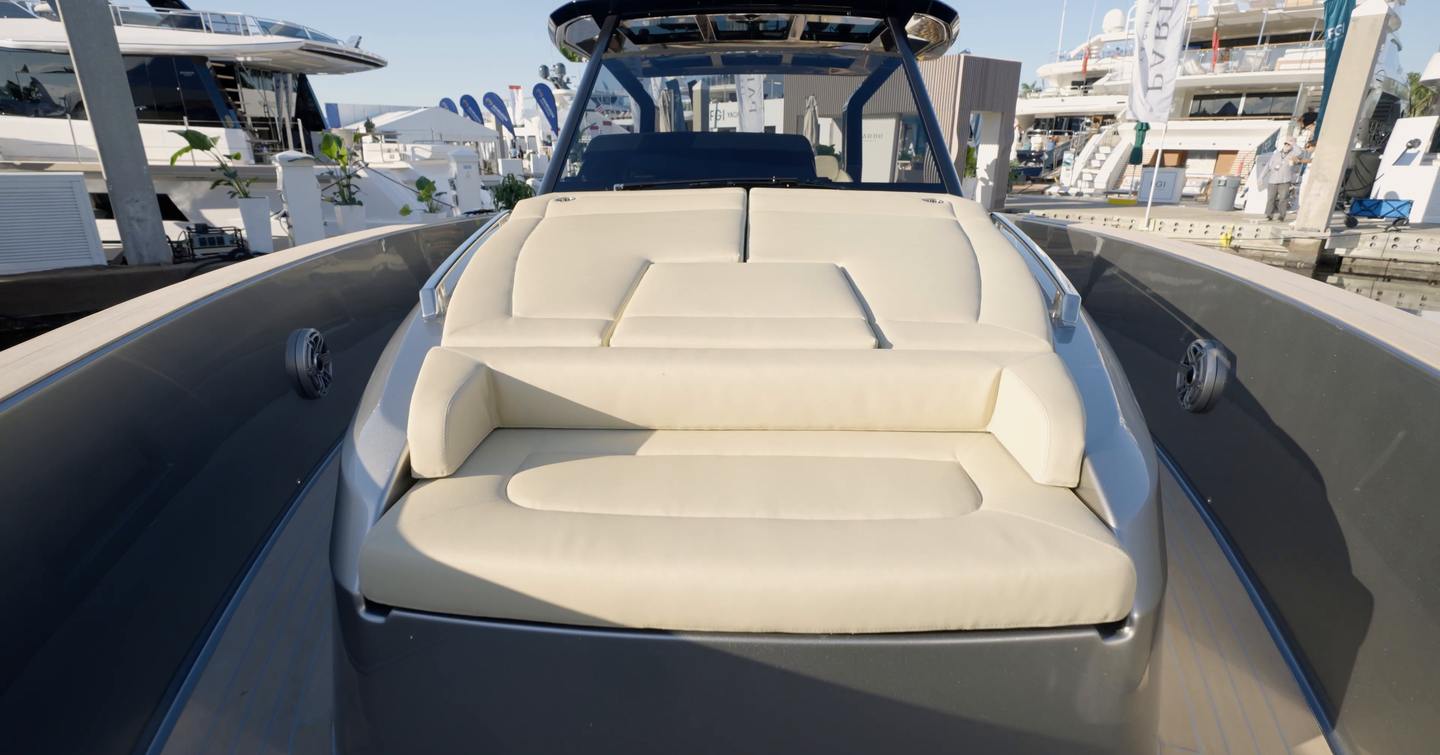
Forward, the first-generation bow is primarily a sunpad. On the new boat, that area becomes a seating space as well, thanks to the addition of a forward-facing bench. It is a small change, but it alters how the bow gets used, especially when running at slower speeds or sitting at anchor.
At the helm, the upgrade is obvious. The earlier boat uses a more conventional arrangement, with fewer screens and a more fragmented dash. The second generation is designed around three large displays, giving a cleaner, more unified helm layout. Functionally, it does the same job, but the newer boat looks and feels closer to what buyers now expect in this size and price bracket.
Below, the brief is still very much day boat first, but more thought has gone into making this a space you actually want to use. There is sleeping for four people in total, with a twin cabin aft, a day head to one side, and a forward area that sleeps two.
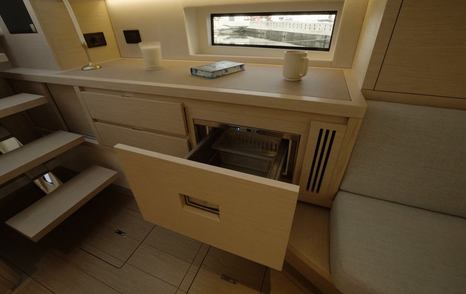
There is no full galley down here, as cooking will take place on deck, but it does give you enough facilities to make overnighting realistic. There is a drawer fridge down here, and on a boat designed for long days out, extra cooling space is always welcome.
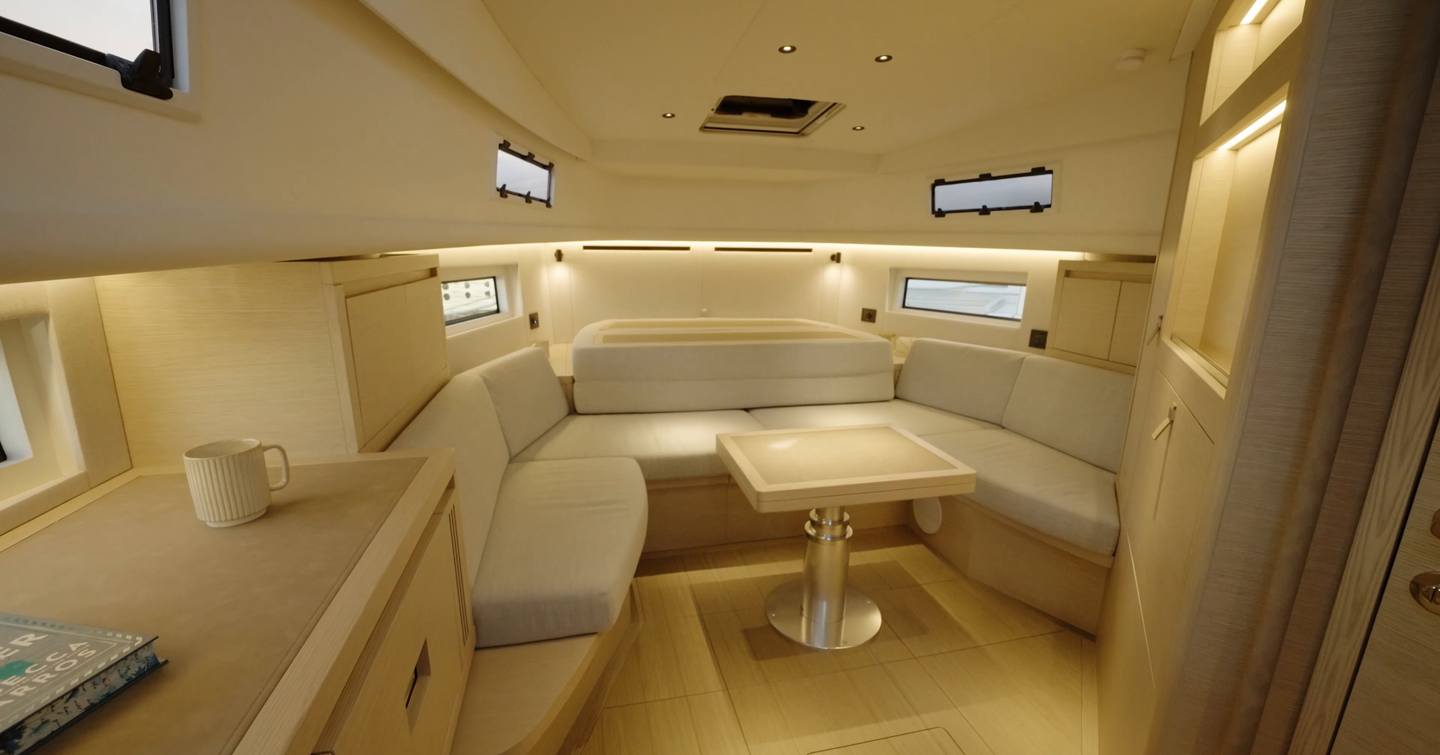
The table drops down, and if you want to sit and eat down here, you can, even if most people probably will not. The important part is what happens next.
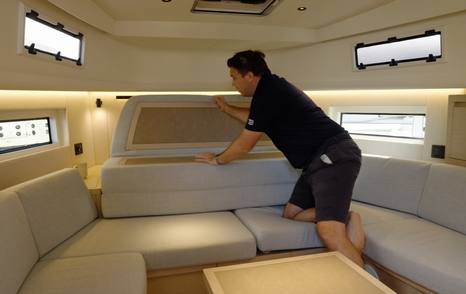
Instead of hunting for cushions and trying to build a bed from loose pieces, the mechanism is built in. You pull the section over, it splits neatly, drops into place, and the bed is ready. It is quick and means you don't have to worry about storing cushions. That matters because if a system takes effort, people stop using it.
When you want the space back as a seating area, the process reverses just as easily. In sofa mode, it feels like a place you can actually sit and relax, rather than a bed pretending to be a bench.
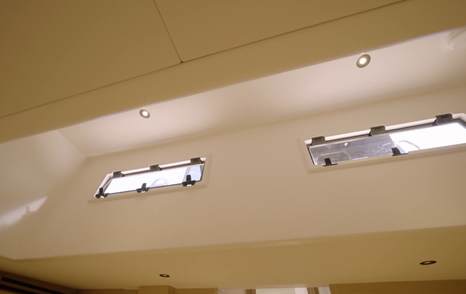
Storage has not been forgotten either. There is a deep hanging locker, a slimmer locker alongside it, shelving along one side, and more lockers around the perimeter. None of them is huge on their own, but together they give you enough room for bags and clothes if you are staying aboard for a night or two. The hull windows are fairly square, and from the outside, they do interrupt the lines slightly, but inside, they make a difference.
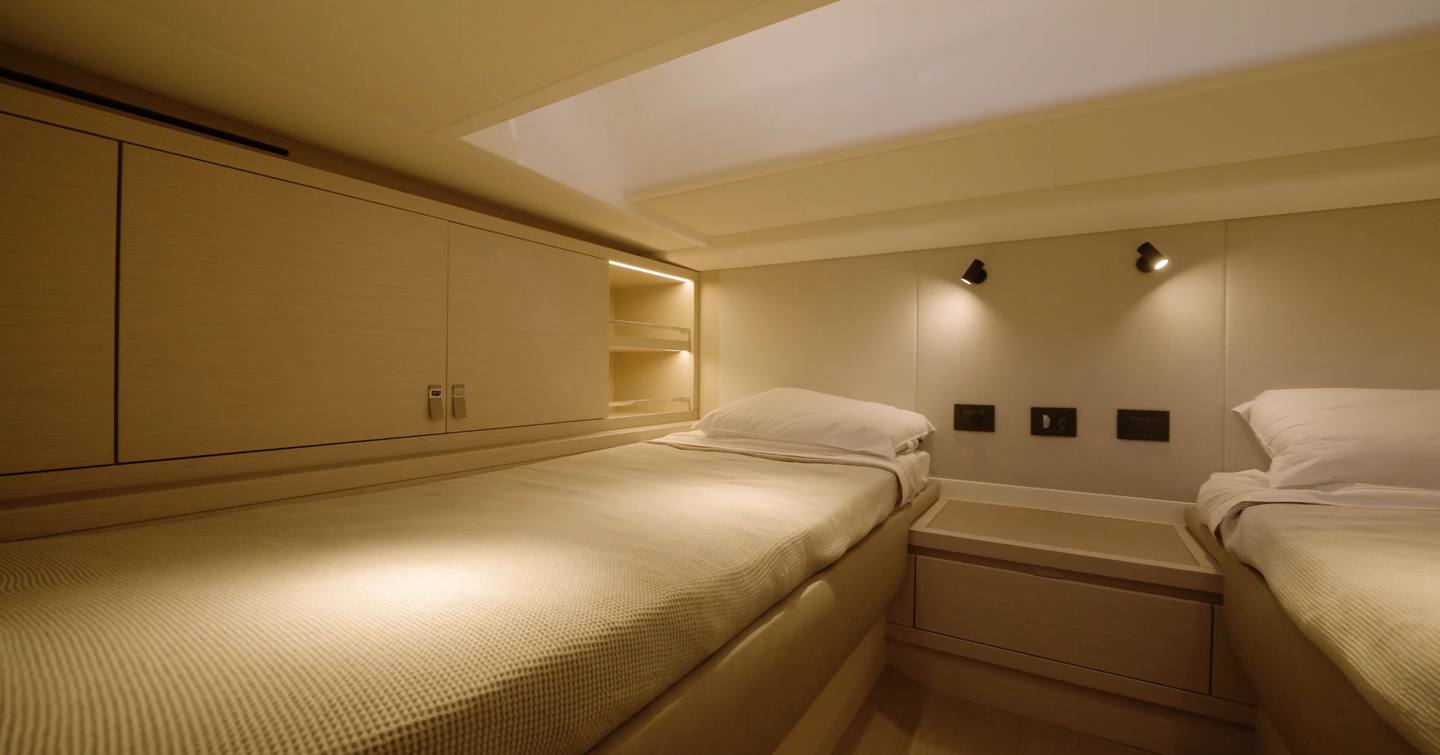
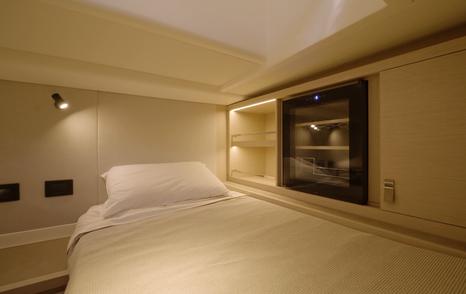
Aft is the mid-cabin, and headroom is always going to be the compromise on a boat like this. The cockpit sits above, so you cannot expect full standing height throughout. What helps is the way the floor drops down once you step inside. There is a ceiling well, which lets you stand upright in one spot.
You have two single berths, and they are wide enough to work for adults rather than feeling like children’s bunks. Storage runs along both sides, and even a wine fridge, which feels very on brand for a boat designed around relaxed days on the water.
There is also a choice here. You can leave this area open to the main cabin, or you can fit a partition door and make it a separate space. If you are cruising with family, an open plan makes sense. If guests are staying aboard, the option for privacy is welcome.
The bathroom is between the two sleeping areas, and it's a reasonable size. Even if you never plan to sleep on board, this is still a space you will use, especially after a long swim or a full day in the sun. There is a good amount of room to move around, and headroom is better than you might expect on a boat of this size. And the shower is a dedicated cubicle with a solid door and a rain-style shower head. That makes it far easier to rinse off properly and leave the rest of the bathroom dry and usable afterwards.
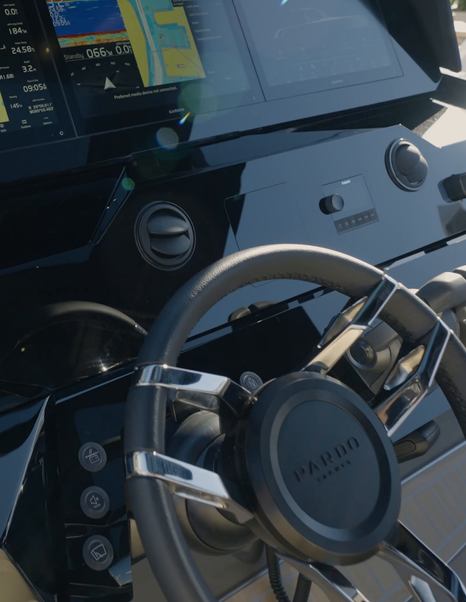
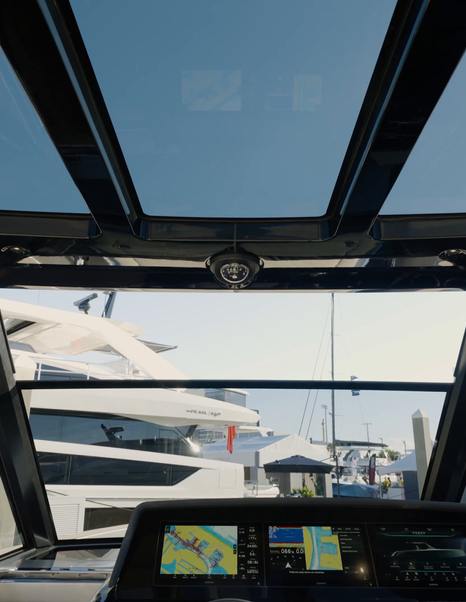
You have three large Garmin displays set into the dash, and the smaller screens are fitted flush, so everything looks clean and homogeneous. So many boats in this class end up with mismatched screens and add-on panels.
Here, the information feels organised and easy to take in at a glance. However, there is a lot of glossy black fibreglass used around the helm area. It looks sharp when it is new, but it does reflect light, and it will show marks over time. There is matte material used higher up, and that works better, so it would make sense to carry more of that lower down the dash as well.
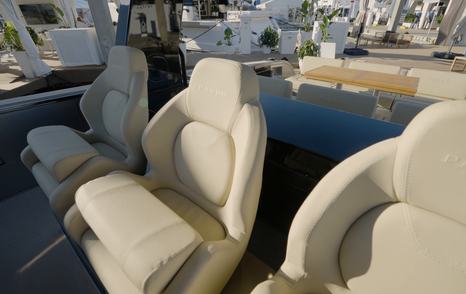
The driving position itself works well. All three seats have bolsters, so you can stand or sit depending on conditions. The seats are fixed, but the wheel adjusts, which means you can dial in a comfortable stance with the throttles in hand. When you are standing, the ergonomics feel natural. When you sit, it still works, even if the throttles are a stretch when fully seated.
The windscreen is high enough to give proper protection at speed, and that makes a difference on a boat that is happy running quickly. There is also good provision for the passenger, with a solid handhold and good-sized cup holders that double as access points to storage. It feels like a helm designed to be used for longer runs.
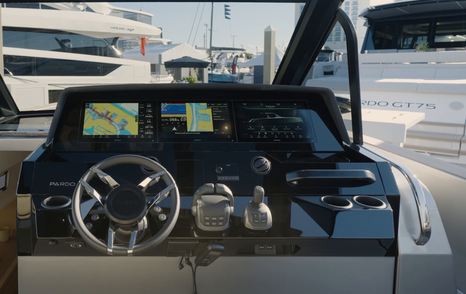
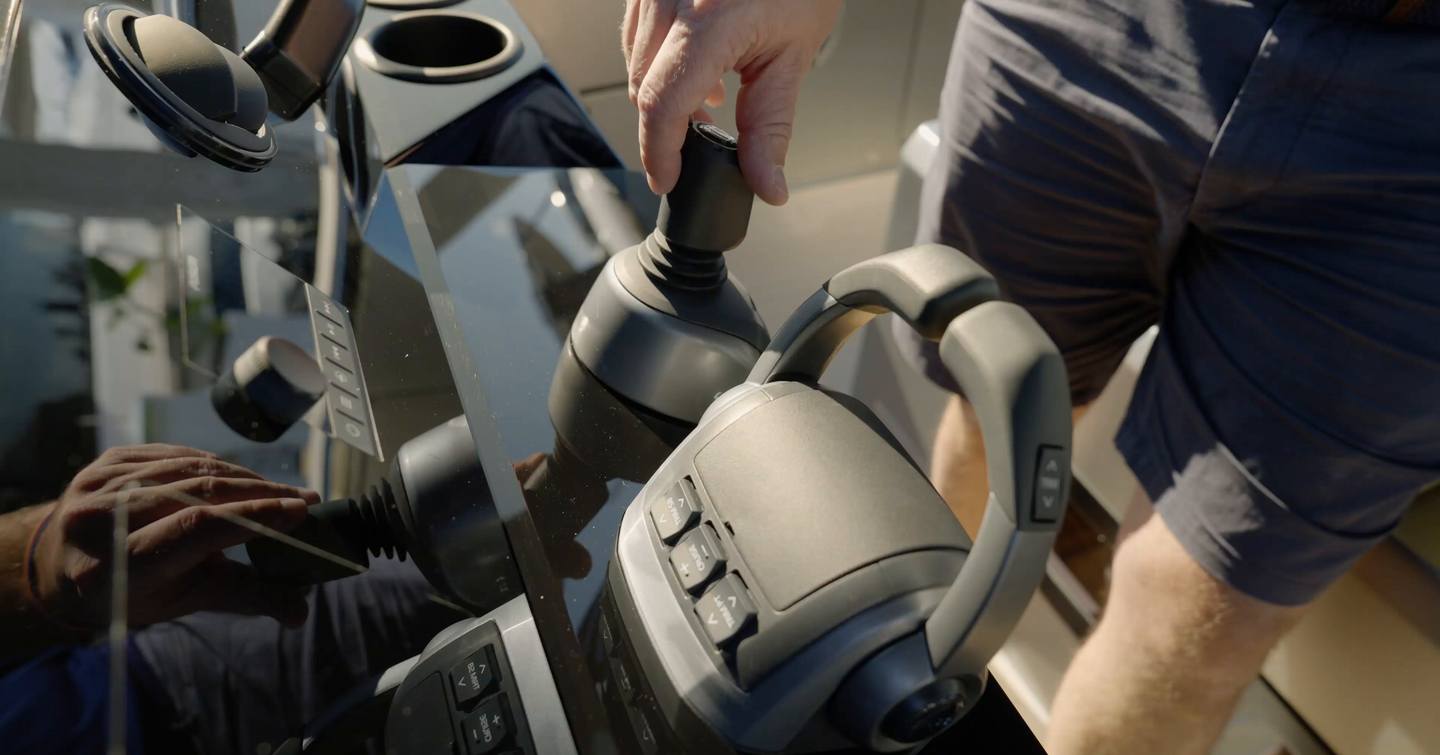
With the IPS set-up, this boat lends itself to simple owner operation. The joystick sits in the right place, centred at the helm, with clear sightlines forward and aft. Being an open boat, all-around vision isn't something that's going to trouble you.
If stern-to mooring is part of the plan, a bow thruster is worth considering. It would give an extra layer of control in crosswinds or tight spaces. It is not essential, but it adds confidence when conditions are less forgiving.
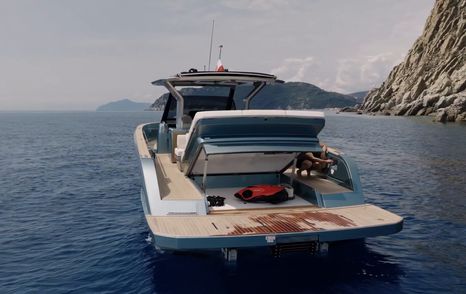
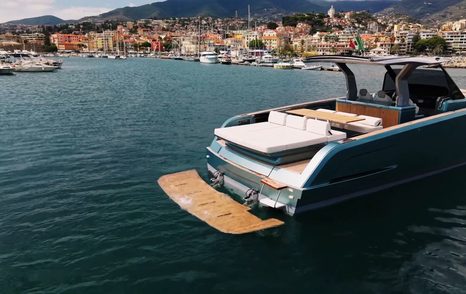
The Pardo 43 has a hydraulic bathing platform that lifts around 250kg (551lb), which is enough for a tender or a couple of heavier toys.
What improves things is how you get in and out of the sea. The ladder now extends down into the water, rather than stopping just below the surface. There are also removable poles that slot into the platform, which give you a clear handhold when climbing back aboard.
Storage sits right alongside this area, and it is handled in a very Pardo way. A large hatch lifts electrically, without moving cushions or clearing the sunpad, and it opens up a garage space right on the waterline. It's great for fenders and lines, but it's also ideal for snorkel gear, inflatables, or anything else that needs to be close to the sea.
This area sums up what the boat is about. You drop the platform, pull the gear out and enjoy time on (and in) the water.
Cockpit
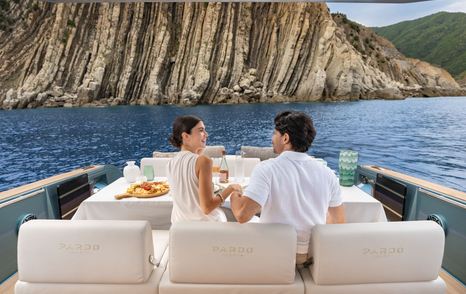
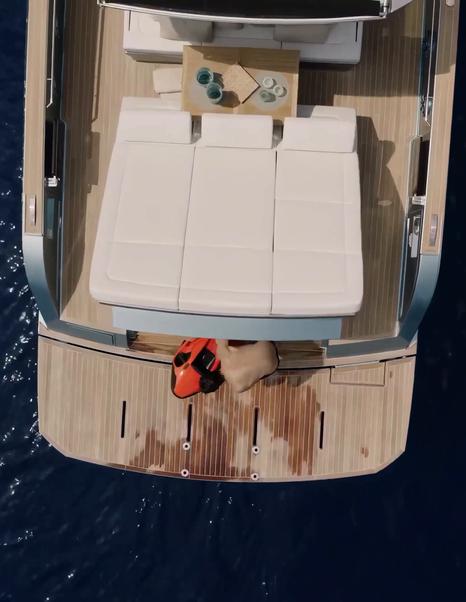
This is where the Pardo formula really shows it's hand, and it does not take long to see why these boats sell so well in places like Florida. Everything sits around a central zone that can change role through the day in a very flexible manner.
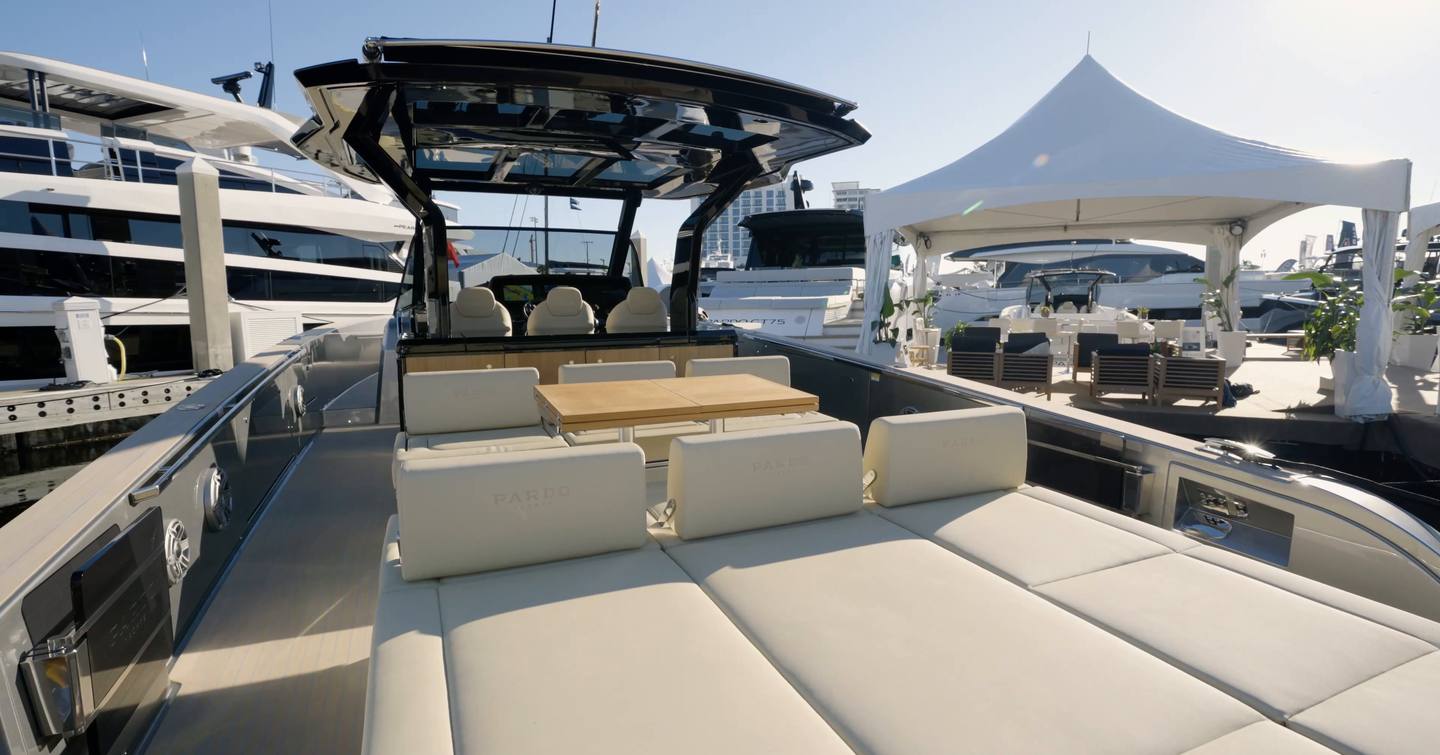
The table is foldable and opens out to double in size when you need it. With the bimini overhead, this works as a proper outdoor dining space. You can sit a good number of people around it, and the proportions are great for a boat of 14m (45.9ft).
What makes it work better than most is the backrest system. The headrests flip over, which lets this whole area switch from dining mode into a rear-facing sun pad. It is a simple move, but it changes how the space gets used. One moment it is lunch, the next it is somewhere to lie back and look out over the wake.
Forward of that, the same thinking continues. You can set this area up for dining as well, but the more interesting option is to flip the seating so three or four people can sit facing forward, so when you are running along, you are not limited to the helm seats alone. More people can sit facing the direction of travel, protected by the screen, and enjoy the ride properly.
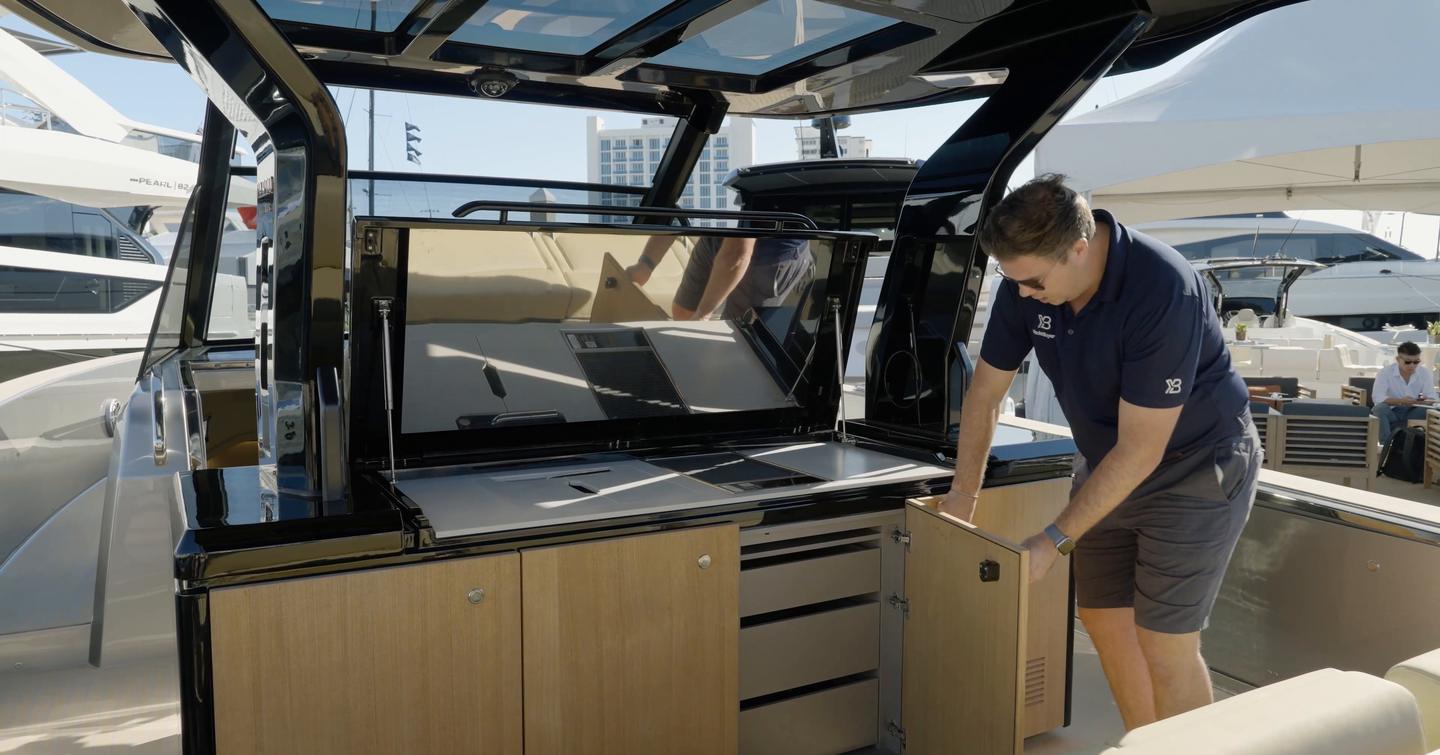
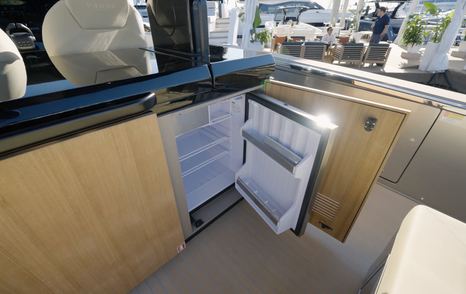
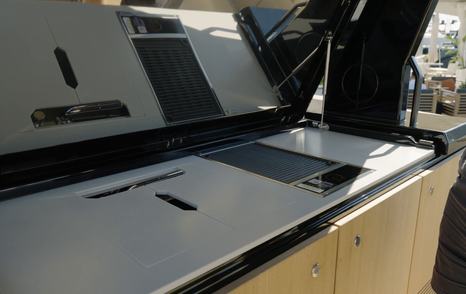
One of the biggest changes over the previous model sits right in the middle of the boat. The wet bar is now much more substantial and better equipped. On a boat like this, cooking and preparing food happen on deck, so Pardo has treated this as a proper working area.
You get a grill, a decent-sized sink, proper storage, cooling space, and an ice maker, all grouped so you are not moving back and forth across the cockpit. The lid itself has been redesigned as well, and it looks much cleaner when it is shut.
Above it all sits the hardtop. The previous boat had one, but this version feels far more substantial. It is nearly the size of the hardtop you get on the 50, which gives the cockpit great protection despite the open design. More importantly, it feels like it should be very sturdy on the move.
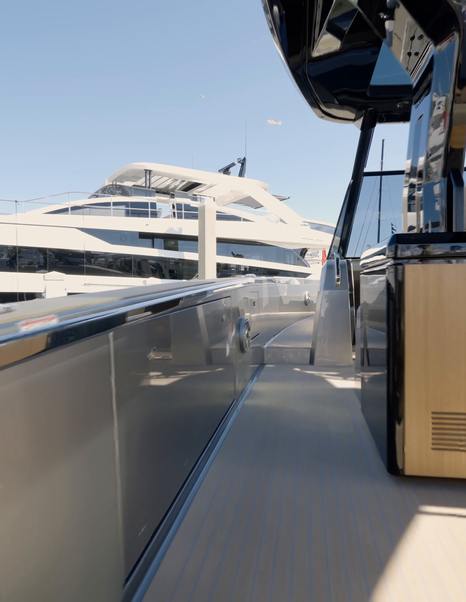
Once you start moving around the boat, the quality shines through very quickly. Pardo has always been strong here, but this boat feels a step up again. The stainless rails are solid and classy, and the fittings feel really high quality.
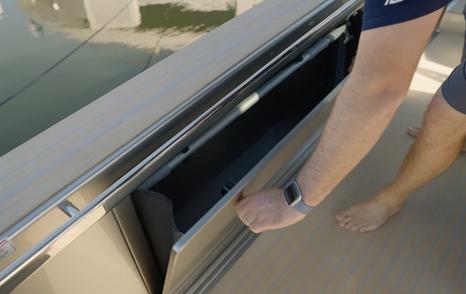
The fender system is a good example of that thinking. These boats come with bespoke flat fenders, designed to sit properly against the hull shape. They clip onto the rails when in use, and when you are done, they slot straight into dedicated lockers along the side. The catches themselves feel well-made, and everything closes flush. You can still use standard round fenders if you want, but this system keeps the decks cleaner.
There is more cold storage tucked away than you might expect. You have fridges under the seating as well as the main cooling space by the wet bar, which makes sense on a boat designed for long days out.
Along the side decks, there are a couple of neat details that make life easier. Built into the topsides are boarding steps, which work well if you are coming alongside another boat or stepping off onto a higher quay.
The pop-up cleats sit where you expect them, and the rub rails are shaped so lines do not chafe against the paintwork. It is worth saying that the paint finish itself looks excellent. This is the type of boat where looks really do matter.
Foredeck
There are no guard rails out at the edge, yet the bulwarks are tall enough that the space still feels secure. You also have inboard railings to grab as you move around, which makes a difference when the boat is underway.
This area is primarily a flat sunbathing zone. The backrests do not adjust, so this is not a lounge in the usual sense, but it works well for lying out at anchor. Shallow cup holders are set into the surface, which helps keep drinks in place rather than sliding around as the boat moves.
There is a practical reason for the panel set into the deck here. It allows light down into the cabin below, and you notice the benefit as soon as you go downstairs.
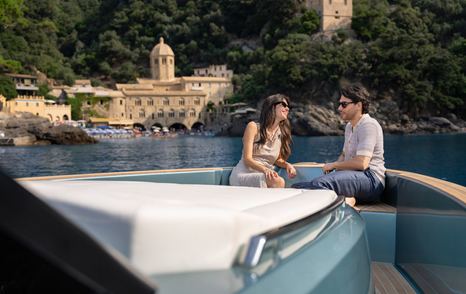
Right at the front, there is a neat bench built into the bow. This is not somewhere you would sit at high speed, but at a slower pace, it becomes a pleasant perch. You sit low, catch the breeze, and stay connected to the water. It is one of those spaces that gets used more than you expect once you have it.
The anchor locker sits neatly at the very front, and even here the execution feels considered. The hatch is well moulded and finished in the same colour as the surrounding deck, so it blends in nicely.
When you open it, proper rams hold the lid clear, which makes access easy and safe when you are leaning forward. Inside, the locker is deep, with plenty of room to work the chain and stow everything without fighting for space. The anchor itself stays hidden when it is stowed, which keeps the bow clean and avoids hardware cluttering the profile. That said, it makes deploying it a bit trickier in an emergency.
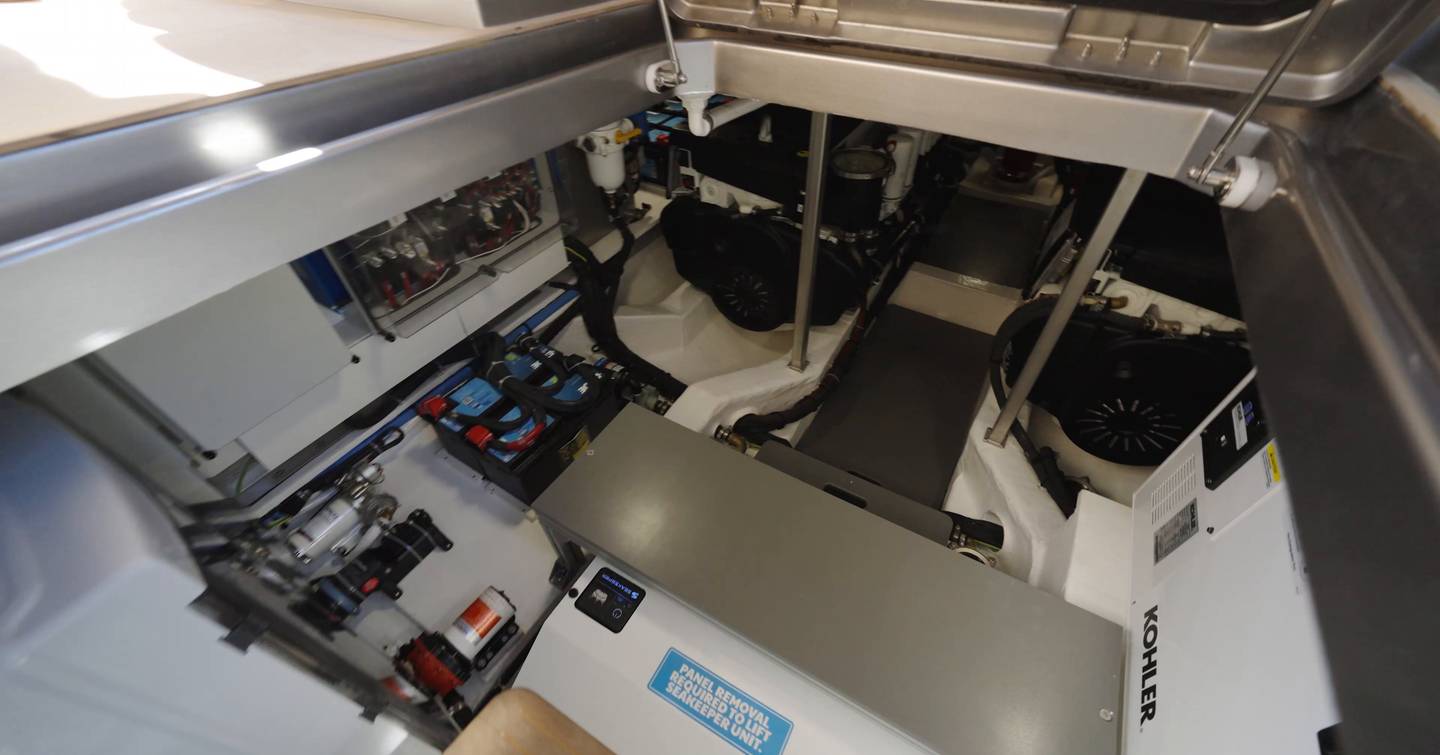
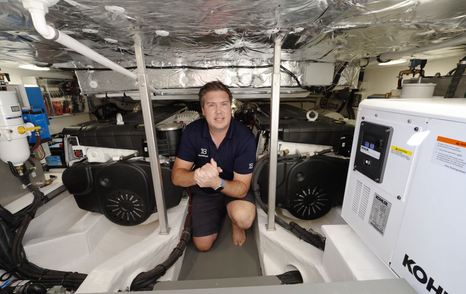
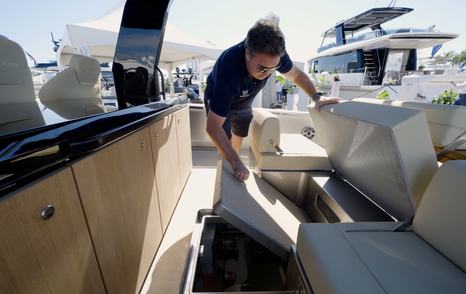
The engine space sits beneath the cockpit, and expectations need to be realistic here, as headroom is always going to be limited on this size of boat.
What matters is access, and on that front, it works better than you might expect. You drop in through the hatch just behind the wet bar, and once you are down there, the central area gives you enough room to move and work. The key service points are where you want them. Fuel filters are easy to reach, strainers are accessible, and you can get to the dipsticks without contorting yourself.
There is space here for stabilisation as well. You can specify a gyro or a Quick system, and both fit into the layout without making access unworkable. The generator sits right by the entrance, which means you can check it quickly without climbing all the way in.
For the first time, the Pardo 43 can be specified with outboards, aimed squarely at the American market. You can choose triple 400hp units or go all the way up to triple 600hp engines. With the 600s, Pardo claims a top speed of around 55 knots, and that version sits on a sharper hull to cope with the extra pace.
If you stay with inboards, there are three Volvo Penta IPS options, topping out at IPS 650 with 480hp per side, which was the option chosen on our tour boat. This version will likely suit Europe better, not least because it runs on diesel and gives you joystick control as standard.
In Europe, you'll pay around €700,000 for a base boat (all prices correct at time of writing) and $1,670,000 in the US (including tariffs).
This was the only pricing information that Pardo was willing to share, and it's safe to assume that you'll need to spend some money to get the boat up to a really usable specification.
Consider the engine options and whether you want inboard or outboard (the largest IPS is probably best if going inboard). Outboards give better performance and shallower draft, but the IPS version is likely to feel more solid through a seaway and be less thirsty to run.
This is a fairweather boat, so you'll likely need a generator to run the air conditioning and a stabiliser, which will make life at anchor a lot more comfortable.
Pardo's tend to be built well, and the standard spec is relatively generous. They've built a few of these now, so you'd assume they're quite good at it!
Our Verdict
The second-generation Pardo 43 has removed many of the small frustrations that come with long-term ownership, and it stays true to what the 43 has always been, while raising the standard for what a 14m (45.9ft) open day boat should deliver. This is the boat that put Pardo on the map, and the second generation cements its place as number one in a sector bursting with eye candy.
Reasons to Buy
- Flexible cockpit seating
- On-deck cooking
- Interior finally usable
- Excellent engine options
Things to Consider
- Glossy dash reflects light
- Engine space is tight
Looking to own a Pardo 43? Use YachtBuyer’s Market Watch to compare all new and used Pardo 43 Yachts for sale worldwide. You can also order a new Pardo 43, customized to your exact specifications, with options for engine choice and layout configuration. Alternatively, explore our global listings of new and used yachts for sale and find your perfect yacht today!
Rivals to Consider
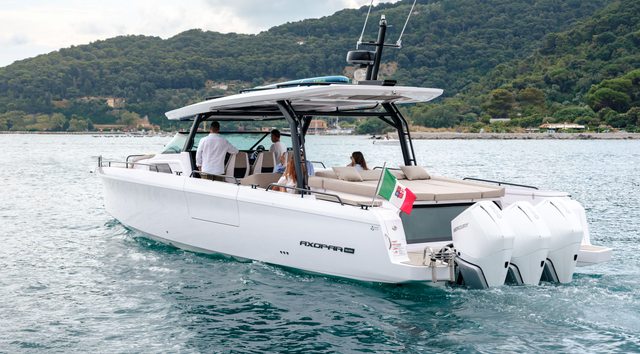
The Axopar 45 Sun-Top is in a similar space as an open 45-foot boat built for high-speed day use with modular deck areas that can adapt from cockpit dining to lounging or sunbathing without heavy covers or partitions. It uses a planing hull and triple outboards and is capable of speeds up to around 50 knots, with a draft near 1m (3′ 4″) and two cabins below for occasional overnighting, giving it a sportier edge and a performance focus compared to the 43’s balance of sociable deck and weekender comfort.
The Azimut Verve 42 is a fully outboard Italian-built sport cruiser around 12.9m (42′ 4″) long that blends centre console performance with yacht-style presence. It is designed to cruise fast and handle well offshore, with triple outboards delivering top speeds around 43-45 knots and a carbon-reinforced structure aimed at a low centre of gravity and dynamic stability. Below, it offers a cabin and dayboat amenities aimed at both longer day runs and short weekends, pitching it as a premium, performance-leaning alternative to more traditional walkaround layouts.
At about 15.03m (49′ 4″), the Fjord 490 Open sits above the Pardo 43 in size and scope. It uses Volvo Penta IPS drives for cruising around 31-34 knots and leans into a spacious walkaround deck, generous social areas and two cabins below, with fold-down balconies and large sunbeds fore and aft. Its brief is closer to a larger open cruiser with lifestyle flexibility and interior volume that supports extended trips or coastal cruising with more guests on board.
The Windy SR44 comes from a yard known for quality build and strong performance. At around 14.46 m (47′ 5″), it can be fitted with powerful outboards producing top speeds above 50 knots, and combines open cockpit living with a cabin that sleeps four. Its focus is on refined seakeeping, lift-off performance and versatility, from day trips to acting as a superyacht chase boat or weekender - making it a comparable sporty yet premium alternative to the 43, with a slight tilt toward performance and high-speed cruising.
Considering a new yacht? Explore Pardo's entire current range to find the model that best suits your needs, and compare it with alternatives from competitors to ensure you make the perfect choice.
Specifications
- Builder Pardo Yachts
- Range Walkaround
- Model P43
- Length Overall 14m
- Beam 4.2m
- Draft 1.05m
- Hull GRP
- Cabins 2
- Berths 4
- Yacht Type (Primary) Sportsboat
- Use Type (Primary) Weekending
- Cruising Speed
- Max Speed
- Fuel Capacity 1,300 Litres
- Fresh Water Capacity 400 Litres
- Engine Model 2x Volvo Penta IPS650
- Engine max range (speed type) 350 (nm)
Pardo 43 Layout
-
Main Deck
-
![Main Deck Pardo 43]()
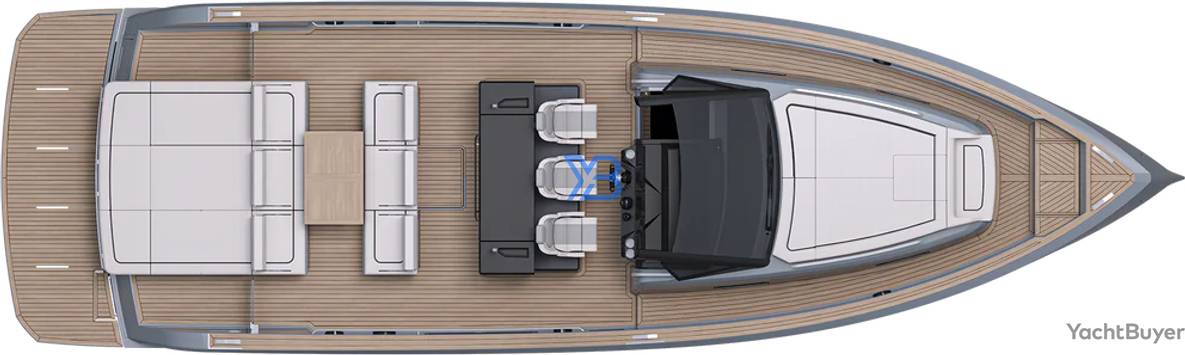
A main deck laser focused on fun in the sun. No balconies, but it's a great layout
-
Lower Deck
-
Standard cabin layout
![Lower Deck Pardo 43]()
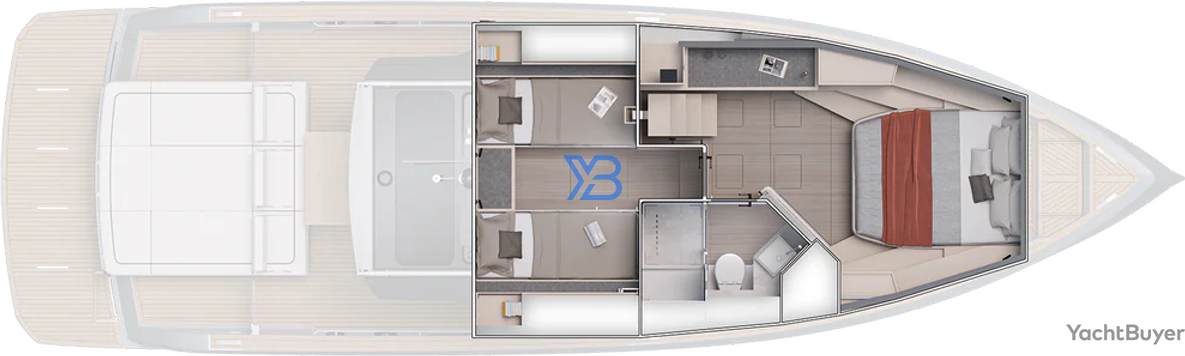
The standard lower deck arrangement with fore and aft cabins
-
Optional dinette layout
![Lower Deck Pardo 43]()
The optional lower deck sports a convertible dinette


Interested in a P43?
NEW Build
Find your local dealer for a personalised, no-cost consultation
or just request
Brochures & Pricing
Used & In Stock
Looking for a ready-to-go P43 or pre-owned options? Explore all inventory of the P43 available worldwide