
Nobody knew what challenges lay ahead, but each contestant had just half an hour to choose a second-hand boat from the yard at Essex Marina.
Watch The Full Video
DISCLAIMER: YachtBuyer does not recommend the 30-minute boat selection method demonstrated in this film. Before parting with £300,000, we strongly advise checking the service history, arranging a sea trial and commissioning an independent marine survey. The ability to prepare cucumber sandwiches onboard does not constitute proof of seaworthiness.
Our Three Contenders
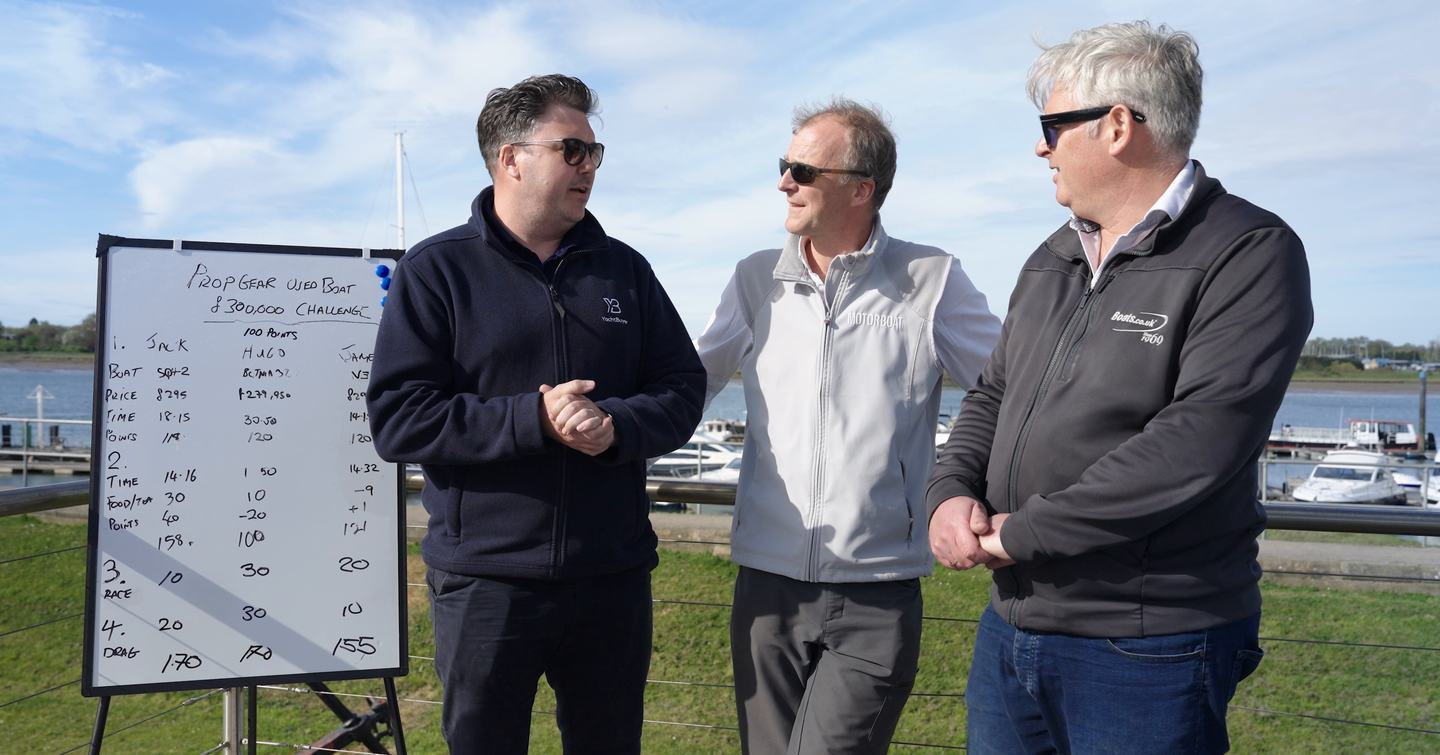
Hugo Andreae used £279,950 of his budget on a 2019 Botnia Targa 32 with twin 400hp Volvo Penta diesels. It's the smallest, newest and cheapest boat of the three, but it had more power than either of its larger rivals. Hugo knew the Targa's formidable reputation for seakeeping and liked its practical walkaround decks, twin helm stations and manageable size. Still, nearly £280,000 for a 10.78m boat takes some justifying when you see what else was available.

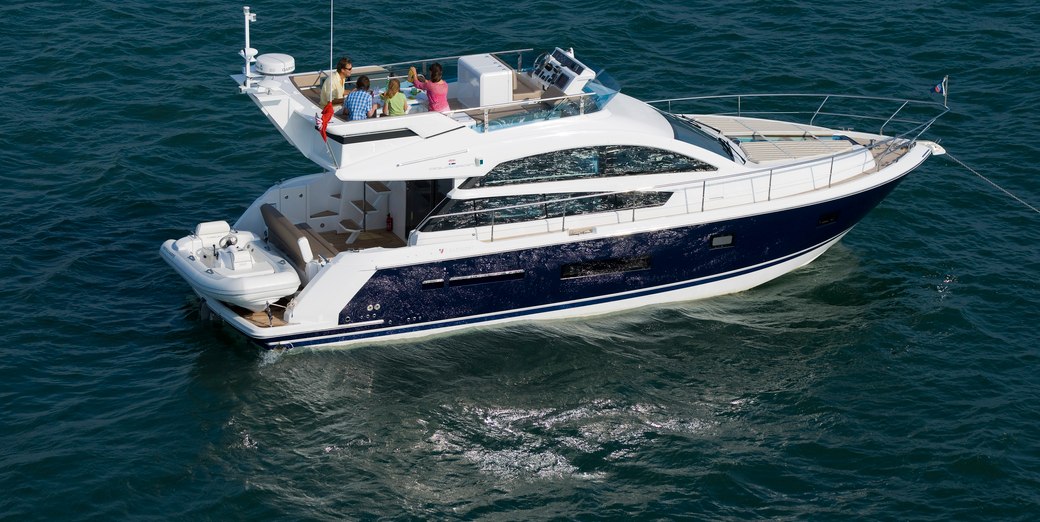
Jack Haines had set out to get the biggest boat he could afford, but walked straight past a 2003 Fairline Phantom 46 at £225,000. Instead, he spent another £70,000 on a smaller 2011 Squadron 42. He preferred the look of the newer Fairline and, at £295,000, got a flybridge, shaft drives, two bathrooms and a hydraulic tender lift. That's a fair amount of boat for the money, even if some of the technology was already 15 years old.
This kind of dilemma makes the new versus used yacht debate much more interesting than a simple comparison of length and price.
Guests
4
Cabins
2
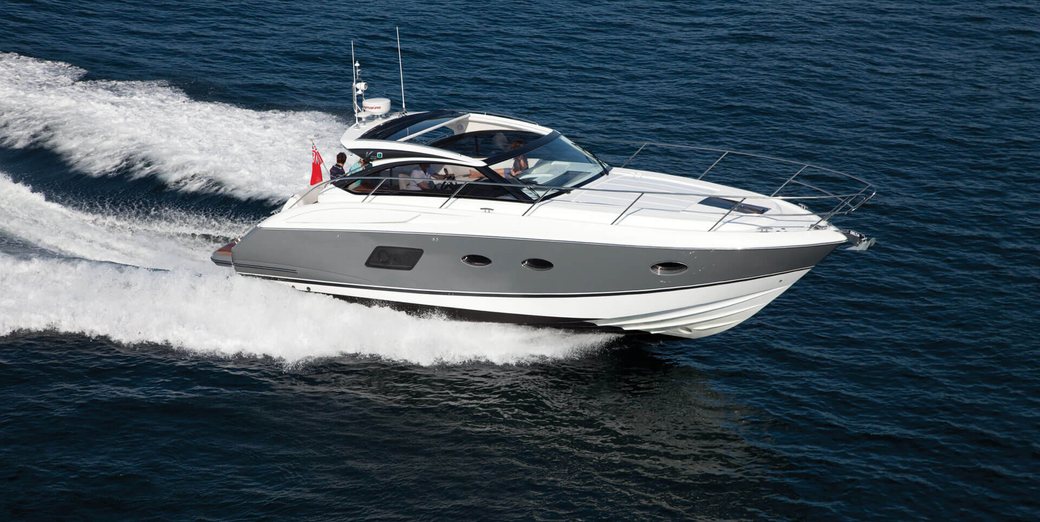
James Barke, whose Boats.co.uk yard at Essex Marina supplied all three contenders, chose a 2015 Princess V39 for the same price of £295,000. It shared the Squadron's 12.98m overall length but was lower, lighter and powered by twin 330hp Volvo Pentas on sterndrives. James also liked its bow and stern thrusters. As a man who knows his way around a marina, he had also spotted another advantage: the Princess was moored in an open berth, with very little nearby for him to hit when he set off.

Which Used Boat Was Fastest?
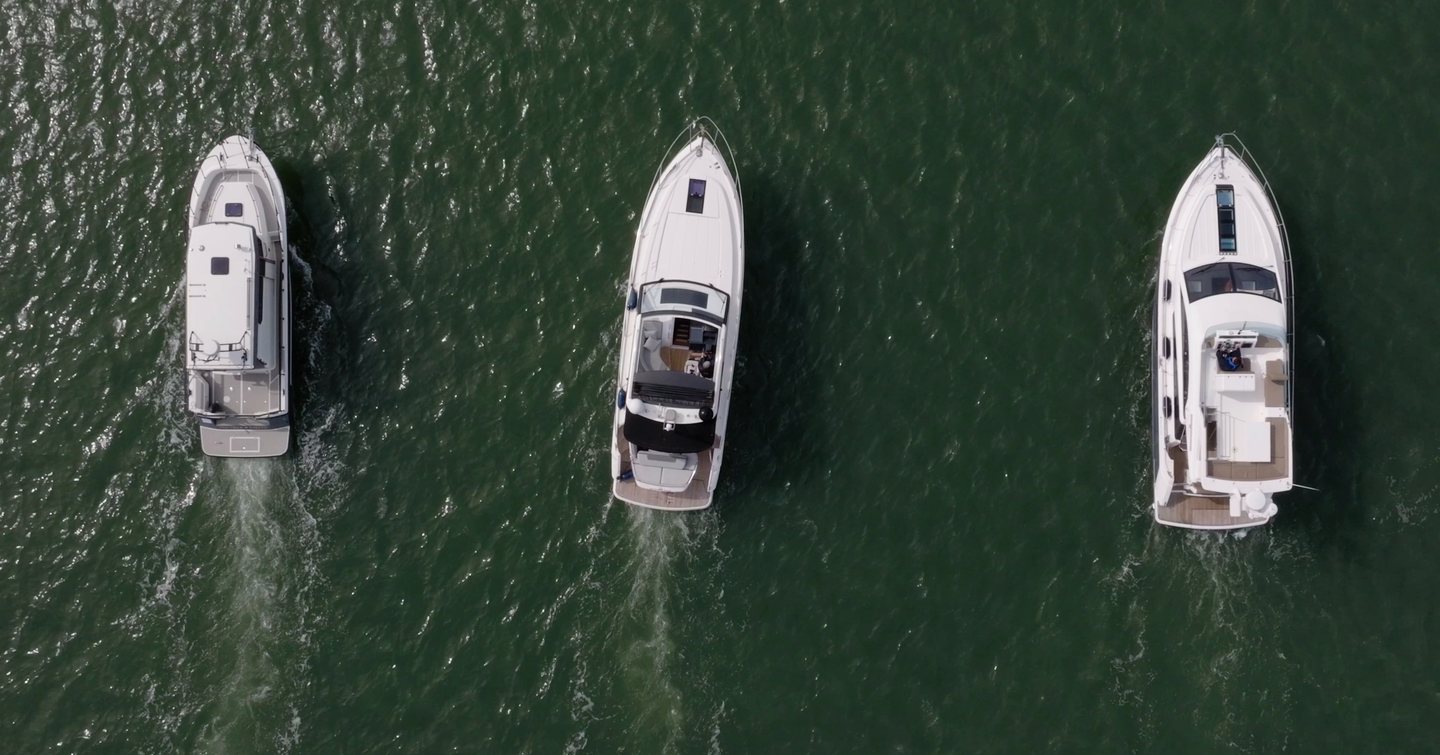
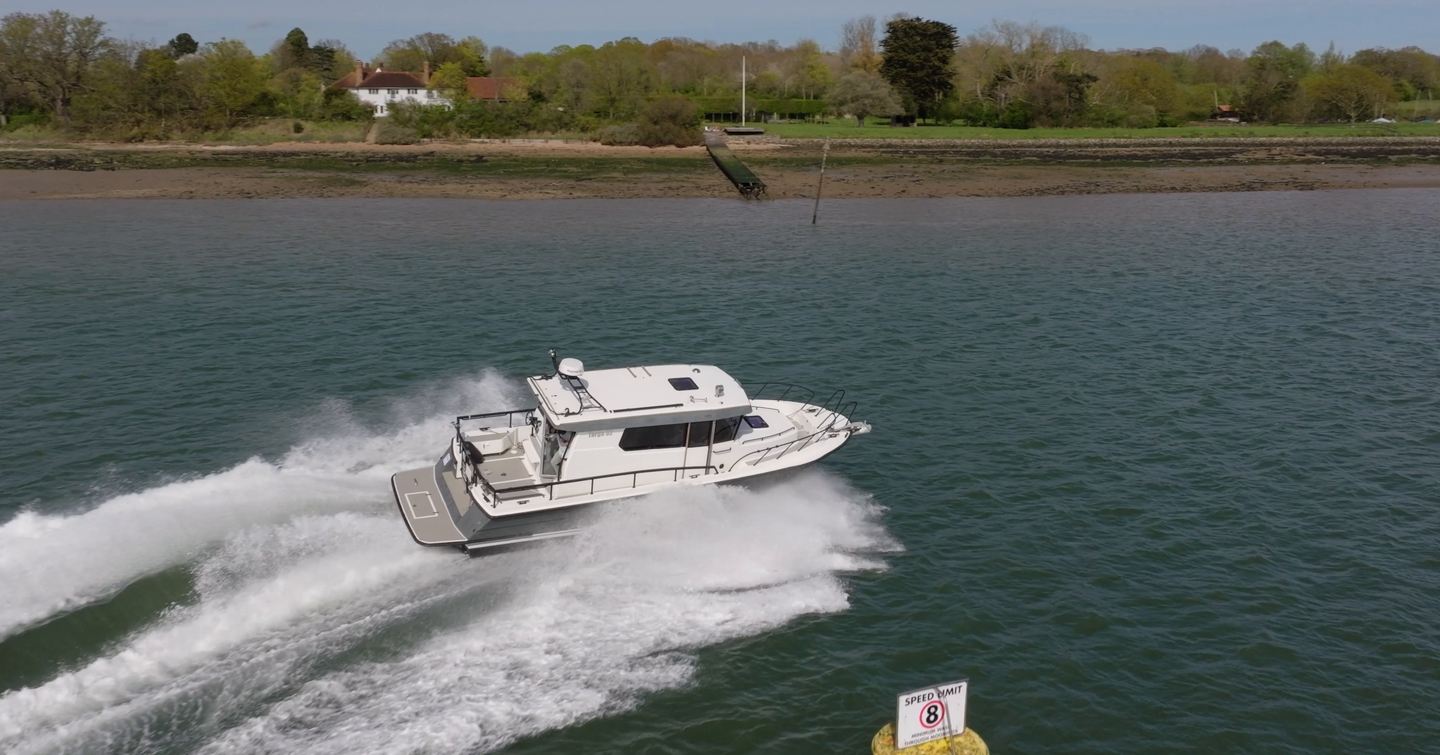
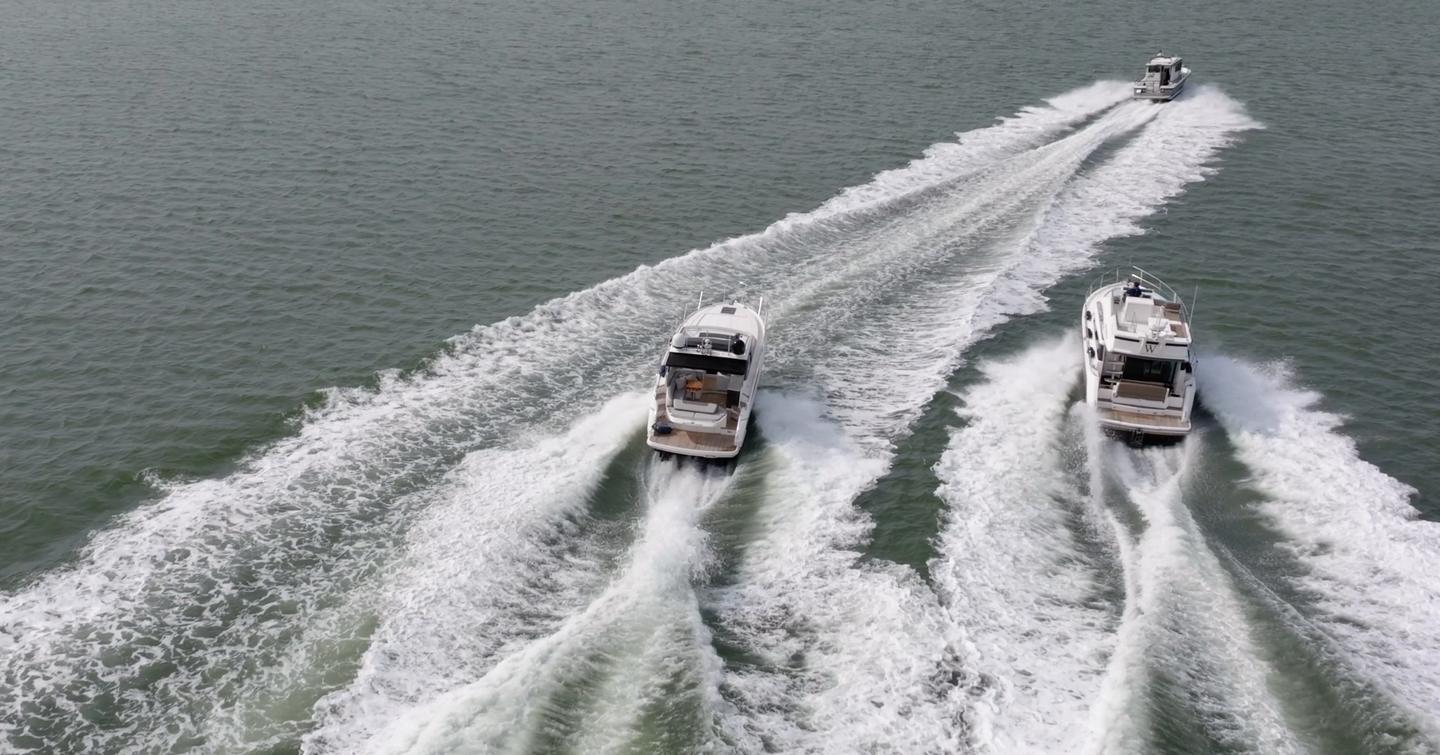
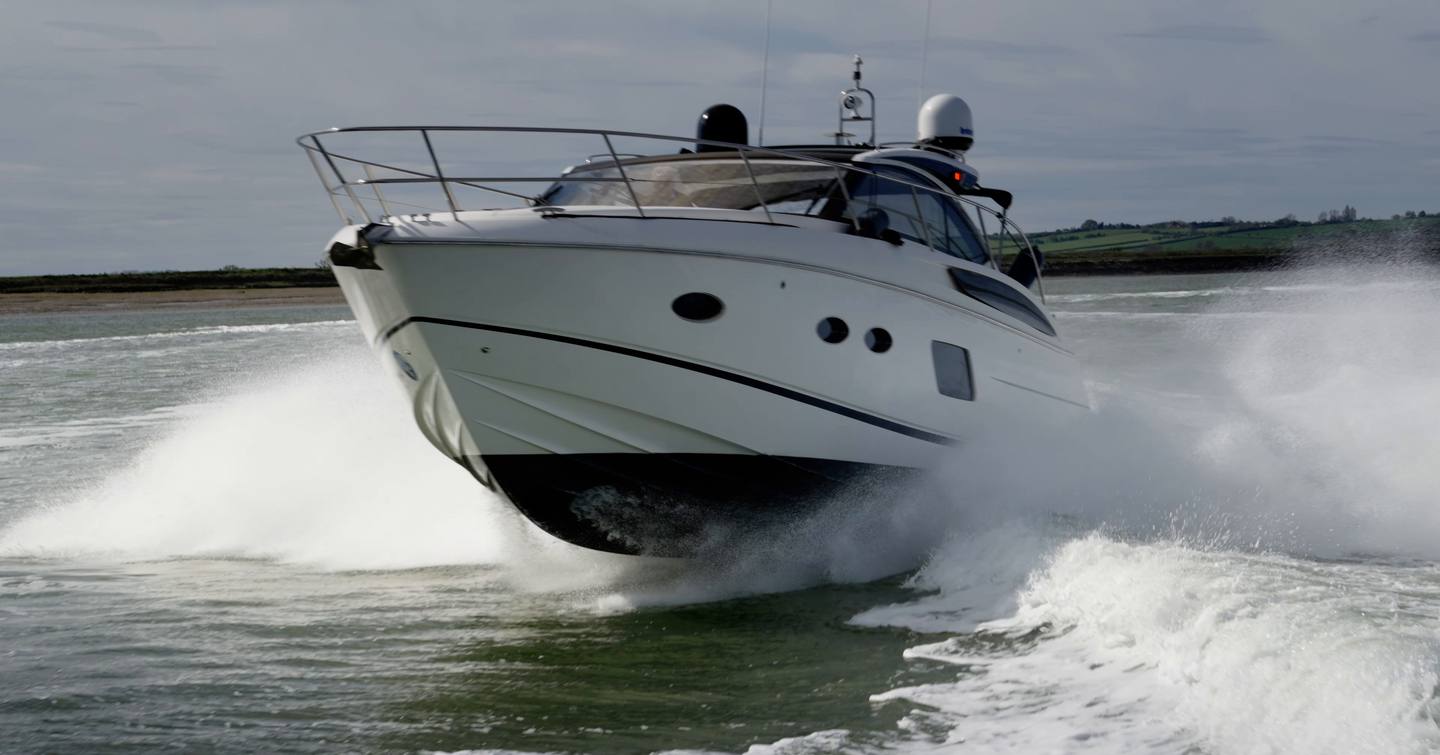
By the time the Princess V39 and Fairline Squadron 42 reached the turning buoy, Hugo Andreae's Botnia Targa 32 had already rounded it and was on its way back. So, it was a comprehensive victory, although the outright speed was only part of the story. Hugo held an easy 38 knots, eased off for the turn, then put the power back on and charged through the other boats' wakes. He later reported 39.5 knots, which is going some for a practical wheelhouse cruiser. Although, the conditions were almost disappointingly calm for a boat with such a formidable offshore reputation. Crossing a couple of wakes is hardly the same as tackling a nasty sea.
Of course, having 800hp in a boat with a quoted displacement of just 6.3 tonnes helps. The Squadron had 740hp to shift roughly twice that weight, while the Princess sat somewhere between the two. But it was the Targa's hull that really caught the others' attention. James reckoned he might claw back some ground through the turns, only to watch Hugo whip round the buoy as if the boat were on rails. He was genuinely astonished by how well it handled.
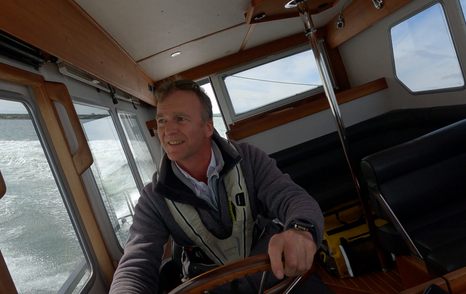
39 and a half. Right, I'm going to ease back. No need to show off any more than that.
Proud owner of an extremely limited-edition pair of Princess R35 socks.
Motor Boat & Yachting
The Princess finished a clear second, but there was a rather unexpected turn of events further back. Despite its weight and shaft drives, the Squadron proved surprisingly lively off the mark. In an extra drag race, Jack managed to get ahead of James's V39 before the lighter Princess eventually pulled past. James freely admitted he hadn't expected the old Fairline to be so quick out of the blocks.
Jack had already eased the Squadron back to 3,000rpm during the longer race, so its distant third place wasn't a fair measure of outright speed. He was quite content to enjoy the view from the flybridge, which was probably just as well given how far ahead the others were.
The Fuel Dock Challenge
The wind had other ideas about Hugo's plan to reverse the Targa onto the fuel pontoon. With his fenders already set on the port side, he wanted to come in stern-first and save himself the bother of shifting them. Trouble was, every time he tried to get alongside, the bow blew away. After several frustrating attempts, he abandoned the idea and came in forwards. It wasn't pretty, as Hugo readily admitted, but he got there. On the return trip, he switched to the outside helm for a better view and found that even the tiniest nudge of throttle from those powerful diesels made quite a difference.
James had considerably less trouble with the Princess. Its excellent visibility and unusual combination of bow and stern thrusters on a sterndrive boat helped him berth alongside the fuel barge at the first attempt. He couldn't quite reach the stern line, however, and on the way back the stern thruster seemed to have rather less authority than he'd hoped. The Squadron had no such luxury, relying on its twin shafts and a bow thruster. Jack was also getting used to some rather stiff electronic controls, while the view from the flybridge left one corner of the boat hidden. For all his concerns about windage, though, the old Fairline proved surprisingly manageable.
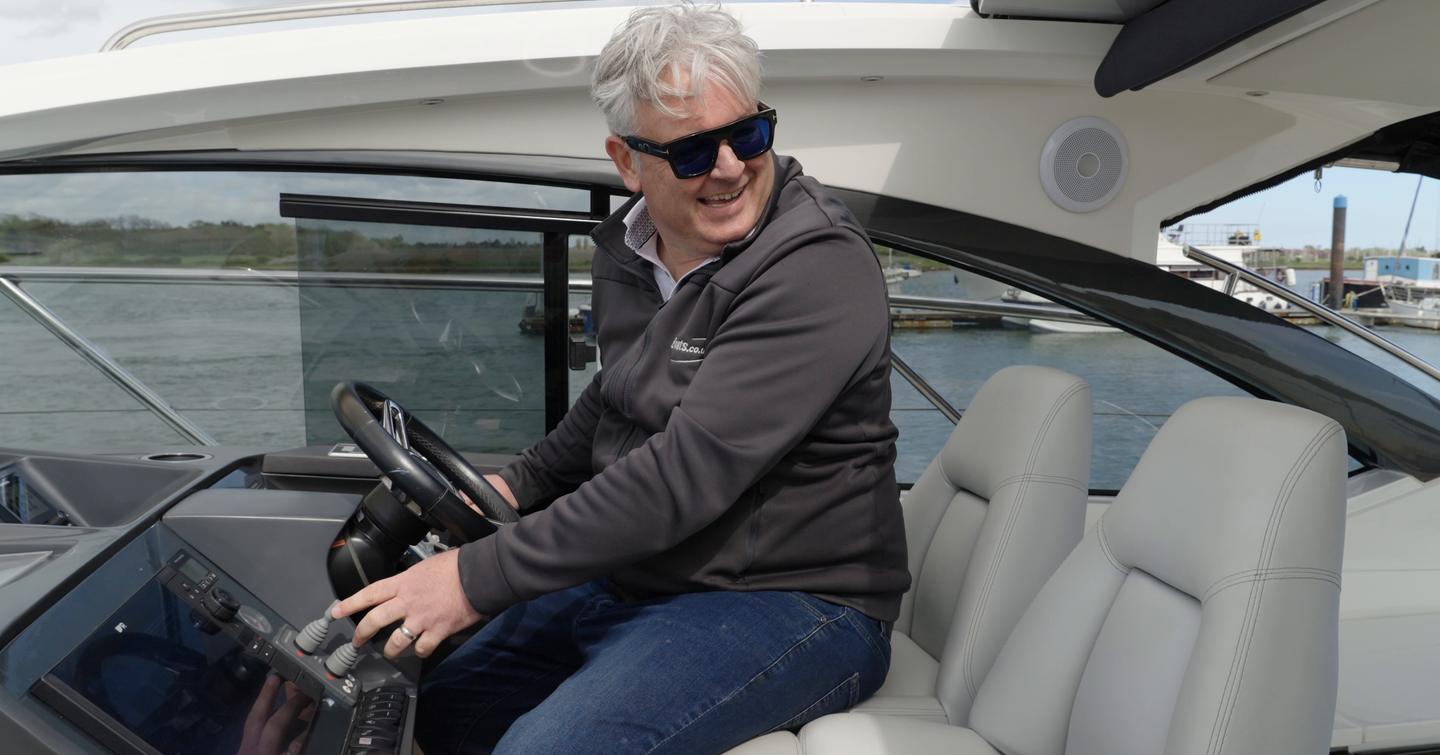
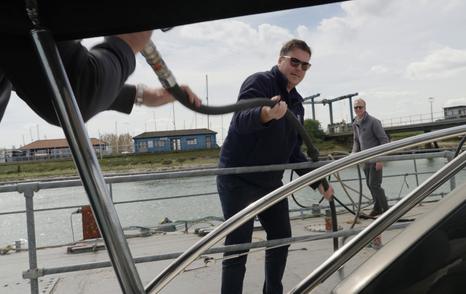
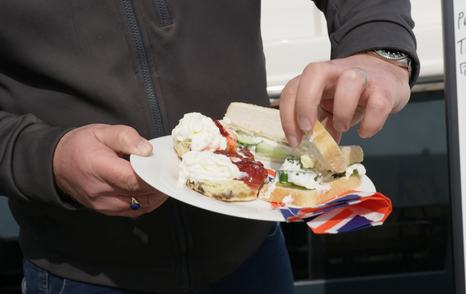
The stopwatch gave Jack the victory in 14 minutes 16 seconds, just 12 seconds ahead of James, with Hugo a more distant third on 17 minutes 33 seconds. There were a few qualifications to that result. Jack's berth was conveniently close to the fuel barge, the wind helped him on his way out, and the others were quick to question his advantage afterwards. Nor was this a pure test of boat handling. The clock kept running while each contestant bought £100 of diesel and attempted to make afternoon tea.
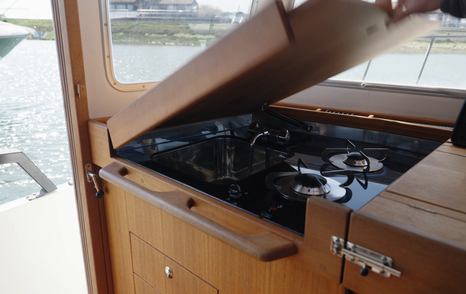
And what an extraordinary test of a galley that turned out to be. James needed to fire up the Princess's generator before his electric kettle would work, while Jack had enough space aboard the Squadron to lay out a respectable spread. Hugo's compact galley was rather more of a fiddle, especially when he discovered there was no gas available for the hob. He did his best with the cucumber sandwiches, but the cold tea cost him ten points. A missing gas cylinder is hardly something to hold against the boat, although the Targa's limited workspace was plain enough to see.
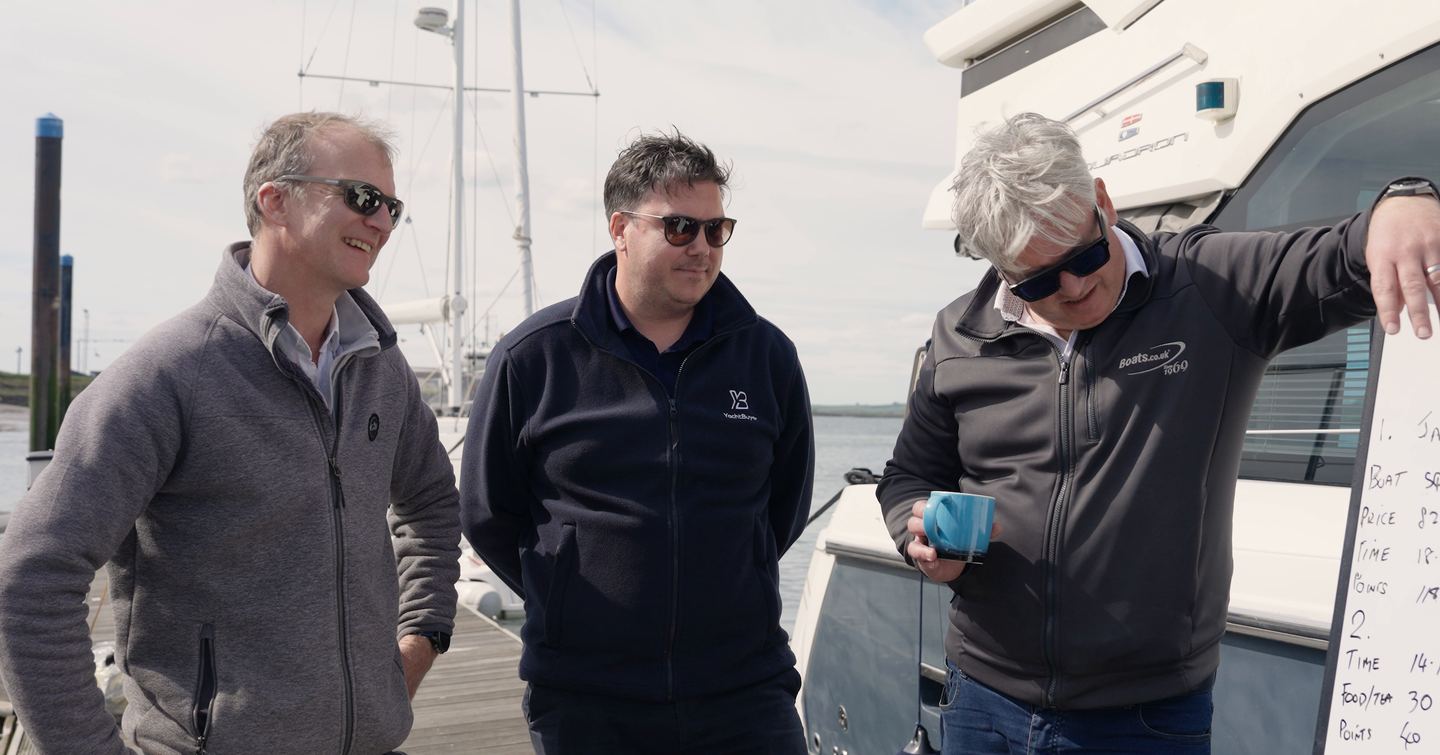
I think the Princess is a great all-rounder. It looks good. It's quick. It's comfortable. The visibility is...just absolutely amazing. But I can't get near you two because of the sandwiches debacle.
Big fan of the Rolling Stones. Wouldn't get a job at Subway.
Boats.co.uk
What £300,000 Gets You
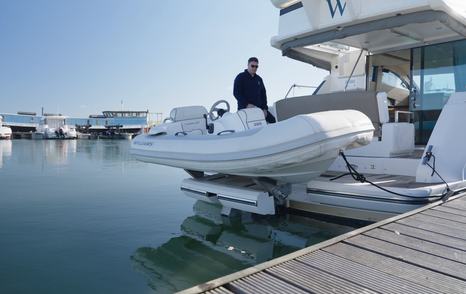
The Squadron 42 has a rather curious bit of engineering tucked into its stern. Its hydraulic tender launch system lowers a small section of the bathing platform to launch the Williams RIB, an arrangement that was all the rage when the model appeared in 2010. James recalls that used examples without it were actually harder to sell. Fifteen years later, the mechanism still works a treat, although Hugo has a point about the design. A full-width hydraulic platform gives you a far more useful space once the tender is off. This little section doesn't have much of a second career.
There's also Jack's wonderfully named 'smug chair', a reversible cockpit seat from which to watch less fortunate boaters struggle into their berths. With the tender aboard, though, its occupant ends up perched with their feet on a small rest. Fortunately, there's no shortage of somewhere to sit upstairs. The flybridge has a generous lounge, a grill, sink and even an ice maker. Hugo reckons the British weather might allow three days a year to enjoy it (little did they know we were about to enter the 2026 Heatwave).
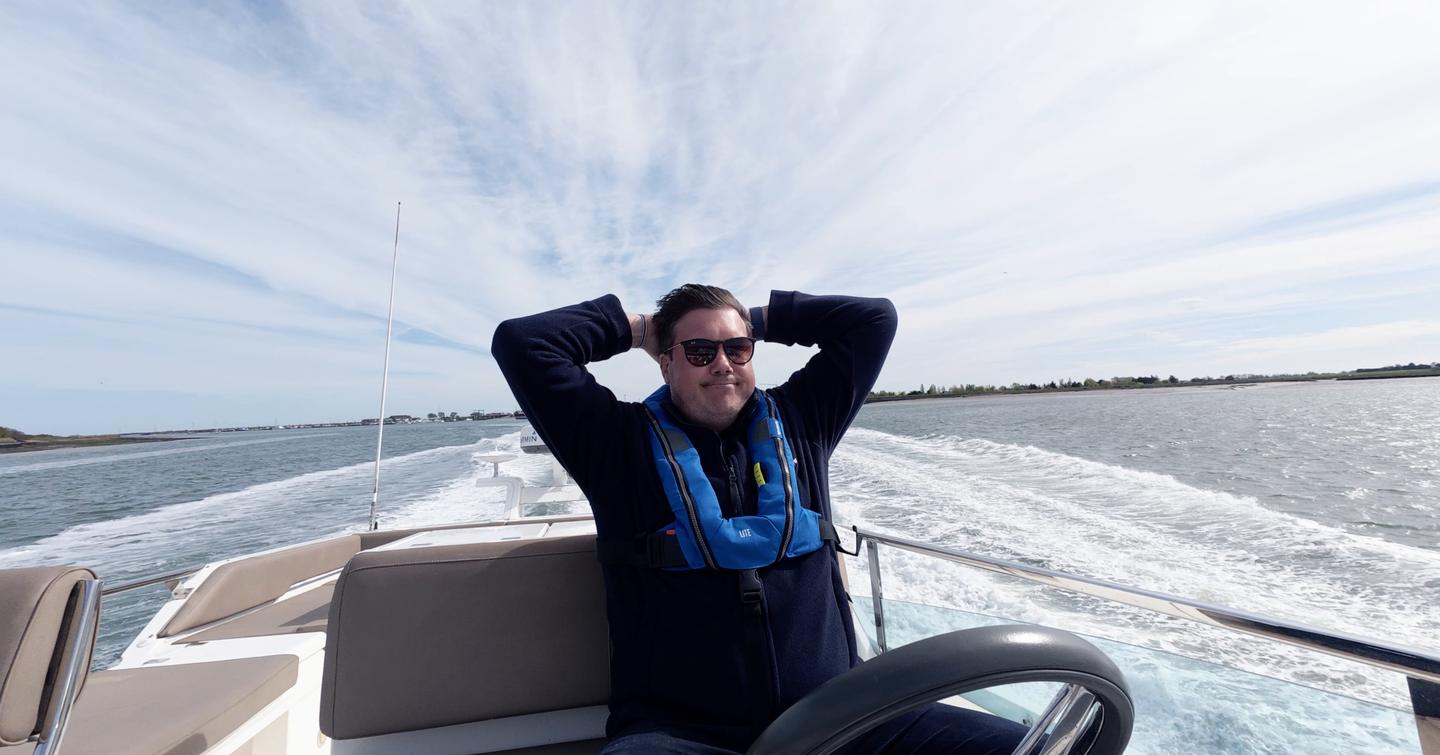
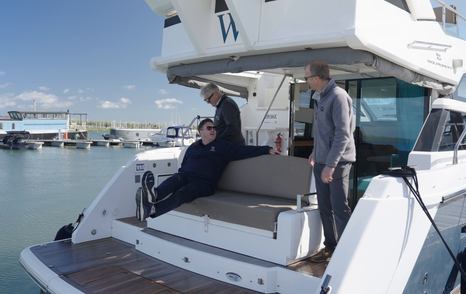
I'm not full of confidence, but I am very comfortable. This is why you want a flybridge boat.
Has a soft spot for toucans and the M&S sock department.
YachtBuyer
Inside, the galley sits a few steps below the saloon but remains open to it, and there's plenty of glass, including a large window in the forward double cabin. Both cabins have their own bathrooms, a luxury Jack is quick to remind the others about. The leather looks a little tired and some of the furniture has rather sharp corners, but it's the tiny TV and a built-in iPod dock that really give the game away. Good luck finding the right iPod to fit that.
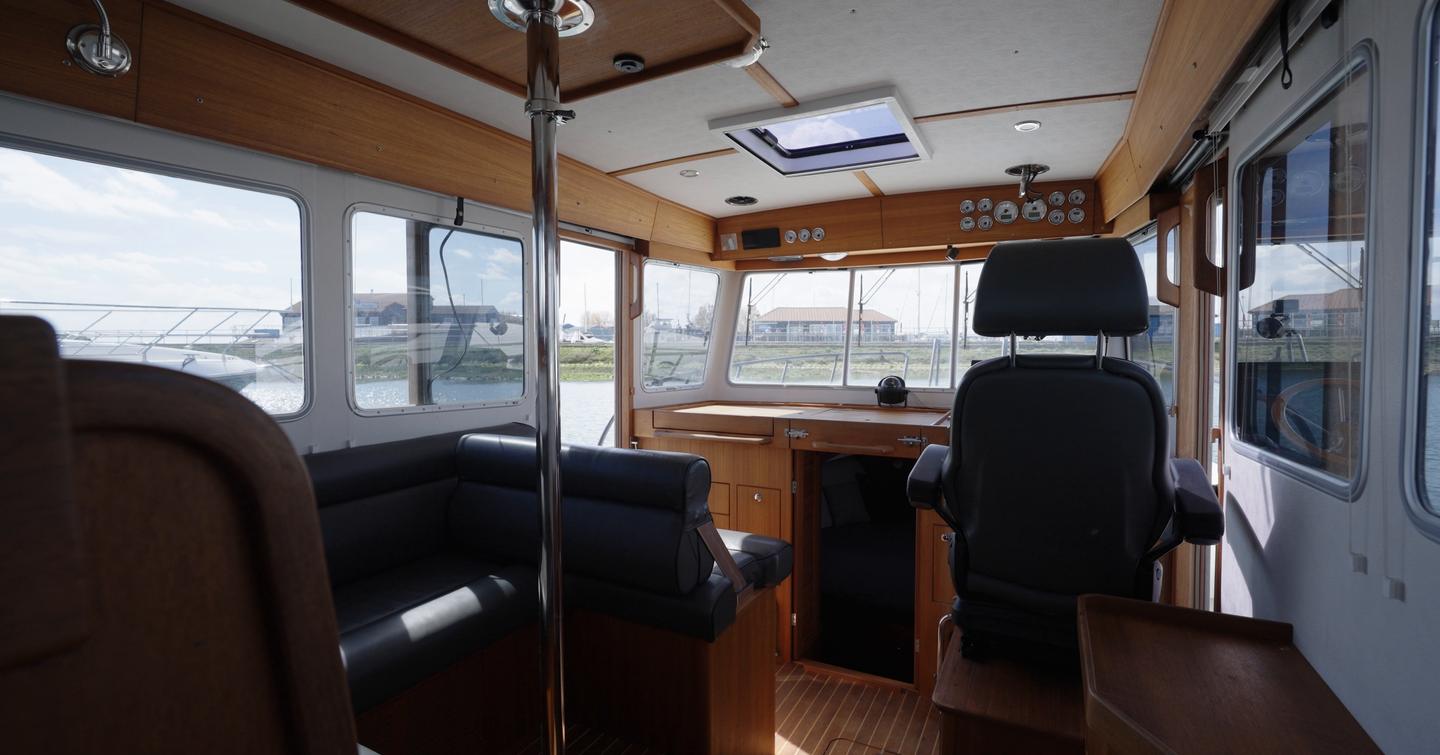
Hugo's Targa takes a very Scandinavian view of comfort. There are walkaround decks, an outside helm and a suspension seat for the helmsman, with a teak-lined wheelhouse that doesn't demand everyone remove their shoes. The accommodation is quite ingenious too, with two enclosed cabins and a saloon table that drops to create another berth. Hugo enthusiastically describes this as a third cabin, although even he might struggle to sell that idea to an estate agent.
Jack is more concerned about where anyone might sunbathe. Hugo's suggestion of a mattress on the wheelhouse roof, complete with retaining bars to stop his guest from falling off, doesn't entirely convince him. The Targa makes excellent use of its compact hull, but there's precious little space devoted to doing absolutely nothing.
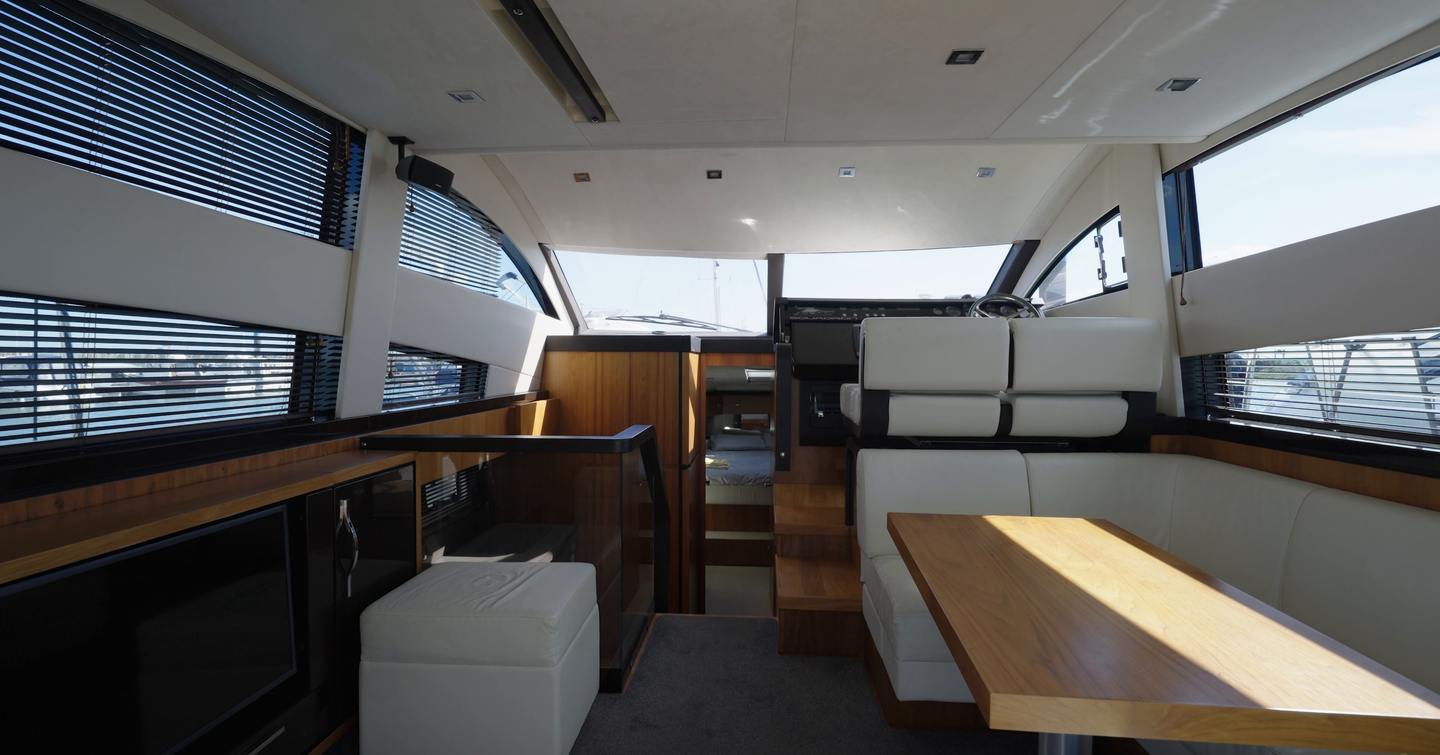
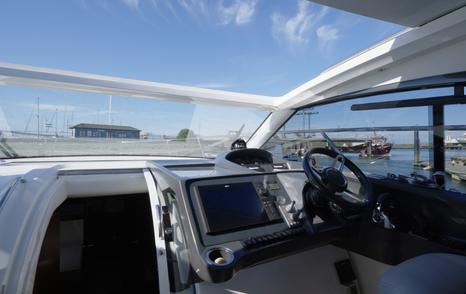
The Princess is perhaps the easiest boat to appreciate without having to make allowances for its age or purpose. James has a lovely cockpit beneath the large opening roof, and the 2015 interior still looks smart, with wooden floors and black tiled bathrooms. The finish impresses everyone, although Jack soon discovers the one omission that gives his Squadron a clear advantage. There's just a single bathroom for both cabins, however attractive the tiles might be.
The £300,000 Used Boat Trade-Offs
Fairline Squadron 42
✅Flybridge, two bathrooms, excellent living space
❌Dated equipment, plenty of windage, heavy steering
Princess V39
✅Good visibility, easy handling, strong all-round pace
❌One shared bathroom, less accommodation than the Fairline
Botnia Targa 32
✅Near-40-knot pace, excellent turns, walkaround decks
❌Compact galley, limited lounging space, lively low-speed response
Who Really Won the £300,000 Boat Challenge?
After choosing the Squadron 42, Jack took another look around James's Princess V39 and began to wonder if he'd made a grave mistake. Fair enough. The Princess was four years newer, handled the fuel pontoon neatly and eventually pulled ahead of the Fairline in their extra drag race. In fact, very little went wrong with James's boat all day. His cucumber sandwiches were another matter.
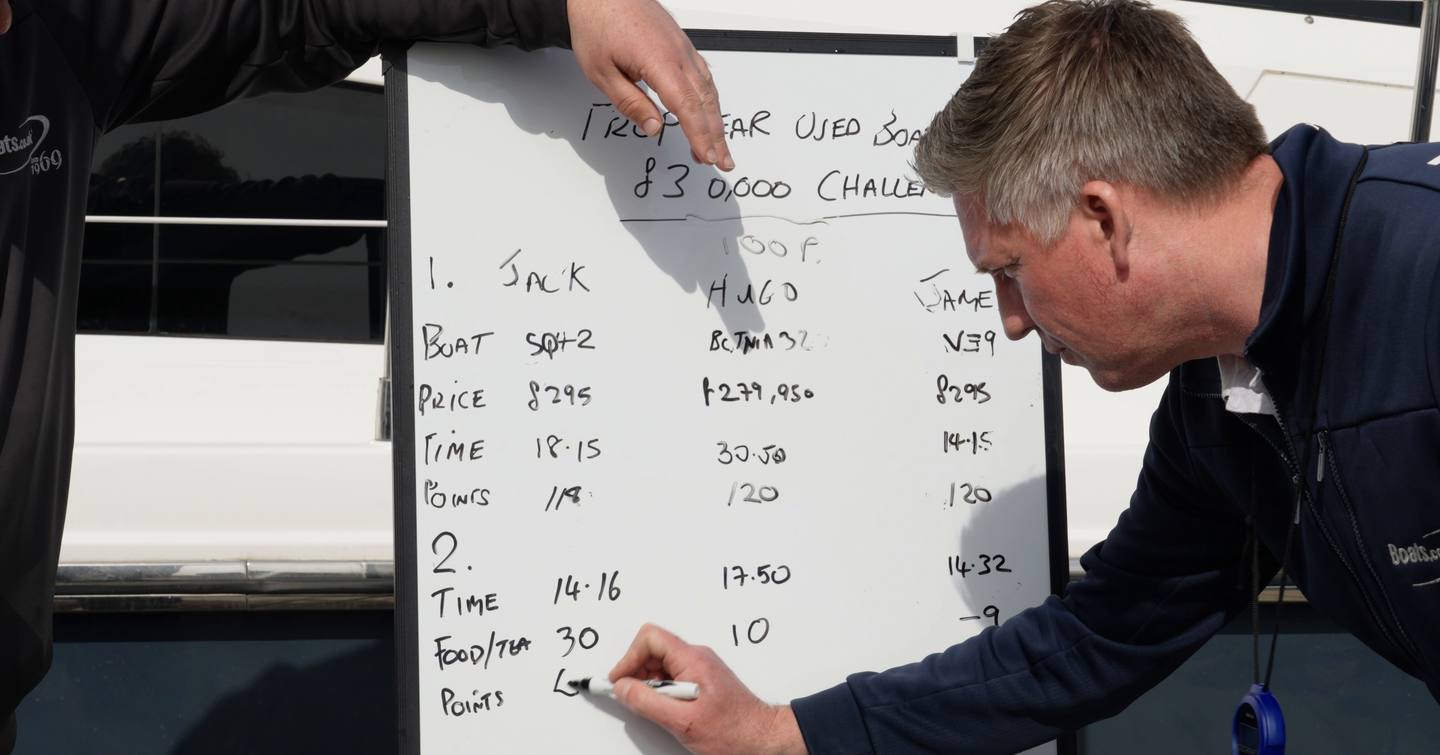
Hugo had won both races in the Targa, but his tea was stone cold so the final arithmetic required a fair bit of creative interpretation. Once the points had been rounded, disputed, deducted and handed back again, he and Jack were tied on 170. Like it or not, James, who supplied all three boats and had them for sale, was then invited to cast the deciding vote. He chose the Squadron. His reasoning was sound enough, although the scoring system probably wouldn't have survived an independent audit...
James's vote was defensible. The Squadron had the most room for a weekend away, and its age hadn't robbed it of much charm. The Princess had precious little wrong with it, either. Hugo's Targa, however, had done precisely what he'd chosen it to do, and neither of the others could get near it on the racecourse. A pretty convincing performance from the smallest and cheapest boat on the pontoon.
The boats in our challenge were advertised for less than £300,000 at the time of filming, but prices and availability change. YachtBuyer MarketWatchtracks listings and asking-price changes. For a closer look at the individual models, explore all Fairline Squadron 42s for sale, Princess V39s for sale and Botnia Targa 32s for sale.
Looking for a used boat? Cast the net wider and browse used boats for sale under £300,000 to see what the same budget buys today.


