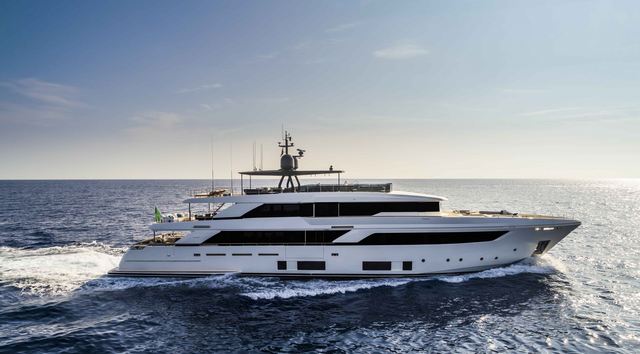
What stands out straight away is how much emphasis is placed on usable space, particularly down at the waterline, where the beach club becomes a central part of the boat.
So slick is the design at the aft end of that yacht, you'd struggle to recognise that there is a tender garage neatly integrated into the transom. This is partly what creates so much usable deck space, as there is no need to cater for a crane on tender storage on deck and the foredeck in particular benefits from this design decision. Inside, there's the familiar five-cabin arrangement with main deck master that you'd expect on yacht of this type but there is some flexibility in the lower deck that lends itself to charter.
Custom Line Navetta 38
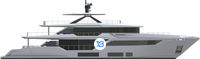
- LOA 38.76m
- Model Year 2024
- Cabins 5
- Crew 8
- Max Speed 15 knots
- Status In Production
- Yacht Type Superyacht
- Use Type Cruising
- Vessel M/Y Telli
Review Video
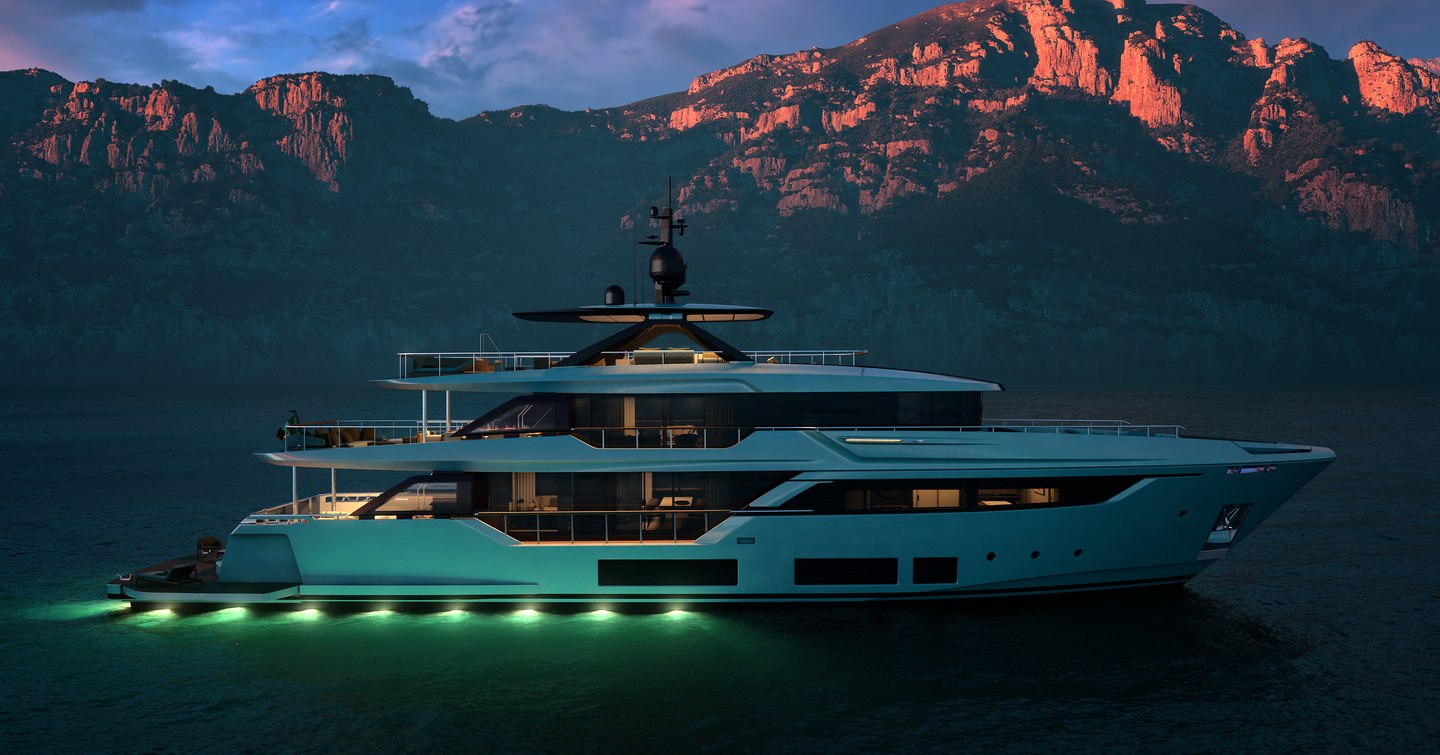
The Custom Line Navetta 38 is a 38.76m displacement yacht built at Ferretti Group’s Superyacht Yard in Ancona. It belongs to the Navetta line of long-range cruisers, and it sits right in the middle of that range, which gives it a bigger role than the numbers suggest.
It also replaced the Custom Line Navetta 37 outright. New emissions rules coming into force in 2025 meant more space was needed in the engine room, so the old platform could not stretch far enough. Rather than compromise, Custom Line started again, and at the same time fed in what owners of the 37 had said about how they actually use their boats. That mix of regulation and real-world feedback informs a lot of what you see here.
The way the yacht comes together reflects how Ferretti Group builds at this level. Product Strategy, led by Piero Ferrari, defines the platform, and the Engineering Department handles the hull and systems integration. Filippo Salvetti is responsible for the exterior, ACPV ARCHITECTS shapes the interior architecture, and Custom Line Atelier works with each owner to personalise the final result.
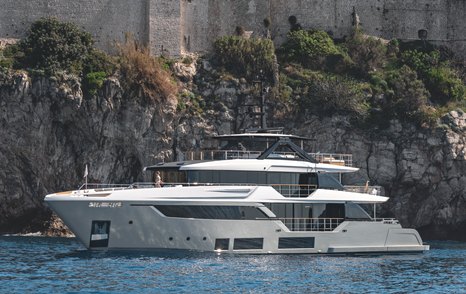
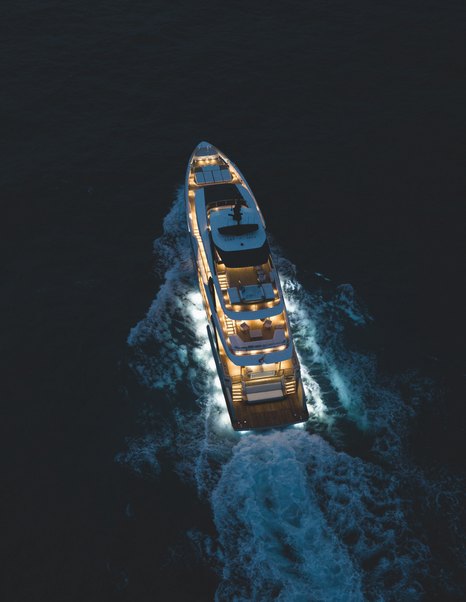
Structurally, this is a composite displacement yacht, with both hull and superstructure built in GRP . The interesting part sits in how the structure has been adapted to support the amount of glass. Large window openings bring their own loads, so metal reinforcement is built into key areas of the superstructure to keep everything rigid . At the same time, the build puts a lot of effort into reducing noise and vibration, with floating floors, heavy insulation, and properly sealed doors used throughout.
Salvetti’s exterior work does not chase trends. The proportions stay familiar, the lines stay restrained, and the whole thing leans on balance rather than detail. There is a shift from the Navetta 37, though. Surfaces are cleaner, glazing is pushed further, and the bulwarks sit lower, which lightens the look and opens the boat up visually.
TELLI, the first hull, is where all of this lands in practice. Launched in January 2024, it is owned by Ferretti Group CEO Alberto Galassi, and that makes it more than a standard first build. It is used as a demonstrator, but it also carries direct input from someone who knows exactly how these boats are meant to work. That influence runs through the boat in ways that are not always obvious at first glance.
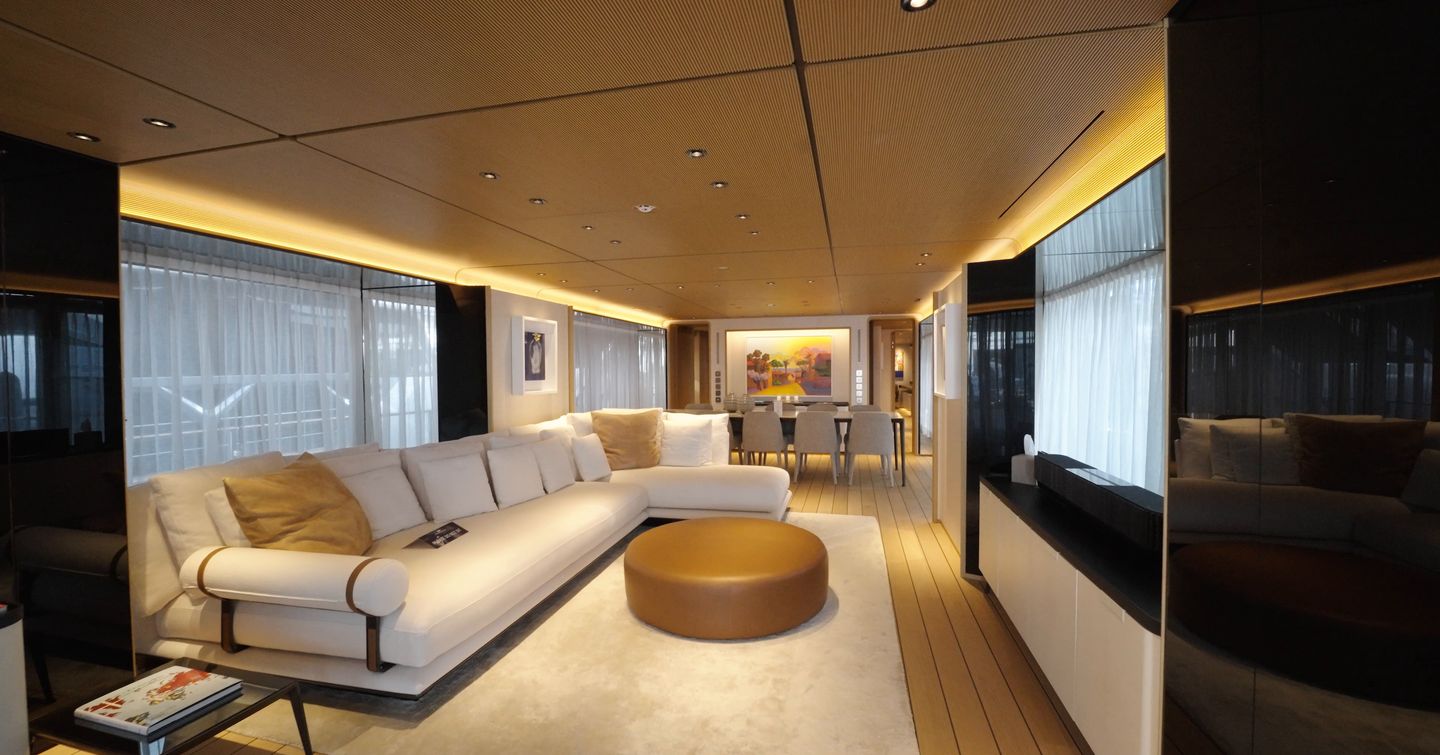
Main Saloon
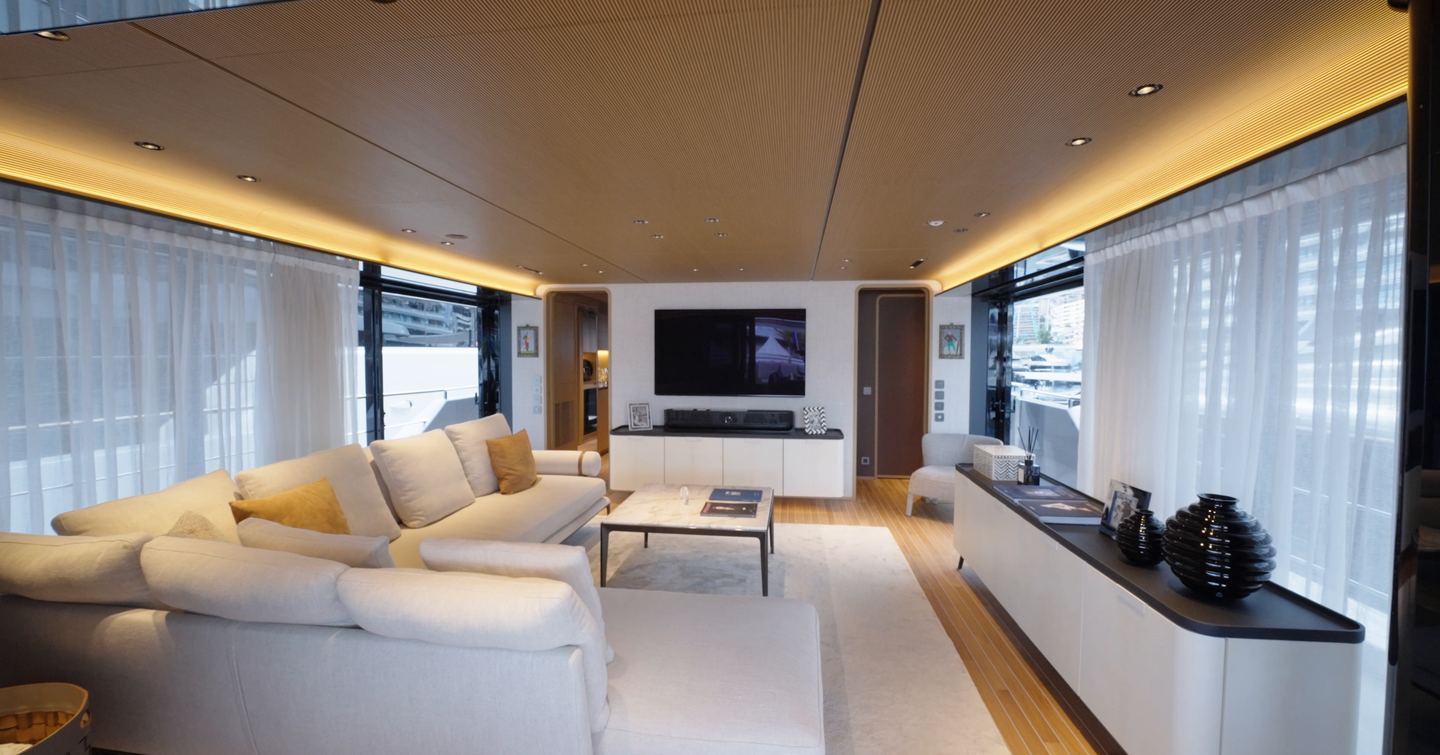
The decor is light in the main saloon, and it’s meant to be, because the idea is to let the artwork stand out. You’ve got light flooring, pale timber overhead, and softer panelling running through the space. Then, within that, the seating is set up around a sofa facing the TV, so it’s a very easy layout to use day to day.
The TV itself drops down from the ceiling when you need it, with a soundbar opposite, so it stays out of the way the rest of the time. They’ve also popped a little fridge into the saloon, which makes sense because the galley is quite a long way forward.
It’s also a really bright space, helped by the large windows and sliding doors, which you can open up to get some air moving through. And then there are small things that just make life a bit easier, like the labelled lighting controls, so you’re not guessing what each switch does.
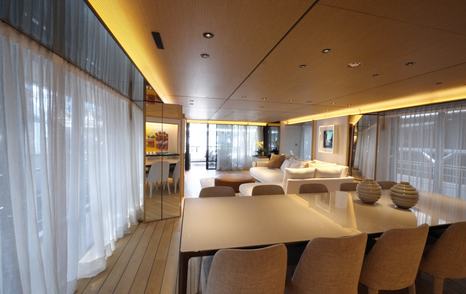
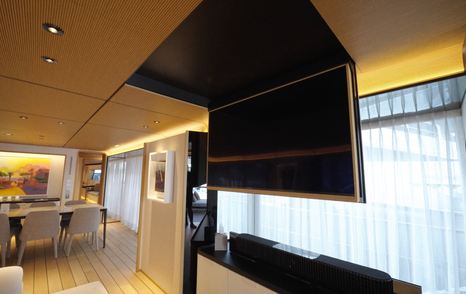
Bridge Deck Saloon
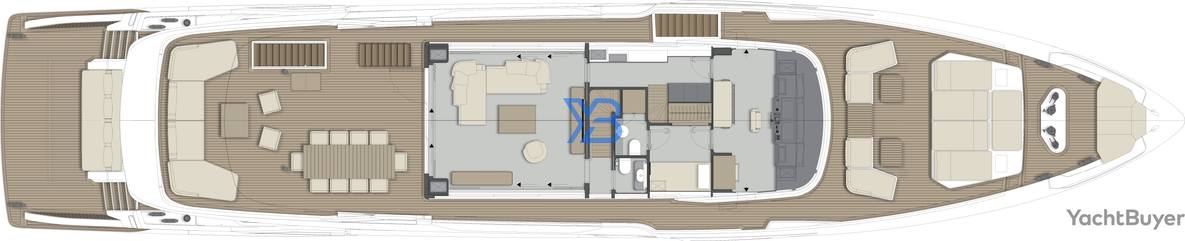
Around to the other side of the bridge, the space opens out into the upper saloon, with a crew pantry sitting between the two. The pantry itself is a nice big space, with fridge storage, a coffee machine, and direct access down to the crew accommodation.
Beyond that, the bridge deck saloon feels softer and more relaxed, with sliding doors on both sides that keep it connected to the deck outside. Inside, an L-shaped sofa anchors the space, creating a cosy area to sit and unwind.
Opposite this, a large TV and sound system are built in, with storage running along the side to keep everything tidy. What stands out again is the use of timber overhead, with integrated lighting picking out the detailing as it runs through the centre of the ceiling.
It also links straight back out to the bridge deck aft, so the movement between inside and outside stays easy. From here, a day head sits on this level, and steps lead down to the main deck below.
Owner's Cabin
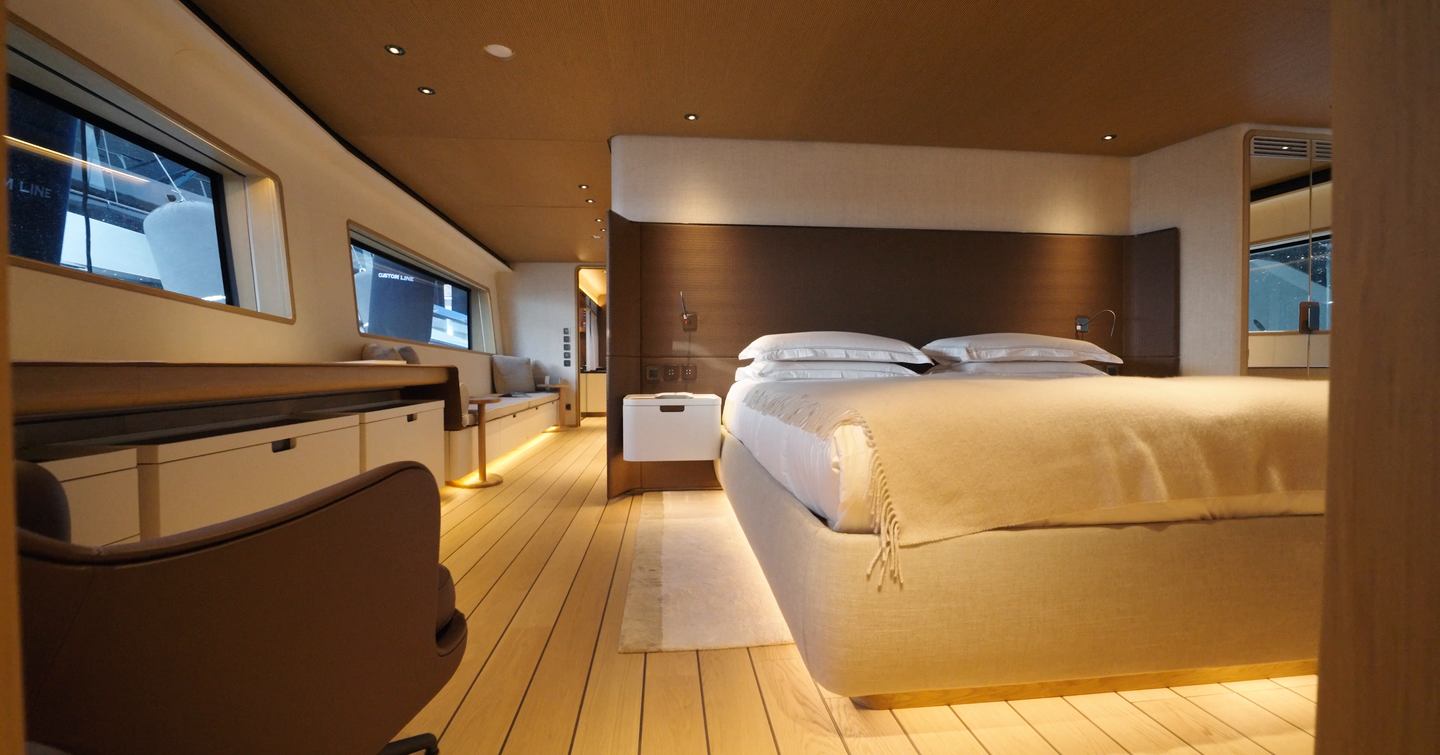
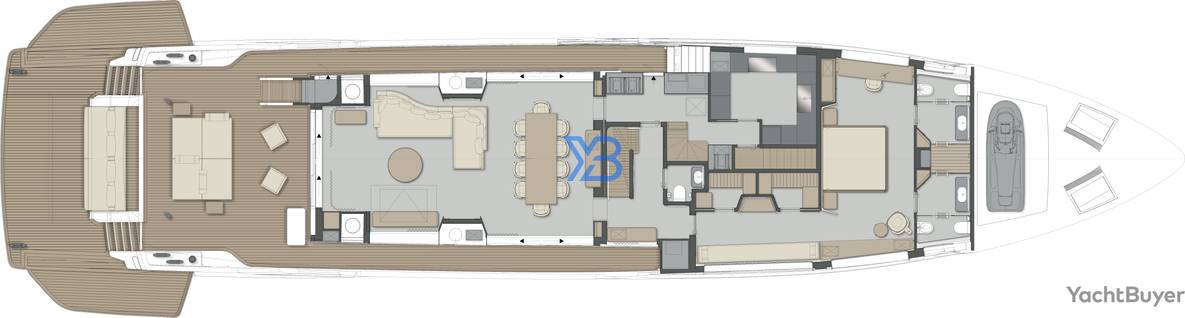
From the saloon, the layout leads forward into the owner’s cabin, set right at the front of the main deck. As you come in, it feels like a proper full-beam space, with plenty of headroom and two big windows bringing in a lot of light.
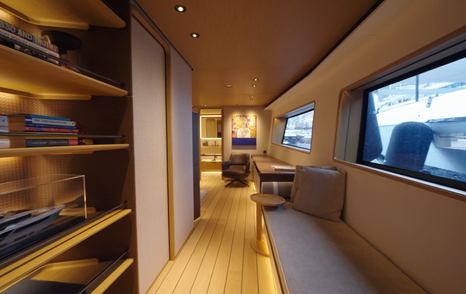
On the way in, there’s a big walk-in storage area, which takes care of bulkier items without eating into the main cabin itself. Along the starboard side, a long chaise runs beneath the windows, with side tables either end, so it’s somewhere to sit and take in the view when you’re at anchor.
Then the bed itself sits centrally, with a lovely big setup and floating side tables that keep the space open around it. Around this, the same mix of timber, fabrics, and textured panels carries through, adding depth without making the room feel busy.
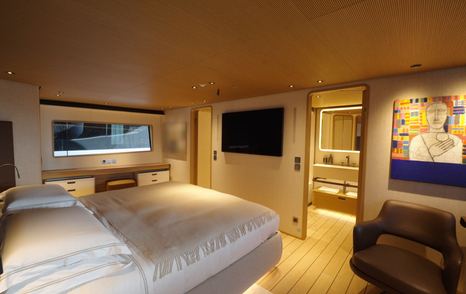
There’s also a bureau and additional storage built in, so everything you need is close at hand. Up ahead, space is set aside for a large TV with integrated speakers, built cleanly into the forward bulkhead.
And then right forward, the bathroom is split across both sides, with separate toilet and sink areas and a large shared shower in the middle.
Guest Cabins
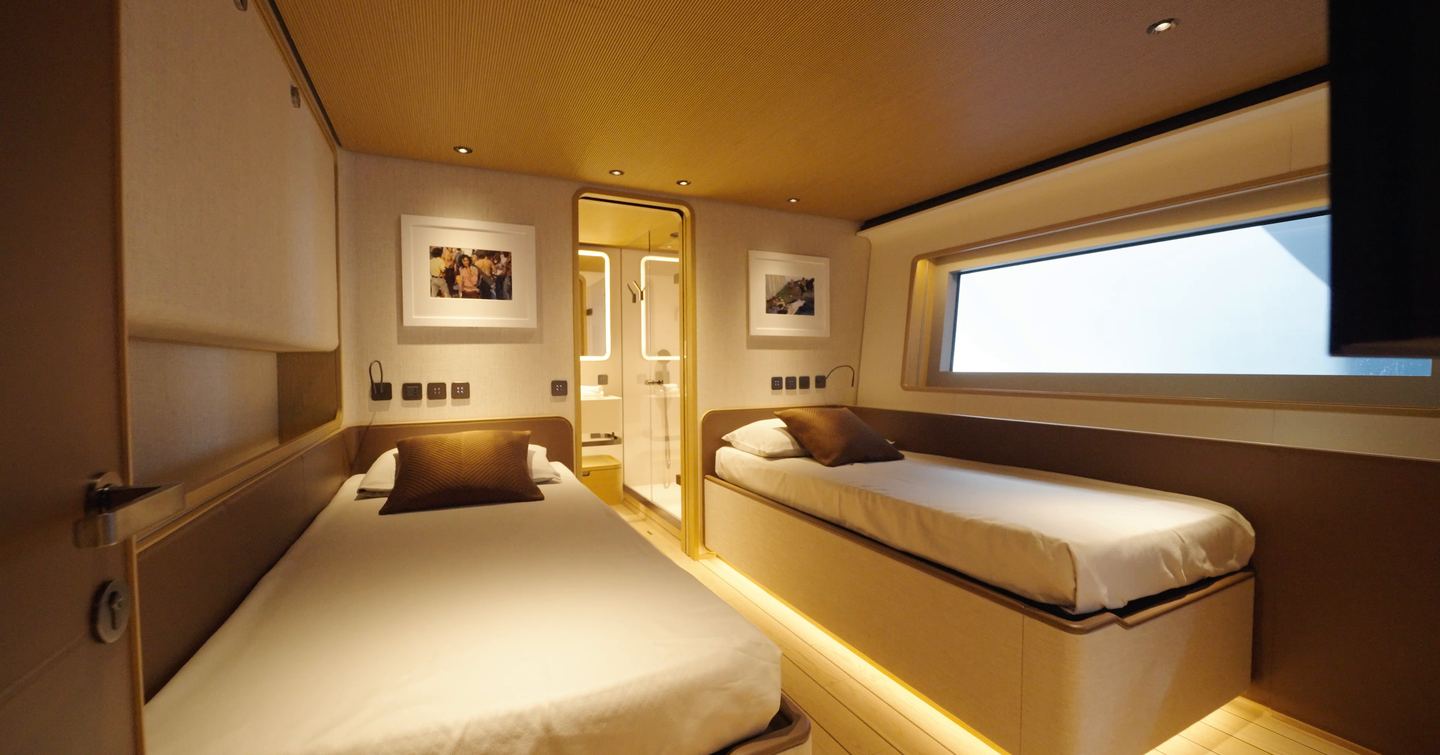
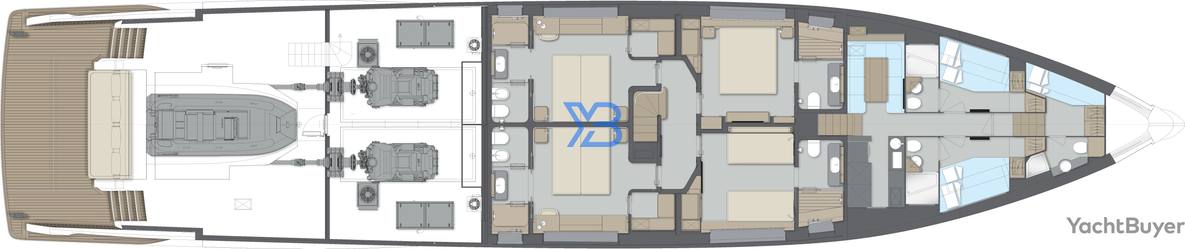
From here, steps lead down to the lower deck, where the guest cabins are laid out. First thing, it’s a good mix, with two doubles, a slightly larger VIP, and a twin that includes a Pullman berth.
The doubles are pretty much identical, with a lovely double bed and floating side tables that mirror what you get up in the owner’s cabin. Storage isn’t quite as generous as on the main deck, but there’s still plenty of hanging space, drawers, and shelving, along with a good-sized window to bring in natural light.
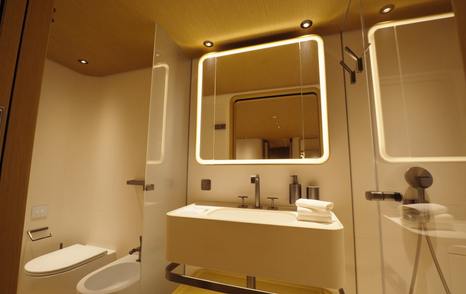
Each cabin also has its own bathroom, with a separate toilet and shower, finished in line with the rest of the yacht.
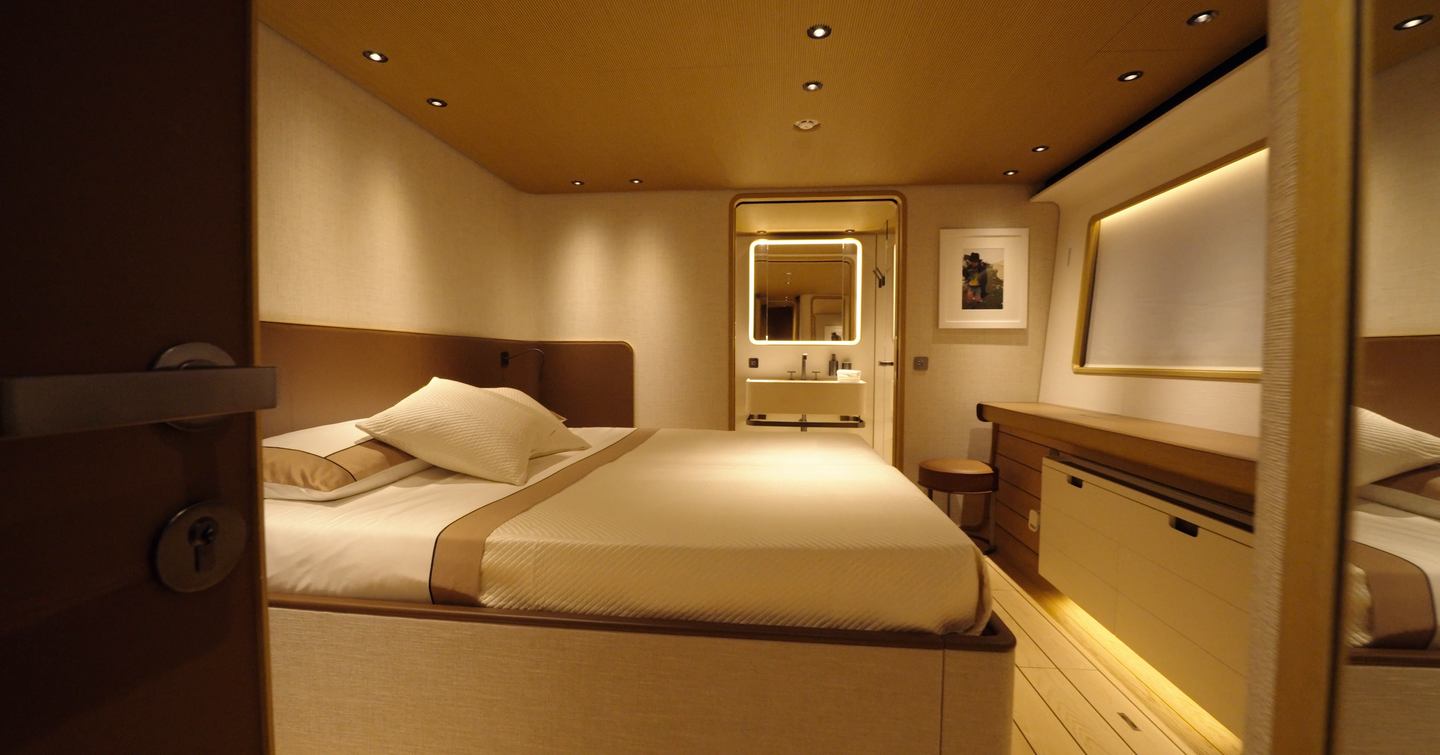
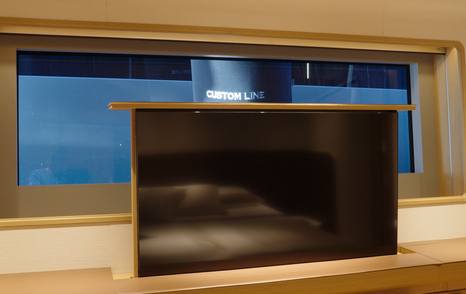
Moving across to the VIP, the layout is similar, but you get a bit more space around the bed, so it’s easier to move around and get changed. There’s also a pop-up TV built into the cabinetry, although it does sit in front of the window when raised, and the bathroom uses sliding doors to open the space up when needed.
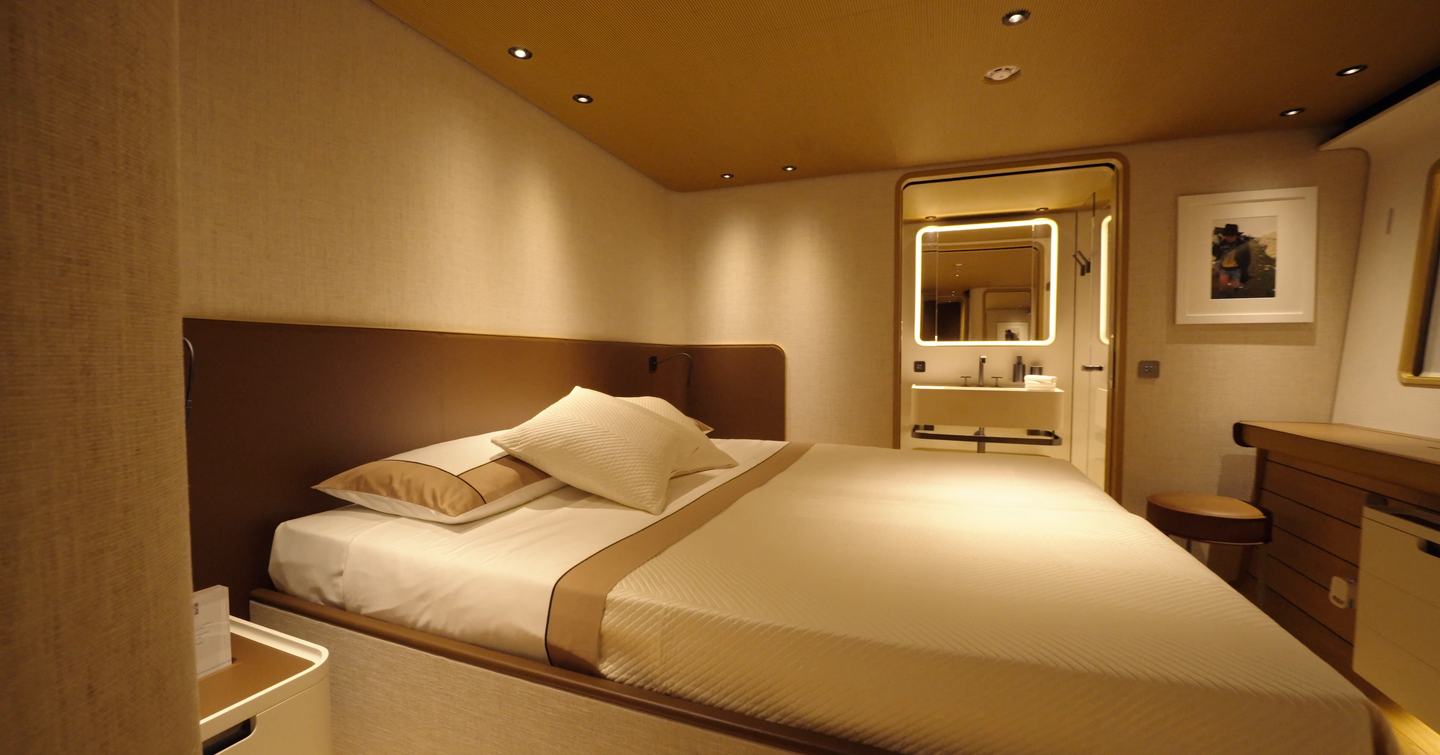
Then finally, the twin cabin adds a bit more flexibility, with a Pullman berth that drops down to sleep a third guest if required. Otherwise, it follows the same approach, with a good-sized window, a wall-mounted TV, and storage built in around the space.
The bathroom here doesn’t split the shower and toilet, but it still has a large shower area with enough room to include a seat.
Galley
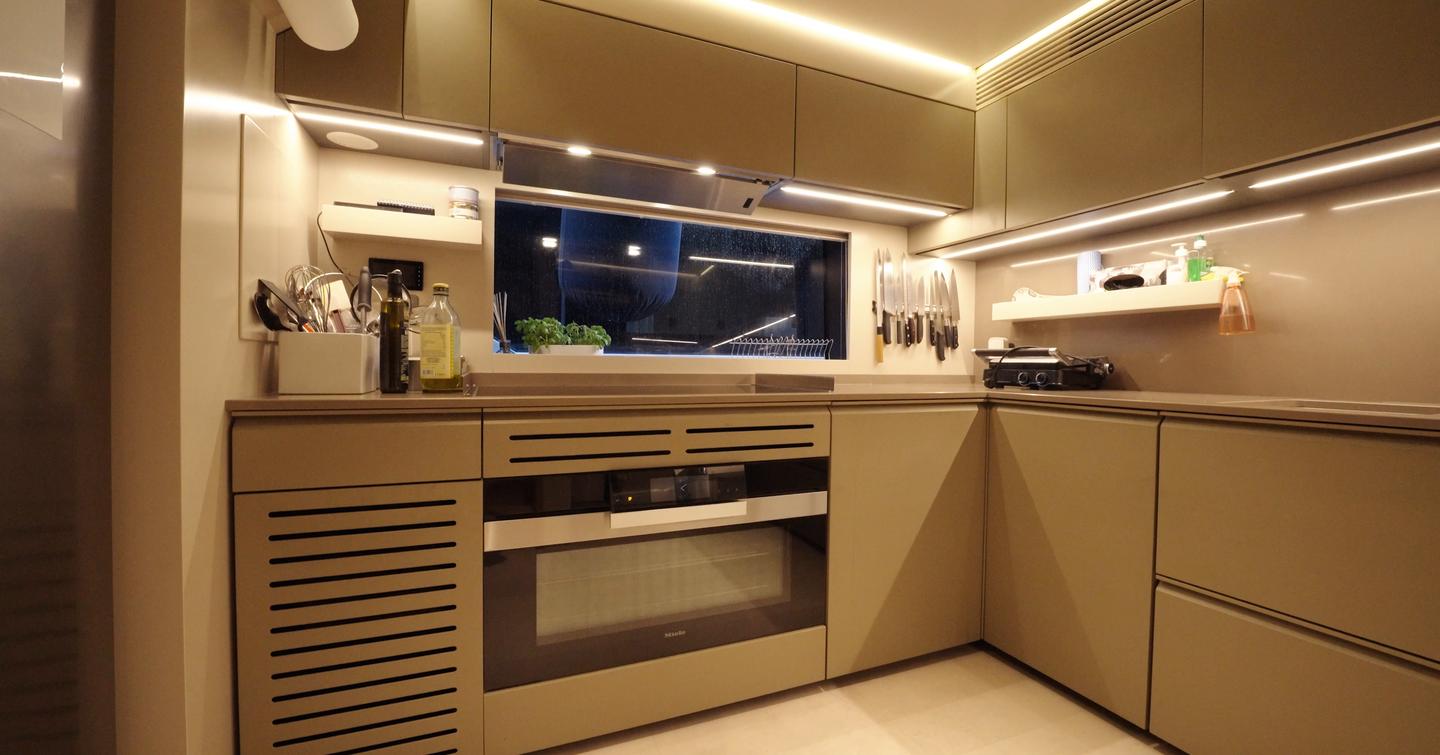
Just forward of the main saloon, the galley sits on the main deck, and it’s quite a long way forward, which helps keep it separate from the main living space.
In terms of setup, it’s well equipped, with a nice big induction cooktop, extraction overhead, an oven below, along with a microwave and dishwasher built in. Alongside that, there’s a good amount of countertop space, and an American-style fridge freezer, so it’s set up to handle longer stays on board.
It also links directly into the crew circulation, with stairs leading down to the accommodation below, so service can move through here without crossing into guest areas.
And being on this level means the chef gets natural light and a view out, rather than being tucked away below deck.
Crew Space
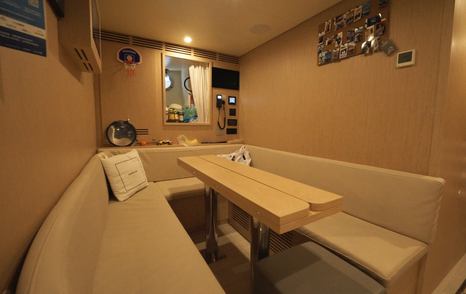
Down below, the crew mess provides a space to sit, eat, and relax, with a screen in place so they can keep an eye on what’s happening around the boat. There’s also a dedicated laundry area built into this space.
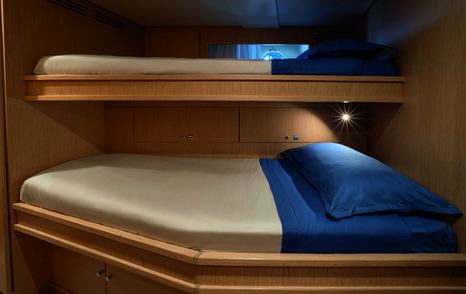
Forward of this, three bunk cabins provide accommodation for the crew, with good headroom carried through despite the stepped layout. Each cabin is set up with a pair of bunks, storage built into the side, and a porthole for natural light.
They also have access to shared bathrooms, while the captain’s cabin sits separately up by the bridge.
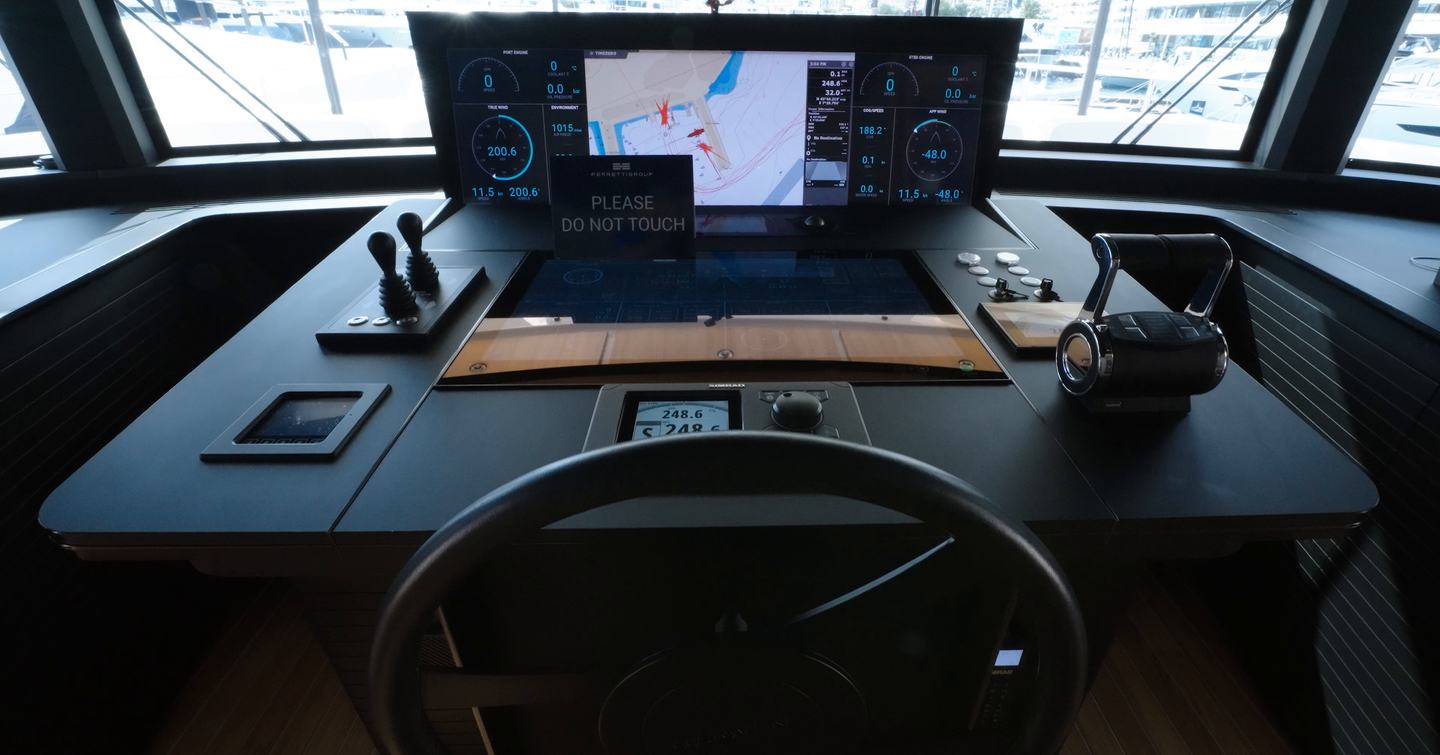
From the deck outside, the bridge sits just inside, and it immediately feels more focused and contained. At the centre of it, a single helm pod brings everything together, with the main screen, throttles, and control systems all within easy reach.
The seating works as both a leaning post and a proper seat, so you can run the boat standing or sitting depending on conditions. What stands out is how easy it is to move around the helm, with cut-outs that let you step forward and get a proper look over the bow when needed.
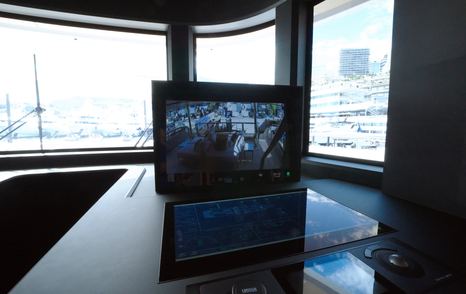
To either side, additional screens and working areas give you space for navigation or paperwork, so it doesn’t all have to happen from one position. All of this comes together in a setup that is easy to read and easy to move around, which is what matters when you’re running a boat like this.
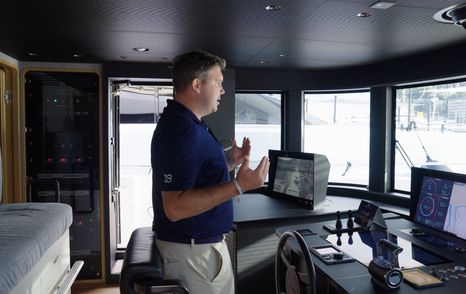
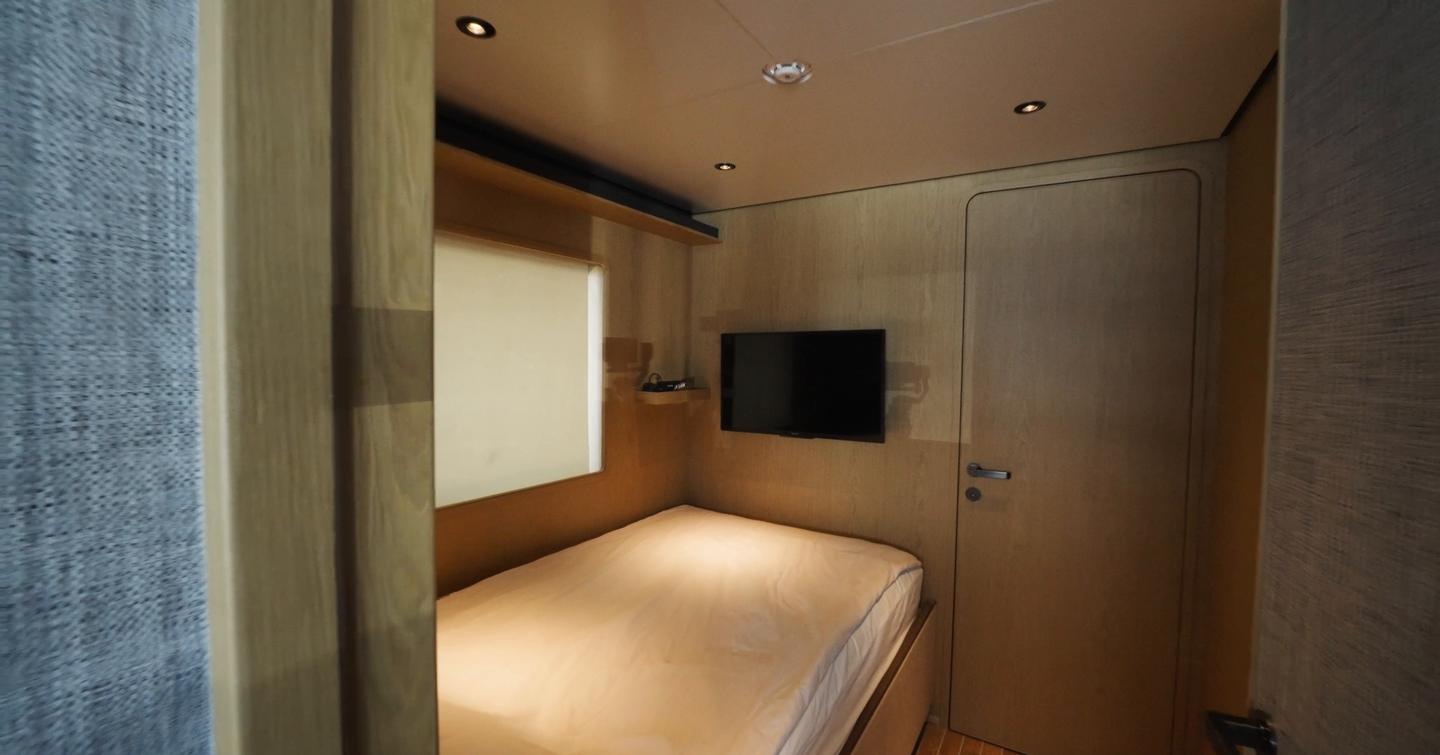
Just aft of the helm, the captain’s cabin connects directly to the bridge, so access is quick without needing to step out onto deck.
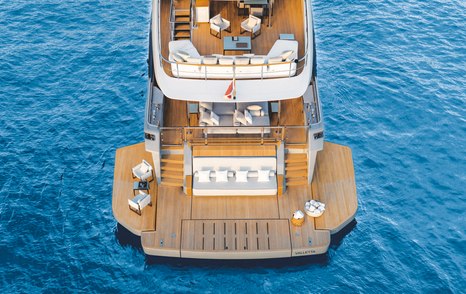
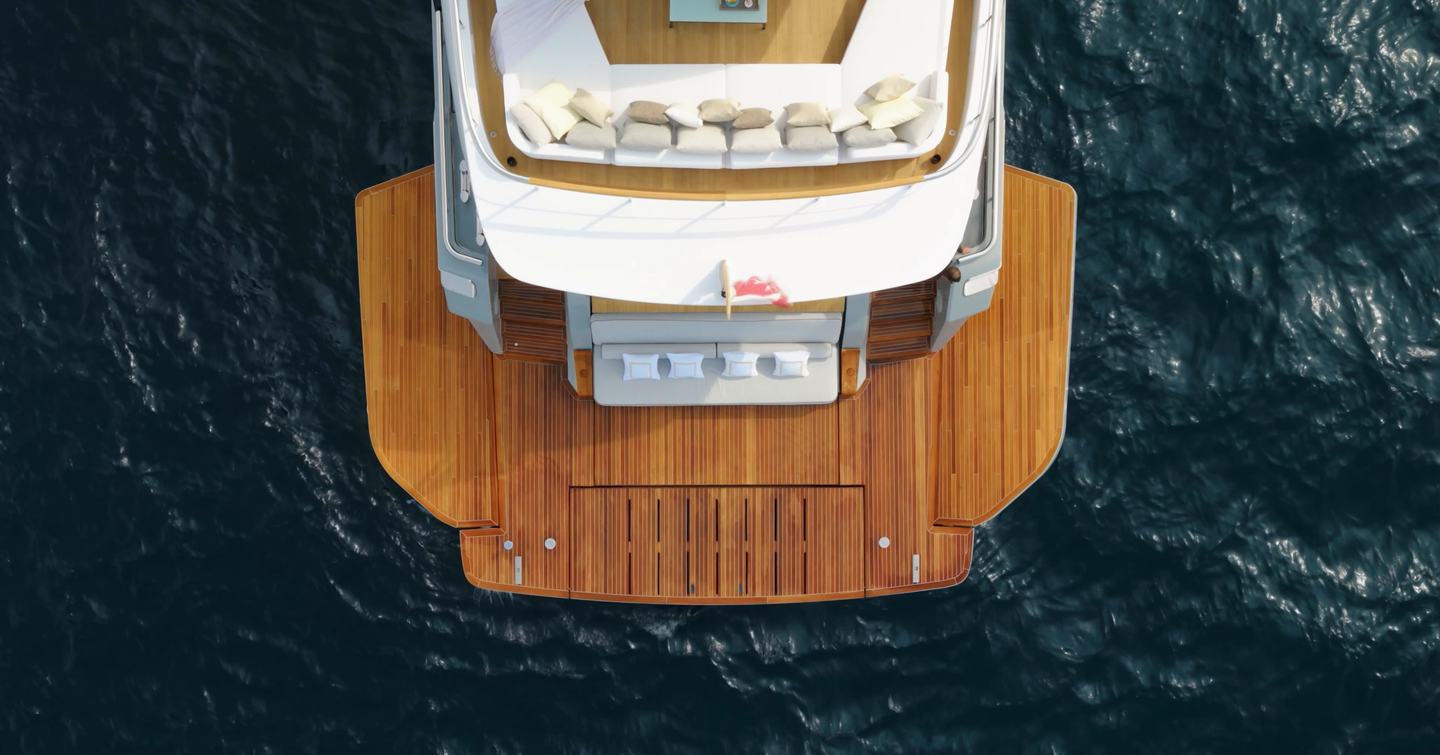
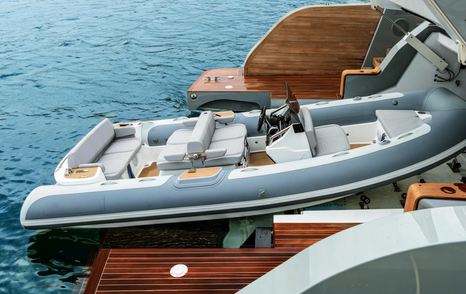
On a yacht of this size, a lot of attention will naturally be on the space at the waterline, and the Navetta 38 leans into that straight away. At the stern, a long, full-width swim platform forms the base of the whole setup, and it sets the scale for everything that sits above it.
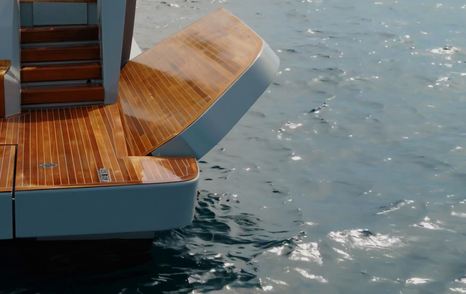
Part of that platform drops down and also forms part of the tender garage system, so when it lifts, it reveals space for a 5.5m (18ft) tender. Alongside that, fold-down terraces open out from both sides, widening the footprint and turning what could be a narrow strip into a much broader, more usable area.
So instead of pushing this space up onto a higher deck, everything happens right at water level, which brings you much closer to the sea and makes it feel like part of the surroundings rather than a separate zone. At the same time, the structure above gives it a degree of shelter, so it is somewhere you can spend time rather than just pass through.
That balance is helped by the glass transom, which keeps a visual link back into the cockpit and stops the whole space from feeling closed off.
Cockpit
Steps lead up from the platform into the main deck cockpit, and the connection between the two spaces is kept deliberately open. That openness comes from the way the area is arranged, with freestanding furniture rather than fixed seating, so the layout can shift depending on how the owner wants to use it.
Around the edges, small fold-down seats are built into both sides, and they give crew a place to wait on lines during berthing without getting in the way. Above this, the overhang from the deck above provides full shade, and the use of timber overhead softens what could otherwise feel quite hard.
It also makes this a working space as well as a social one, with enough cover for crew to operate here when coming into a berth, while still leaving it open enough to use as part of the main outdoor living area.
From here, the layout continues upward, with the next level given over to dining and lounging on the bridge deck.
Bridge Deck Aft
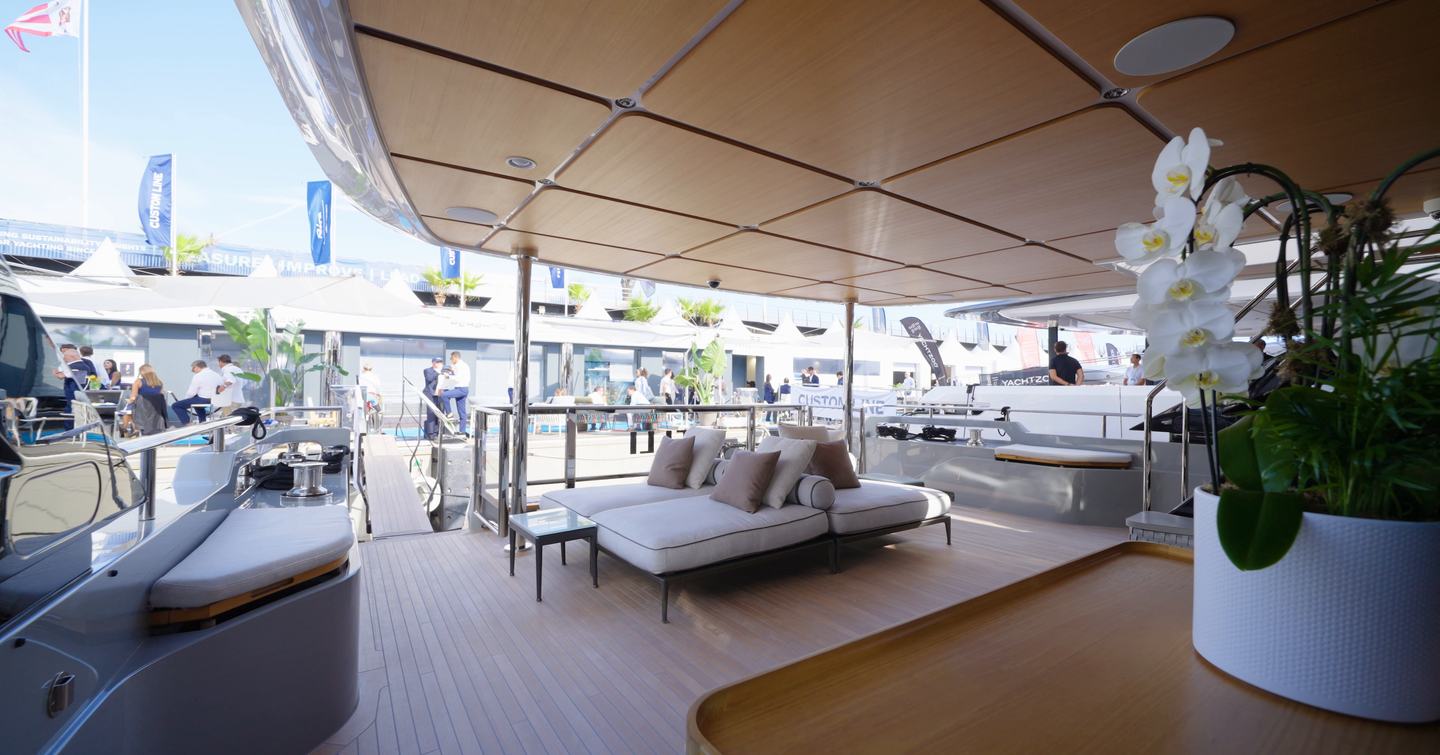
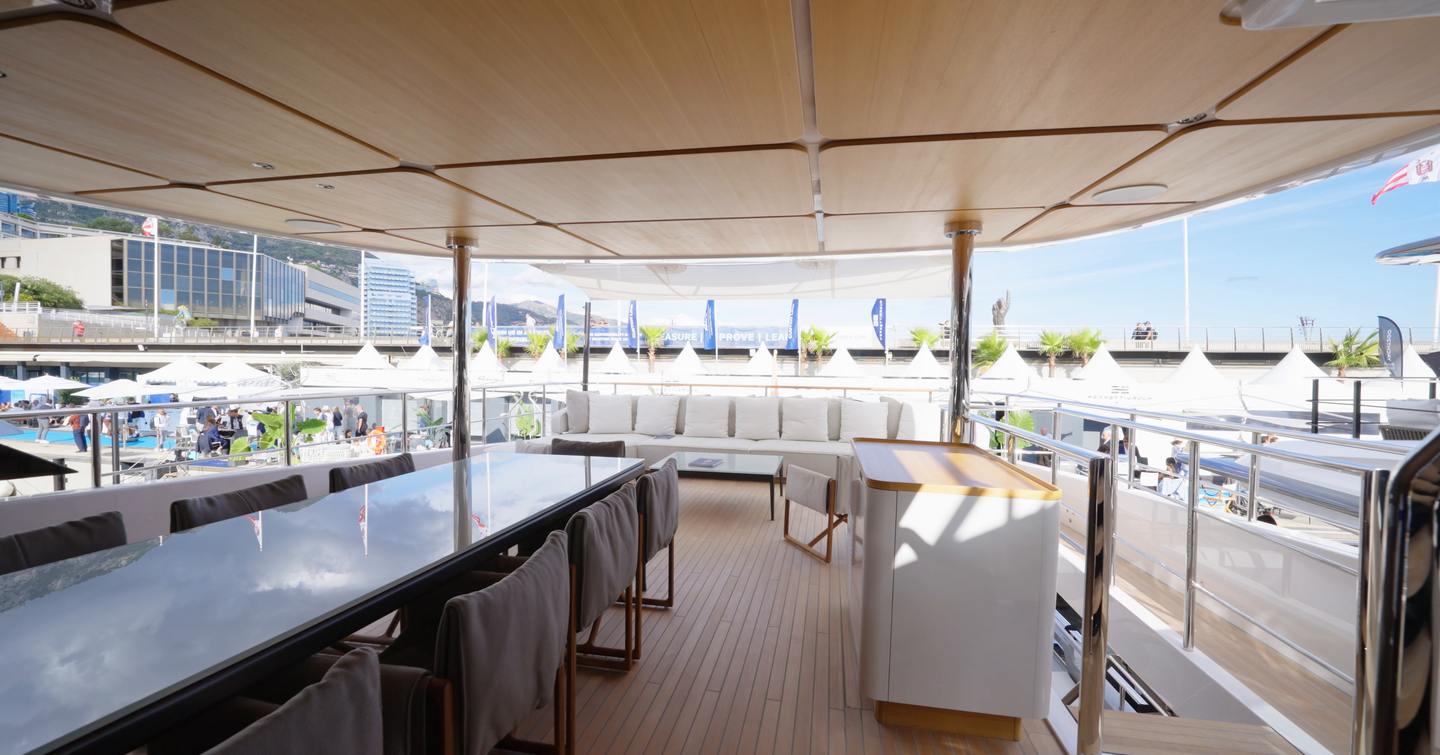
Steps lead up again to the bridge deck aft, which becomes one of the main social areas on board. At the aft end, a lounge space is arranged around a low table, giving this part of the deck a more relaxed feel.
Forward of that, the layout shifts into a proper outdoor dining area, centred around a lovely big table set beneath the overhang. That overhang gives the space proper protection, so it can be used throughout the day rather than only when conditions allow.
It also works well from a service point of view, with a pantry just inside the saloon, so food can move out here quickly without cutting through guest areas.
From here, side decks run forward without interruption, linking this level directly to the foredeck lounge.
Side Decks & Foredeck
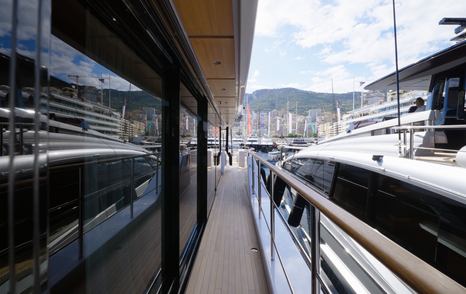
Side decks lead forward to the foredeck, and access up here is handled well, with wide walkways and proper handholds along the way. As you arrive, the finish stands out straight away, with timber used across the deck and overhead sections, which breaks up what could otherwise feel like a lot of stainless steel.
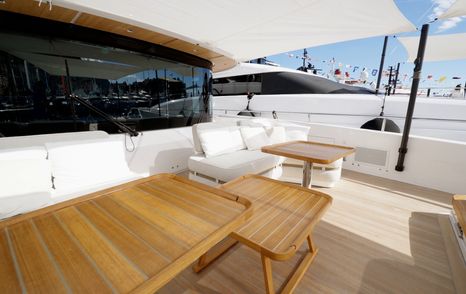
The layout itself is built around two L-shaped sofas, set apart to leave a clear walkway through the middle, so you get really good circulation across the deck rather than having to step around furniture. Around this, the sunpad area is set up with adjustable backrests on both sides, so it can face forward or aft depending on how you want to use it.
It’s the smaller details that land well, like the built-in trays for phones and sunglasses, which stop things sliding around when the boat starts moving. Right forward, the space shifts into a working area, with the anchor gear and mooring equipment laid out cleanly without taking over.
But even here, the material treatment carries through, with timber details softening what would normally be a purely functional space.
Sun Deck
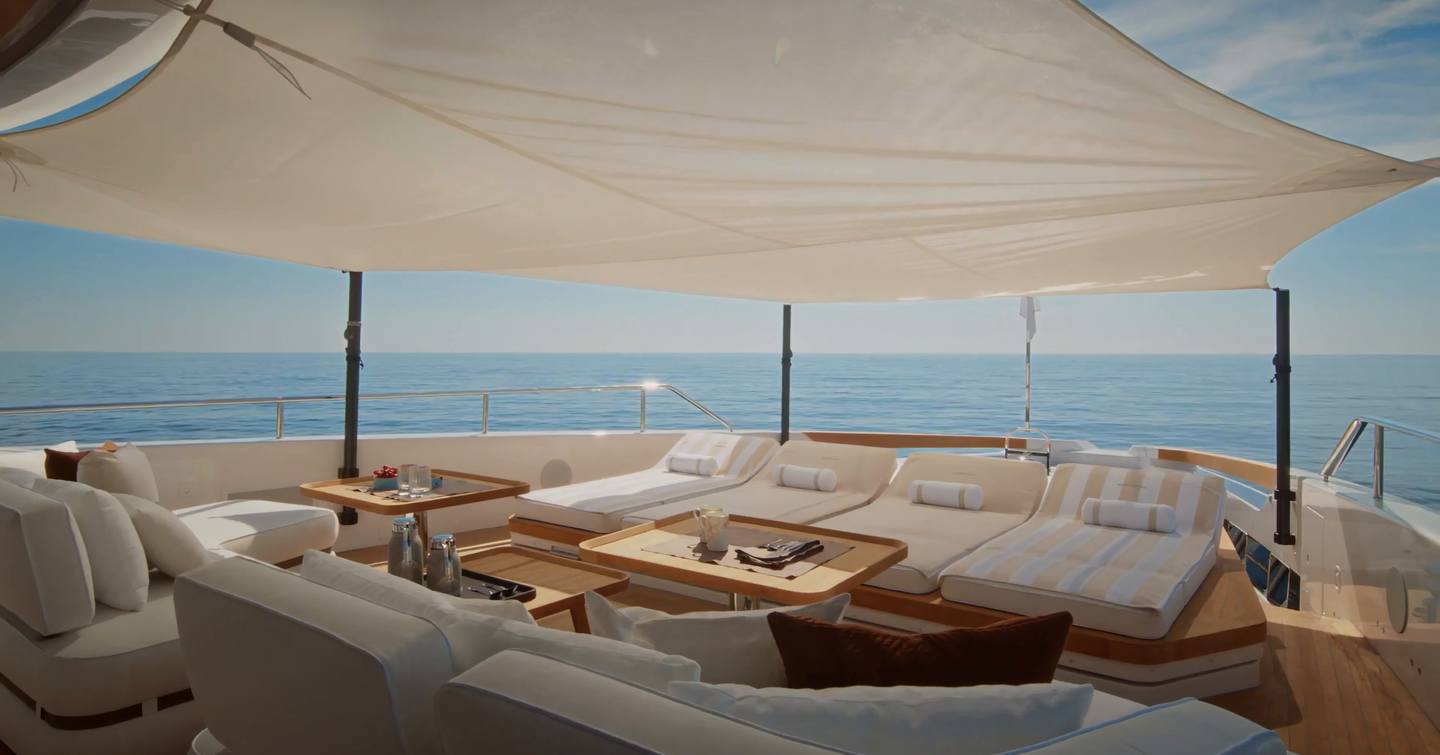
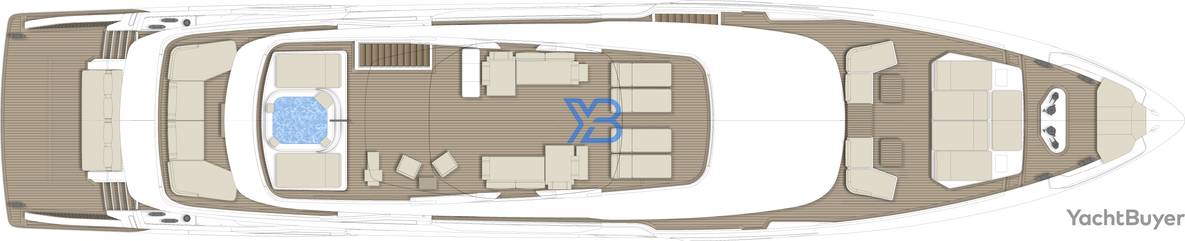
The sundeck is where the yacht opens out the most. Up here, it’s easy to see the appeal, especially with a hot tub set right at the aft end, looking out over the stern.
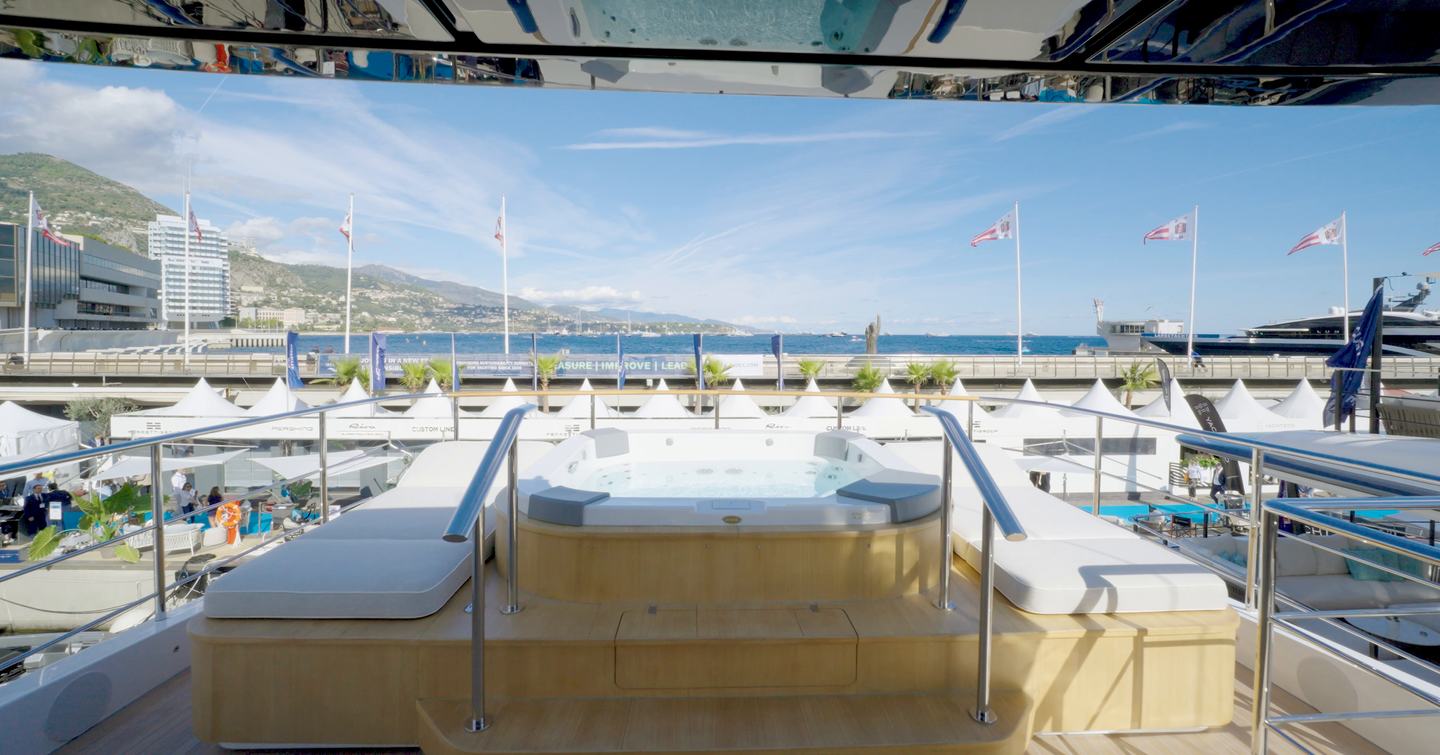
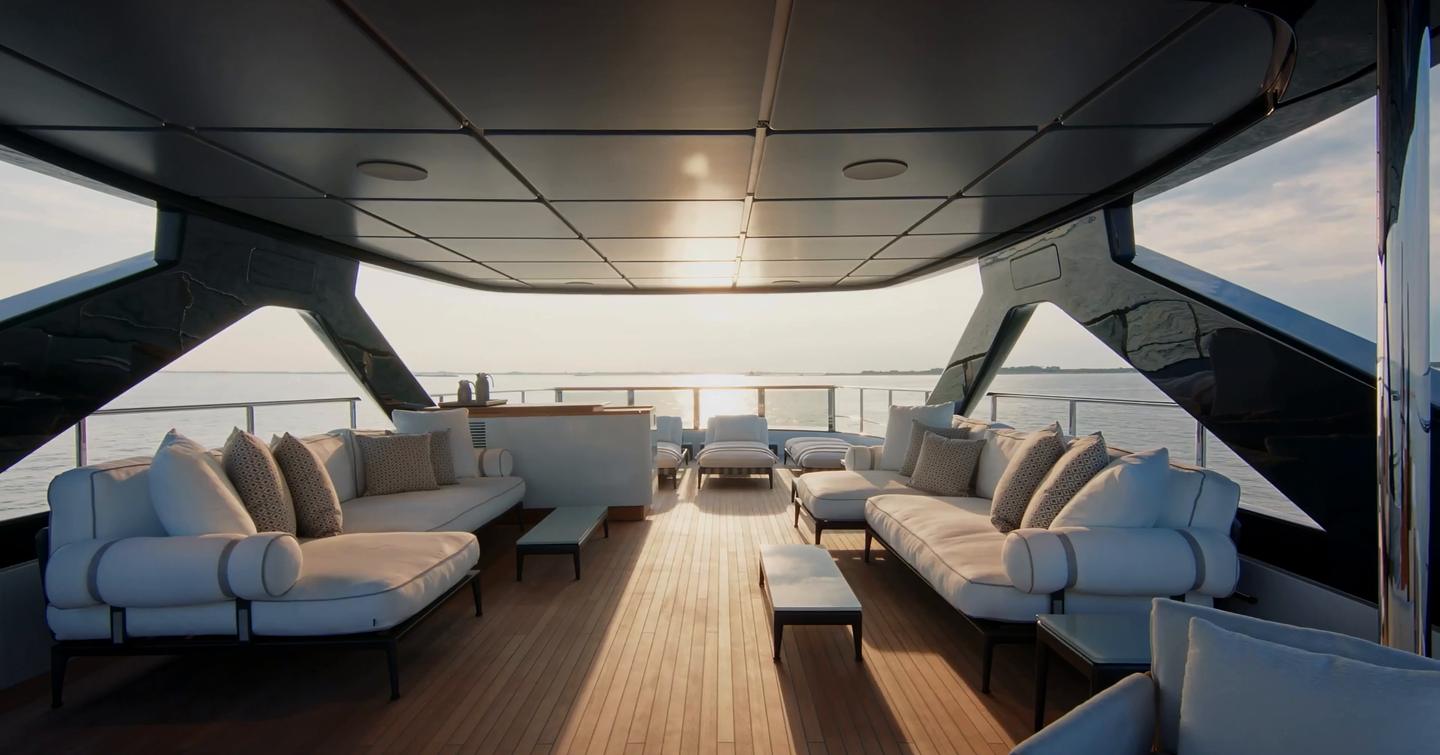
Around it, there’s space to stretch out on either side, so this part of the deck works as both a viewing point and somewhere to relax. Moving forward, the layout shifts into a more sheltered seating area beneath the hardtop, which gives you some cover without closing the space in.
Just ahead of that, a wet bar and a lovely grill setup sit along the side, so food can be prepared up here without needing to head below. Although in this configuration there’s no dining table, so anything cooked here still needs to be taken down a deck to eat.
It’s worth noting that this is the sort of thing Custom Line will adapt, so a table can be added if you want to turn this into a proper dining space. Right forward, a row of sun loungers rounds the deck off, set up for quieter use away from the main social areas.
Engine Room
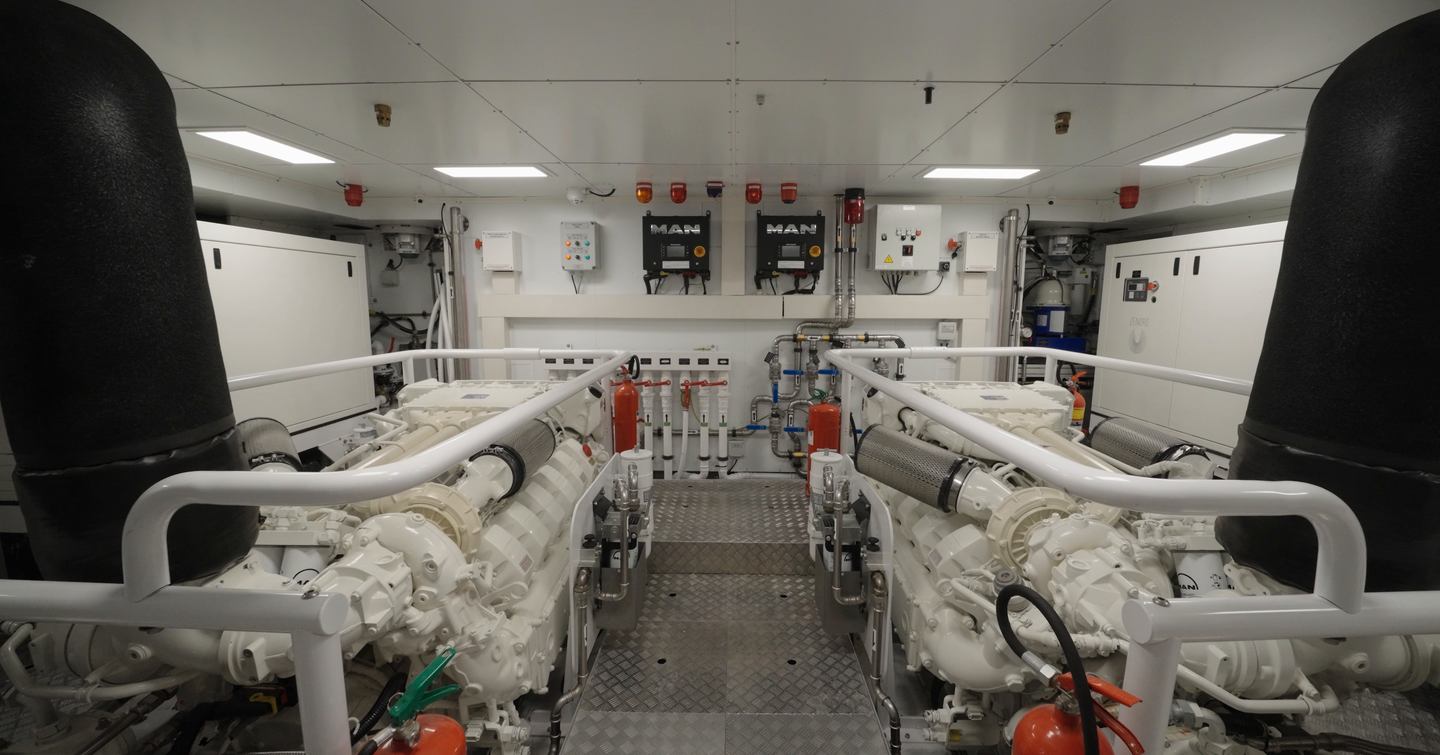
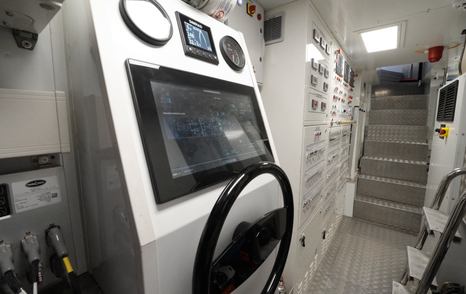
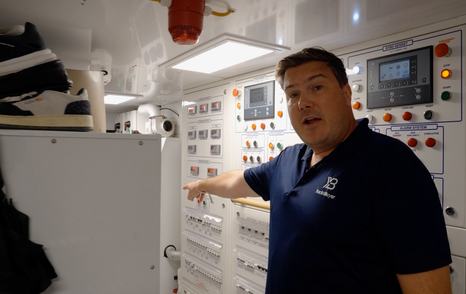
From the guest accommodation, access on the port side leads through to the working areas, starting with the engine room. On the way in, the main switchboards are neatly lined up at the base of the steps, so everything is easy to get to straight away.
There’s also a secondary control position down here, so the engineer can take over if needed. You can see the headroom straight away, along with clear access around the engines, and brace bars in place so you can move around safely when underway. Everything is easy to reach, and it’s well lit too, so you can see right down into the bilge and along the shaft without any trouble.
You’ve also got generators on both sides, positioned so they’re easy to get to for servicing. It feels like a pretty easy boat to work on, which is what matters down here.
The whole setup is built around a pair of MAN 1400hp engines. That gives you a top speed of around 15 knots, which is exactly where you’d expect a yacht like this to sit.
At a more relaxed cruising speed of 10 knots, range comes in at around 2,800nm, so it’s very much set up for longer passages rather than short hops.
To support that, the yacht is fitted with both fin stabilisers for use underway and a gyro system for when you’re at anchor. So whether you’re moving or sitting still, the aim is to keep the boat as steady as possible.
Our Verdict
The Custom Line Navetta 38 brings a lot together in this size range. You’ve got that sun deck with the hot tub, along with a proper living space down at the waterline, which feels like a core part of the boat rather than something added on. Inside, the five-cabin layout gives you a good level of flexibility, with a mix that works for both private use and charter. And then you’ve got the range, which comes close to transatlantic capability on a yacht of this size. It's no wonder Ferretti Group's top dog opted for this model.
Reasons to Buy
- Comfortable 5 cabin layout
- Big sun deck
- Strong long-range capability
- Solid engineering
Things to Consider
- No dining table on sundeck
- Pop-up TV blocks VIP window
Looking to own a Custom Line Navetta 38? Use YachtBuyer’s Market Watch to compare all new and used Custom Line Navetta 38 Yachts for sale worldwide. You can also order a new Custom Line Navetta 38, customized to your exact specifications, with options for engine choice and layout configuration. Alternatively, explore our global listings of new and used yachts for sale and find your perfect yacht today!
Rivals to Consider
At a similar length of 38.36m (125.9ft), the Custom Line 120 heads in a very different direction. This is a planing yacht with MTU power and a top speed of 25 knots, so it is built for covering distance quickly rather than settling into it. You give up range, with around 1,100nm at 11 knots, and the feel on board is more performance-led than relaxed. If the Navetta 38 is about quiet passage-making and time on board, the 120 is about getting somewhere fast, with a sharper, more aggressive stance to match.
The Moonen 122 Martinique takes a more traditional northern European approach, with a steel hull, aluminium superstructure, and a strong focus on engineering. At 37.40m (122.7ft) with a 345GT volume, it offers a longer range of around 4,000nm at 10 knots, and the builder leans heavily into data around noise, fuel burn, and efficiency. It feels more like a small ship in the way it is put together, and it will suit owners who prioritise passage-making confidence and build method over interior styling or open deck living.
At 40.45m (132.7ft) and around 346GT, the upcoming Sunseeker 134 brings more volume and more speed, with a top end close to 20 knots and a range of around 1,600nm at 10 knots. It is a semi-displacement GRP yacht that leans into presence, with bold exterior lines and large interior spaces. Compared to the Navetta 38, it feels more like a flagship statement, trading some long-range efficiency for pace and scale, while still keeping a five-cabin layout.
The Horizon RP125 is less a fixed model and more a flexible platform, typically around 38m (124.7ft), where each build can vary quite a bit depending on the owner. That shows up in details like altered deck layouts, different stair arrangements, and custom interior planning. It sits in a similar semi-displacement space to the Sunseeker, but with a stronger emphasis on owner-led design choices. Compared to the Navetta 38, it offers more freedom to change the brief, while Custom Line keeps a tighter grip on the overall design language.
The Sanlorenzo SD132 pushes further on volume, coming in at 40.7m (133.5ft) and around 420GT, which is a noticeable jump up from the Navetta 38. It uses a semi-displacement platform and introduces an asymmetric deck layout to increase internal space and improve circulation. The result is a yacht that leans heavily into interior volume and layout innovation, including a very large owner’s suite. Next to it, the Navetta 38 feels more restrained, staying under 300GT and focusing on balance, proportion, and everyday usability rather than outright space.
Considering a new yacht? Explore Custom Line's entire current range to find the model that best suits your needs, and compare it with alternatives from competitors to ensure you make the perfect choice.
Specifications
- Builder Custom Line
- Range Navetta
- Model Navetta 38
- Length Overall 38.76m
- Beam 8m
- Draft(full load) 2.27m
- Hull GRP
- Cabins 5
- Berths 10
- Crew 8
- Yacht Type (Primary) Superyacht
- Use Type (Primary) Cruising
- Cruising Speed
- Max Speed
- Fuel Capacity 34,000 Litres
- Fresh Water Capacity 4,000 Litres
- Engine Model 2x MAN V12-1400
- Engine max range (speed type) 2800 (nm)
Custom Line Navetta 38 Layout
-
Sun Deck
-
![Sun Deck Custom Line Navetta 38]()
The sun deck is big for a 40m and includes a hot tub and bar
-
Upper Deck
-
![Upper Deck Custom Line Navetta 38]()
The upper deck is home to the bridge and sky lounge
-
Main Deck
-
![Main Deck Custom Line Navetta 38]()
The owner's cabin is forward on the main deck; note the jet ski storage forward of it
-
Lower Deck
-
![Lower Deck Custom Line Navetta 38]()
Four guest cabins and three for crew on the lower deck
Available Stock
Interested in a Navetta 38?
NEW Build
Find your local dealer for a personalised, no-cost consultation
or just request
Brochures & Pricing
Used & In Stock
Looking for a ready-to-go Navetta 38 or pre-owned options? Explore all inventory of the Navetta 38 available worldwide