An explorer or expedition yacht offers its owner the liberty to traverse the world's oceans, navigating to any destination of their choosing. In broad terms, an explorer yacht is a vessel purposefully constructed or converted for extended voyages into remote regions.
Explorer Yacht vs Expedition Yacht: What's the Difference?
In practice, there is no firm technical distinction. Builders and owners often use the terms explorer yacht and expedition yacht for the same type of long-range vessel. Neither name guarantees a particular hull design, minimum range or ice-class certification, so the specification matters far more than the label.
Compared with a conventional motor yacht used mainly for shorter coastal trips, an explorer yacht generally places greater importance on fuel range, storage, reliable onboard systems and equipment for remote destinations. The distinction isn't absolute, however. Some conventional motor yachts are capable of ocean crossings, while others with explorer styling lack the equipment needed for extended periods away from shore support.


Expedition/Explorer Yacht Features
Hull Design Characteristics of Explorer Yachts
Many explorer yachts have full-displacement hulls, which offer good fuel efficiency at modest speeds and suit long ocean passages. Others use semi-displacement designs, so there is no single hull type that defines an explorer yacht. Hull shape, weight distribution and stabilisation all affect how a yacht behaves at sea.
Ice class is a separate consideration. Yachts intended for Arctic or Antarctic expeditions may need reinforced hulls and extra protection for their underwater equipment. The IMO Polar Code also sets requirements for vessels within its scope, but not every explorer yacht is built for icy waters.


-
 La Datcha77m Damen Yachting
2020 (2025)
Explorer Yacht Range & Autonomy
Long-distance cruising is central to an explorer yacht's purpose, but there is no minimum range that defines the type. Some can cover several thousand nautical miles without refuelling, although the distance depends on speed, fuel capacity, hull design and sea conditions.
Published range figures also need context. A yacht capable of 5,000nm at 10 knots may cover considerably less distance at a higher speed. Fuel consumption from generators and other onboard systems can also affect its practical range.
Range is only part of the equation. An explorer yacht must also carry enough food, freshwater, spare parts and other supplies to support its intended voyage. This is known as autonomy, and it can be just as important as fuel capacity when the nearest suitable port is hundreds of miles away.
Our guide to yacht range vs autonomy explains how to assess these figures and what can limit a yacht's time at sea.

Explorer Yacht Provisions & Storage
Long voyages far from ports call for substantial food stores, with enough chilled, frozen and dry storage for everyone aboard. Watermakers can extend the freshwater supply, although they need power, regular maintenance and spare parts. Waste storage also matters, particularly in remote areas where shore facilities are scarce or discharge is restricted.
Equipment needs just as much thought. Tenders, diving gear, kayaks and other expedition kit need secure storage and safe access. Larger tenders may require dedicated cranes, while spare filters, pumps and tools need to be readily accessible if something breaks hundreds of miles from the nearest port.

All this equipment takes up space and adds weight. A large tender garage is little use if the crew cannot launch its contents safely in the conditions they expect to encounter. The layout should reflect the voyages the owner intends to make and the equipment those trips demand.

Style and Design of Expedition and Explorer Yachts
Exterior of Explorer Yachts
An explorer yacht might look like a small commercial ship, with a high bow, tall bulwarks and a wheelhouse set well forward. Another may look much like a conventional superyacht. The exterior is a poor guide to how far either can travel or the conditions for which it was built.
The position of the superstructure can matter more. Set forward, it leaves a broad aft deck for tenders, cranes and other expedition equipment. Tall bulwarks can give crew shelter from spray, while reverse-raked bridge windows help reduce reflections at the helm. Such details have practical value, but none is essential to every explorer yacht.
Making the Interior Count
An explorer yacht's interior has to work for weeks at sea, not just afternoons at anchor. Secure furniture, handholds and a galley suited to use underway matter when the yacht rolls. Good sound insulation and climate control also make long passages more comfortable.


Layout matters behind the scenes, too. The crew will need practical access to machinery and service spaces, while guests need room to move between cabins and communal areas without crossing busy working zones. Details that seem minor in harbour can become a daily frustration once a yacht reaches remote waters.
The Mudroom Test: What Makes a Good Explorer Yacht?
An explorer yacht may have the range to reach Greenland, but what happens when everyone returns on board with wet boots and heavy outdoor gear?
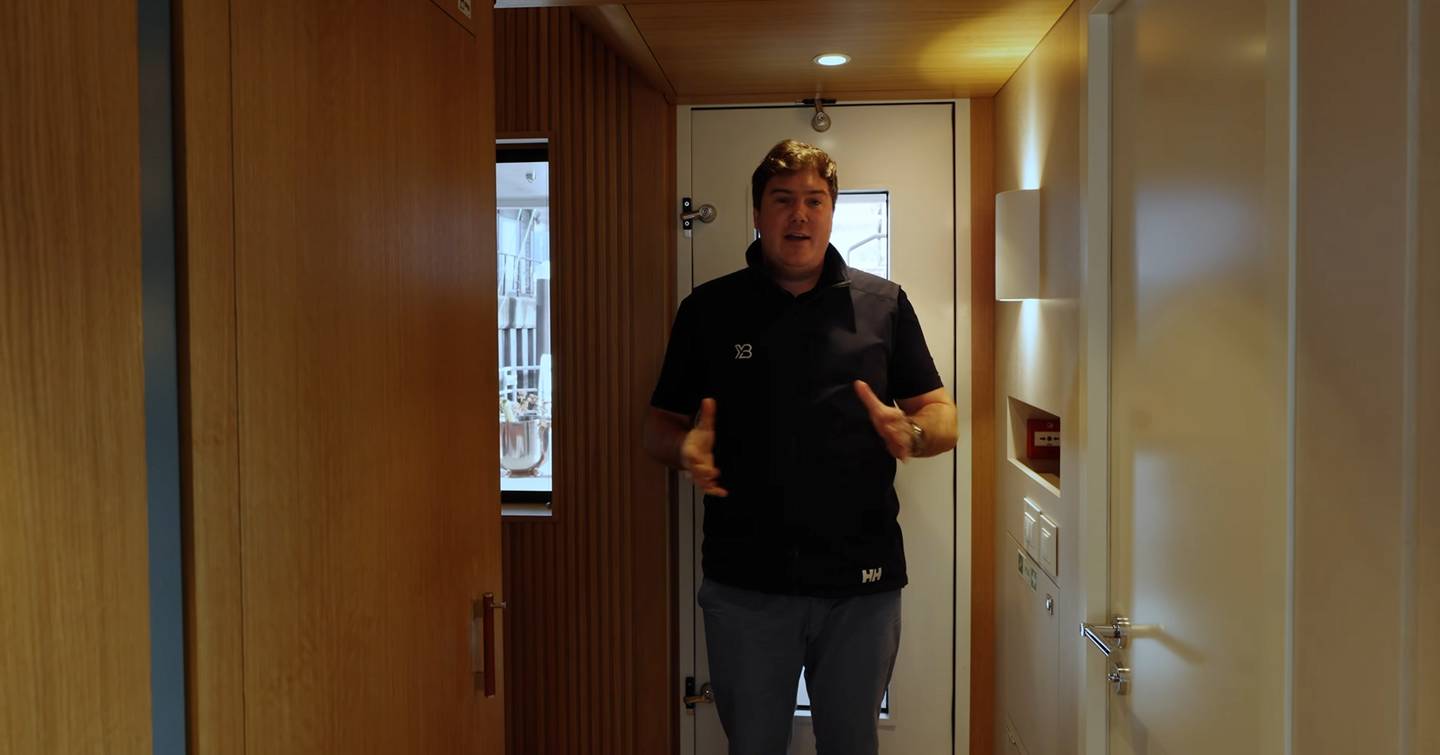
In a YachtBuyer interview with Tom Schröder, the owner of 44.3m (145ft) Cantiere delle Marche Maverick, Tom reflected on 25,000nm of cruising, including voyages to Norway and Greenland. Despite being very pleased with the yacht's layout, he identified one omission after time in the Arctic: a proper mudroom where wet boots and outdoor clothes could be left before guests entered the interior.
It's a telling detail on a yacht with an ice-strengthened hull, a vast working deck and a four-tonne A-frame for its tenders. The Flexplorer 146 earned five stars in our independent review and a place in the YachtBuyer Hall of Fame.

Plus in our review of the 27.4m (90ft) Arksen 85, the aft lobby onboard doubles as a boot room, with a bench for removing heavy boots, a heated locker for wet oilskins and an adjoining wet room. The whole area can be shut off from the saloon to help retain heat in colder climates.
It's a relatively modest feature, but one that says a great deal about the practical demands of life aboard an explorer yacht.
Explorer Yacht Performance
An explorer yacht may spend days at sea, so the important question is how efficiently it can maintain a comfortable passage speed, particularly when conditions deteriorate. Much like a Land Cruiser, its appeal has little to do with the 0–60mph time. The difference becomes apparent when you examine the hull. A full-displacement yacht moves through the water without rising onto the plane, with its speed governed partly by the length and shape of its waterline. At modest speeds, this can be an extremely economical way to cover long distances. Push towards the hull's practical speed limit, however, and wave-making resistance increases sharply. The engines have to produce considerably more power for surprisingly little extra pace, with fuel consumption rising out of all proportion to the speed gained.

Semi-displacement explorers have a little more freedom in this respect. Their hulls can generate some hydrodynamic lift at higher speeds, which allows them to travel faster than a conventional displacement design of similar waterline length. The penalty is generally much higher fuel consumption when that extra performance is used. Getting the engine and propulsion package right is important, too. Propeller diameter, pitch and gearbox ratios influence how efficiently engine power reaches the water, while the engine's duty rating determines the loads it is designed to sustain. A yacht with enormous horsepower isn't necessarily an efficient long-distance cruiser. Nor will all that power guarantee a comfortable passage. Hull shape, weight distribution and stabilisation affect how the yacht behaves in a seaway, and even a capable explorer may have to reduce speed substantially in rough weather.
The machinery itself deserves close attention on a yacht intended for remote waters. Good access to pumps, filters and other service items can save hours of work, while duplex fuel filters allow the crew to switch between filter elements without stopping the engine. Spare parts and back-up systems become particularly valuable when a fault occurs several days from the nearest repair yard. Nobody wants to discover that replacing a failed pump requires half the engine room to be dismantled.
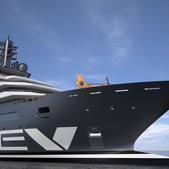
REV Ocean - The World's Largest Research Explorer Yacht
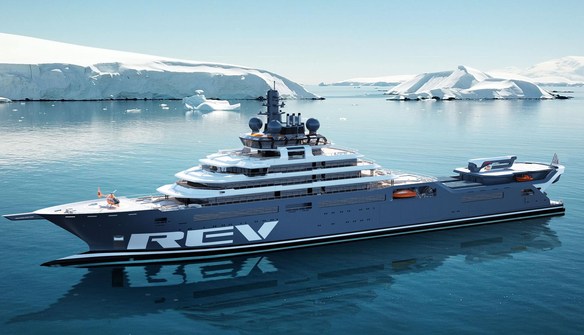
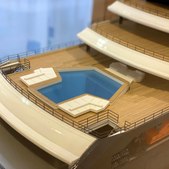
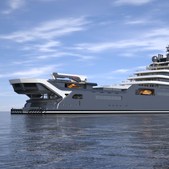
There can't be many yachts that have needed an extra 12m (39ft) of hull to accommodate their scientific ambitions, but that's what happened to REV Ocean. The extension helped address weight and stability concerns while making room for a submarine hangar, specialist equipment stores and a robotics laboratory. At 194.9m (639ft), she's set to become the world's largest purpose-built research and expedition yacht, although her role is closer to that of a fully equipped oceanographic research ship than a conventional private explorer. Her Polar Class PC6 hull, diesel-electric propulsion and quoted range of 21,120nm at 11 knots reflect the scale of the work she's built to undertake.
Guests
36
Cabins
18
Crew
30
The underwater equipment is frankly extraordinary. The three-person Aurelia submersible can descend to 2,300m (7,546ft), while Aurora, a remotely operated vehicle, can reach 6,000m (19,685ft). Both carry cameras and instruments to collect samples from parts of the ocean few people will ever see. There's a moon pool for deploying equipment through the hull, nine permanent laboratories and sonar capable of mapping the seabed at depths of up to 11,000m (36,089ft). Scientists can collect samples thousands of metres below the surface, bring them aboard and examine them without having to return to shore.
Looking for Expedition Yachts for Sale?
If you're considering an explorer yacht, browse our new and used explorer yachts for sale, with detailed specifications, photographs and asking prices. YachtBuyer MarketWatch adds valuable context, with historical asking prices and recorded price reductions to help you assess a yacht's market history, where data is available.