Embarking on the journey of constructing a new yacht is an exhilarating venture, filled with a myriad of decisions that shape the very essence of the vessel.
From choosing between a semi-custom or full-custom yacht to the materials, design elements and onboard systems, each decision plays a pivotal role in crafting a yacht that transcends expectations. In this article, we delve into the critical choices that define the character, performance, and luxury of these maritime marvels.
Should I Choose a Builder or Designer?
Many yacht builders provide comprehensive internal design support, yet they are equally open to collaboration with independent designers or studios. If you are drawn to a builder's distinct design DNA or captivated by the elegance of their previous yacht creations, opting for their in-house design team can ensure a seamless integration of your vision. Alternatively, if a particular independent designer has caught your eye, their unique artistic flair might be the perfect fit for your project.
While independent designers strive to showcase the vast range of possibilities they can offer, it's important to acknowledge that each designer often possesses a distinctive style. This style spectrum spans from minimalist aesthetics to the avant-garde, allowing you to align your preferences with a designer whose artistic sensibilities resonate with your vision for the ultimate custom yacht.

Buyers often come to the yacht customization process with preferences based on existing yachts they admire, serving as valuable reference points to shape the initial stylistic direction. On the flip side, builders or design studios may present pre-existing concepts tailored to various sizes and styles, potentially serving as a solid foundation for the project and speeding up the early stages of the custom yacht build process.
Alternatively, buyers may enter the process with a well-defined vision or choose to collaborate with a designer starting from a blank canvas. The essence of a custom yacht lies in the freedom to manifest one's desires. However, the pivotal consideration is determining whether those desires align with practicality, feasibility, and the allocated budget. When it comes to customization, the ultimate question is not just what you want, but whether it's the right fit for your aspirations and financial plan, and whether it's achievable in reality.
Yacht Design Trilogy
The design of a personalized yacht can be effectively segmented into three distinct phases, each demanding a distinct skill set and varying levels of involvement from the owner or buyer.
Exterior Design
The comprehensive design of a yacht, encompassing the exterior features, styling, layout, and decks from the waterline upward, can be expertly managed by either an independent design studio or the in-house team of the construction yard. Collaborative efforts are not uncommon, where an independent designer collaborates with the yard's design team to create a cohesive vision.

While the designer primarily oversees the interior layout, there are instances where the exterior designer assumes responsibility for all aspects of interior design, including details such as door handles and furniture, eliminating the need for a separate interior designer. Regardless of the division of responsibilities, seamless communication and a shared understanding between the exterior and interior design components are imperative for a harmonious and integrated final result.
Interior Design
In the contemporary realm of yacht design, where the significance of interior volume and luxury rivals that of exterior aesthetics, the role of the interior designer has ascended to unprecedented prominence. Never before has their influence been more crucial in shaping the ultimate visual appeal of the yacht.


Beyond the confines of exterior lines, the interior designer stands as a key orchestrator, entrusted with the task of crafting the very essence of the vessel. From conceptual layouts to the meticulous final finishes and the minutest details, every aspect falls within the purview of the interior designer. Their responsibility extends far beyond the tangible, delving into the realm of creating the heart and soul of the yacht, a task that demands a deep understanding of the owner's tastes and intricate attention to detail.
In essence, the interior designer plays a pivotal role in transforming a yacht from a vessel of the seas into a personalized, luxurious haven that resonates intimately with the owner's preferences and desires.
Naval Architecture
The hull design, including the choice of hull material, dictates the yacht’s performance, handling and stability in the water, falls within the purview of naval architecture. A streamlined and efficient hull design significantly influences the size and spatial volume (often express as gross tonnage) of the yacht's upper structure, just as a robust and voluminous exterior design necessitates a stable hull to uphold it.
While the option exists for an independent designer to undertake naval architecture, it is more common for the chosen shipyard, selected for its expertise in constructing yachts of the desired size and specifications, to provide existing and proven designs adaptable to support the overall yacht design.
Opting for a proven piece of naval architecture extends beyond the aesthetic realm, offering substantial benefits in terms of engineering, electrical systems, and domestic functionalities. The incorporation of a pre-established framework ensures a thoughtful layout for conduits, facilitating the integration of the yacht's extensive cabling and pipework to support and supply its systems. This pre-considered approach not only enhances efficiency but also contributes to the seamless functioning of a superyacht's intricate network of systems.
Glass, Windows and Glazed Structures
On a modern superyacht, huge windows, glass bulwarks and sweeping curved panes need to do far more than frame the view. Glass forms part of the yacht’s weather- and watertight skin, so its size, shape and position all have consequences once the boat leaves the dock. Wave pressure, hull movement and structural flex all come into play, which means a design flourish on the drawing board can quickly turn into a fairly serious engineering exercise.
The weight can also creep up faster than you might expect, especially with large panes lower down in the yacht where the loads are greater. Even a small increase in glass thickness can call for a much larger increase in ballast, which then cuts into the yacht’s available deadweight. So while acres of glass may look like an easy win, there can be a knock-on effect elsewhere in the design.
Large glazed areas can also admit a great deal of solar heat, so insulation, tint, coatings and light transmission all need to be thought through early rather than patched up later with blinds and energy-guzzling air-conditioning. Curved glass can complicate matters further because some strengthening methods restrict the coatings that can be used, so the cleanest-looking solution is not always the easiest one to live with.
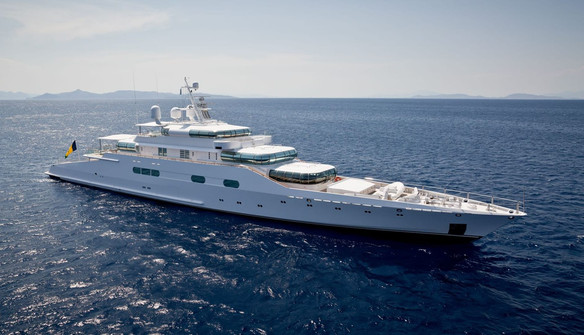
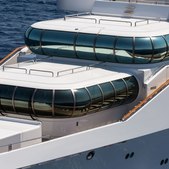
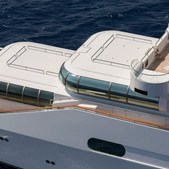
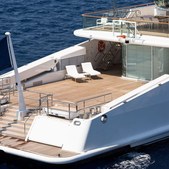
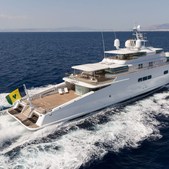
Optical quality matters most where the crew need a clear view, particularly around the bridge, but curved glass can also become part of the yacht’s whole identity. Zeus is a great case in point: her three tiers of convex glazing were radical when she launched as Eco in 1991 and still define the yacht today. The curves were shaped in part to cut internal reflections, which shows how glass can solve a practical problem and make a bold design statement at the same time. Get it wrong, though, and distortion, fabrication limits and structural demands can quickly take the shine off the idea.
Zeus: A Case Study of Curved Glass
Guests
15
Cabins
6
Crew
21
Custom Yacht Design Features
Custom yachts stand as the trailblazers that have not only influenced but also birthed numerous design features witnessed on smaller production models. Within the realm of custom builds, innovation becomes an incubator, fostering the realization of an owner's ambitions and ideas through the skilled craftsmanship of designers and builders. It is in these bespoke creations that groundbreaking concepts take shape, setting the stage for the evolution of maritime design and the seamless integration of visionary ideas into luxurious seafaring vessels.
Beach Club
Onboard yacht beach clubs have become a prominent and sought-after feature in modern yacht design. Positioned strategically, usually at the stern of the vessel, these exclusive spaces aim to recreate the ambiance of a private beach resort. They offer yacht owners and guests an unparalleled experience of leisure and relaxation while being surrounded by the open sea.
Modern beach club and stern design often uses extendable platforms, folding terraces or balconies that open the yacht up to the water, creating a private area for sunbathing, socializing, or enjoying water sports. Equipped with a variety of water toys and equipment.


Comfortable lounging areas with plush seating and dining setups are also common in beach clubs. These spaces provide an ideal setting for alfresco meals, cocktails, or simply enjoying the sea breeze. Some beach clubs go a step further by incorporating wellness facilities, such as gyms, spa treatment rooms, and saunas, allowing guests to indulge in health and relaxation activities with an ocean view.
The design prioritizes seamless transitions between indoor and outdoor spaces, fostering a harmonious blend of the yacht's interior and the natural beauty of the surrounding seascape.
Main or Upper Deck Owner’s Cabin
The main or upper deck owner's cabin is a pinnacle of luxury on a custom yacht, offering the owner an exclusive retreat. Positioned on either the main or upper deck, this cabin enjoys prime real estate, providing panoramic views of the sea and surroundings. It is a carefully curated space, adorned with expansive windows or balconies to maximize natural light and the connection to the outdoor environment.

Luxury defines the amenities within the owner's Cabin. A lavish en-suite bathroom, a comfortable sitting area, and personalized storage solutions are standard features. The interior design is a reflection of the owner's taste, incorporating bespoke furnishings, premium materials, and a cohesive color palette.
Entertainment systems are seamlessly integrated, ensuring the owner has access to a range of options for leisure. Security and privacy are enhanced with private access and, often, a separate entrance for the crew. The cabin is designed to be a tranquil haven, separate from the guest accommodations.
Sun Decks
Sun decks on custom yachts are designed to provide an exclusive and open-air space for relaxation, entertainment, and sweeping views.
Guests can enjoy panoramic views of the surrounding seascape, with comfortable lounge areas with plush seating, sunbeds, and sometimes private cabanas for relaxation and socializing in the open air. These decks often include dining areas with tables and seating for alfresco meals against the backdrop of the open sea.

To enhance the experience, sun decks feature wet bars or refreshment stations, providing guests with a selection of beverages and snacks. Some decks go a step further, incorporating hot tubs or jacuzzis, adding a touch of indulgence to the open-air ambiance.
Integrated entertainment systems, including outdoor speakers and audio setups, contribute to the sun deck's ambiance. Water features such as splash pools or fountains may also be integrated, providing a refreshing addition to the space. In modern designs, some sun decks include fitness areas with exercise equipment or spaces for yoga and wellness activities. Shaded areas or retractable awnings offer respite from direct sunlight when desired, ensuring a balanced and comfortable experience.
Swimming Pools
Contrary to popular belief, very few yachts have pools, but those that do, have them seamlessly integrated into the yacht's design, offering a private oasis for relaxation and recreation.
Positioned strategically, these pools often grace the aft deck, providing stunning views of the ocean while guests enjoy a refreshing swim. Some custom yachts take innovation further by featuring infinity pools or pools with transparent walls, creating a mesmerizing connection with the surrounding waters.

Glass-bottomed pools and transparent pool walls sit in much the same engineering territory as underwater windows. The glazing has to cope with long-term hydrostatic pressure, while the stiffness of the laminate and its interlayer also become part of the calculation. Because these panels are often thick and highly restrained, engineers need to work out the effective glass thickness carefully rather than assume the laminate acts as one solid pane. The weight of the glass and the pool water also has to be increased to allow for the accelerations created by the yacht’s movement.
Movement creates another headache once the pool is full, because even small yacht motions can set the water sloshing. Feadship has gone quite a long way down this rabbit hole with its ContraWave system, which uses an air chamber and hidden pipework to absorb wave energy before it builds. Its research also found that water depth, pool steps and drain design can make a measurable difference; horizontal drain openings, for example, provided twice the damping effect of vertical ones in its tests. Filtration and water treatment then sit alongside all of this as a separate job, keeping several tonnes of moving water clean as well as under control.
Some yachts even turn machinery heat into a useful asset. On superyacht Obsidian for example, waste heat from the generators and air-conditioning chillers is reused for the pool, domestic hot water, HVAC and engine pre-heating, rather than simply dumped overboard. Breakthrough takes the idea further still, with recovered heat used for its pool, Jacuzzi, steam room and even heated bathroom floors.
Submarine and Toy Garages
Submarine and toy garages are positioned within the yacht's structure and serve as secure and concealed storage spaces for a plethora of items, providing yacht owners with the extraordinary capability to explore the depths of the ocean. The launch and recovery system may use hydraulic doors, cranes or platforms to get the tender, submarine and toys in and out of the water.

Yacht owners can embark on adventures directly from their yacht, bypassing the need for external launch facilities. The submarines themselves are custom-designed, featuring advanced technology for underwater exploration, observation, and leisure.
The security and protection of the submarines within these garages are paramount. Advanced securing mechanisms, climate control systems, and monitoring technologies ensure the submarines remain in optimal condition, ready for deployment whenever the urge for exploration arises.
Dive Center
A dive center onboard a custom yacht is a testament to the convergence of luxury and adventure, catering to the desires of yacht owners and guests seeking immersive underwater experiences. This specialized feature transforms the yacht into a floating hub for diving enthusiasts, offering a comprehensive and self-contained facility for all aspects of diving.
Strategically integrated into the yacht's design, the dive center typically includes storage for diving equipment such as tanks, wetsuits, fins, and masks. Custom-built racks and storage solutions ensure that the gear is secure, organized, and easily accessible for diving excursions.
Dive centers onboard custom yachts often boast dedicated spaces for dive briefings and post-dive debriefings, enhancing the overall diving experience. These areas are equipped with multimedia systems for presenting underwater maps, dive sites, and safety protocols, contributing to a seamless and informative preparation process.

The yacht's crew includes experienced dive instructors and support staff who oversee the dive center operations. Their expertise ensures the safety and enjoyment of guests during underwater activities. In addition to the instructional aspect, the crew is responsible for maintaining the diving equipment, ensuring it is in optimal condition for each dive.
The dive center extends beyond the vessel itself, often featuring a platform or staging area for easy access to the water. Some custom yachts even include hydraulic platforms that can be lowered into the sea, providing a convenient entry and exit point for divers. Advanced safety features, such as emergency oxygen supply and first aid stations, are integral components of the dive center. These measures underscore the commitment to guest safety and well-being during underwater adventures.
Summary
The myriad of design features onboard custom yachts represent a harmonious marriage of innovation, luxury, and functionality. From sun decks offering panoramic views to swimming pools creating aquatic oases, and even extraordinary additions like submarine garages and dive centers, these bespoke features redefine the yachting experience.
Meticulously crafted to cater to the unique preferences and desires of the owners, these design elements elevate custom yachts into floating masterpieces, each with its distinct blend of luxury, technology, and adventure.
Related articles