Superyacht, megayacht and gigayacht are fairly loosey-goosey industry labels (not legal classes) but most people use them as shorthand for size. Perhaps the most common starting point is: superyacht at 24m+ (79ft+), megayacht at 60m+ (197ft+), and gigayacht at 100m+ (328ft+). This guide explains the ranges, where there's a lot of overlap, and what changes as yachts grow.
How Much Have Superyacht Sizes Increased?
Over the past few decades, the size of private yachts has increased steadily. According to YachtBuyer, only 27 privately owned yachts had been built at 100m (328ft) or more before 2000. Since then, a further 65 yachts have crossed that threshold, which has really driven wider use of megayacht and gigayacht to describe them.
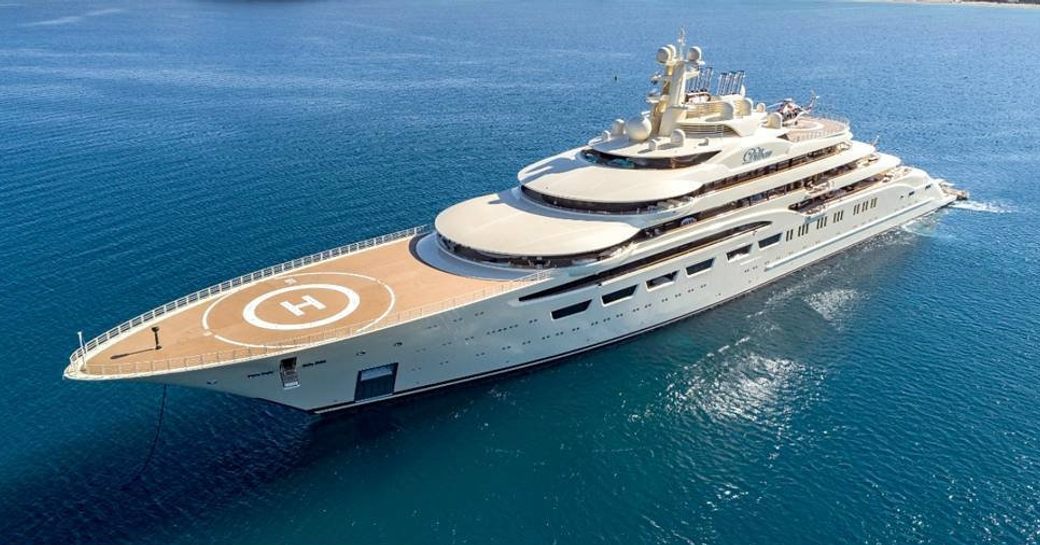
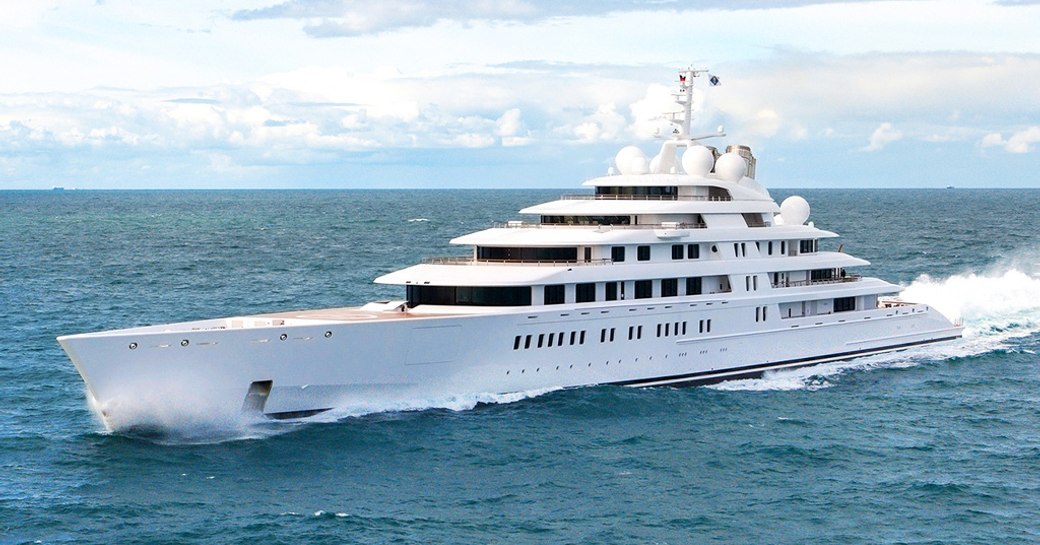
At the largest end of the spectrum, yachts such as Azzam (the world's longest yacht) and Dilbar (the world's biggest yacht) illustrate how far the market has expanded, with lengths well beyond 150m (492ft). Vessels of this scale require large professional crews, dedicated management structures and specialist shore support, which places them in a very different category from smaller superyachts.
The table below sets out the size ranges commonly used across the market. These figures are indicative rather than absolute, but they provide a practical framework for comparing yachts by scale and capability.
Yacht Classification Overview
(All figures will vary by builder, broker and specification)
| Category | Length Range | Beam Range | Crew Size | Gross Tonnage | Key Features |
|---|---|---|---|---|---|
| Yacht / Boat | <24m (<78ft) | 3-8m | 0-5 | <500GT | Owner operated, limited systems |
| Superyacht | 24-60m (78-197ft) | 6-12m | 6-15 | 500-3000GT | Professional crew, complex onboard systems |
| Megayacht | ~60-100m (197-328ft) | 10-18m | 15–50+ | 3000-8000GT | Multiple decks, aviation and tender capability |
| Gigayacht | ~100m+ (328ft+) | 15-25m+ | 50-100+ | 8000+ GT | Large crew departments, global operating scope |
Size Matters: LOA vs GT
Yacht size is usually described using Length Overall (LOA) and gross tonnage (GT). LOA measures the total length of the hull, while GT measures internal volume. Two yachts with the same LOA can differ widely in GT depending on beam, deck count, and layout, which is why length alone rarely tells the full story.
For this reason, YachtBuyer has published the YB100, which ranks the world’s largest yachts by gross tonnage rather than length. At the upper end of the market, GT gives a clearer picture of usable volume, system complexity, and crew scale than LOA on its own.
There is no formal global standard that defines where a superyacht becomes a megayacht, or a megayacht becomes a gigayacht. The terms are used as practical labels rather than technical classifications, and usage can vary between builders, brokers, and markets. A yacht around 45m (148ft), for example, may be described differently depending on context.
To keep comparisons consistent, YachtBuyer uses size-based ranges that reflect how the market commonly separates yachts by scale:
Superyacht: 24-60m (79-197ft)
Megayacht: 60-100m (197-328ft)
Gigayacht: 100m+ (328ft+)
As yachts move up through these ranges, the differences extend beyond length. Crew numbers increase, onboard systems become more complex, and operational requirements shift from relatively simple management to full professional teams, and these practical changes explain why both LOA and GT matter when comparing large yachts, even when the terminology itself stays quite informal.
Case study: Azzam vs Dilbar
Azzam and Dilbar are frequently compared as they represent two different design priorities within the same ultra-large yacht category.
Azzam, at approximately 180m (590ft), is the longest private yacht built. Her long, narrow hull prioritises speed and overall length, but results in a comparatively lower gross tonnage of for her size.
Dilbar is shorter at around 156m (512ft) but has a gross tonnage of over 15,900GT, making her one of the most voluminous private yachts ever built. Her wider beam and internal arrangement create significantly more usable interior space, supporting large guest areas, extensive crew accommodation, and complex onboard facilities.
The comparison highlights why length alone can be misleading when assessing large yachts. While both sit firmly within the gigayacht category, their internal volume, crew requirements, and onboard experience differ markedly, and so this is also why YachtBuyer’s YB100 ranks yachts by gross tonnage rather than length.
For a detailed side-by-side breakdown of specifications and layout differences, see YachtBuyer's Azzam vs Dilbar comparison tool.
What is a Superyacht?
On YachtBuyer, the term superyacht is applied to all yachts above 24m (79ft), as this threshold marks the point where crew, regulation, and onboard systems really change in a meaningful way.
Definition of a Superyacht
- Size: 24m (79ft) and above
- Operation: Professionally crewed
- Use: Private cruising, extended stays on board, occasional charter
- Regulation: Flag-state rules and maritime labour standards apply when operated commercially
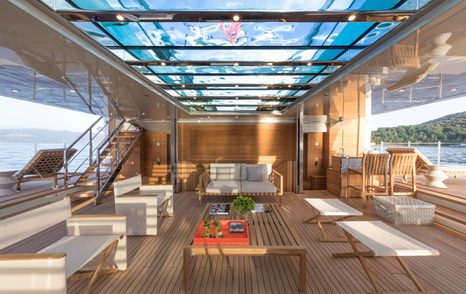
- Typical characteristics: Full-beam cabins, multiple guest spaces, dedicated crew areas, tender and toy storage
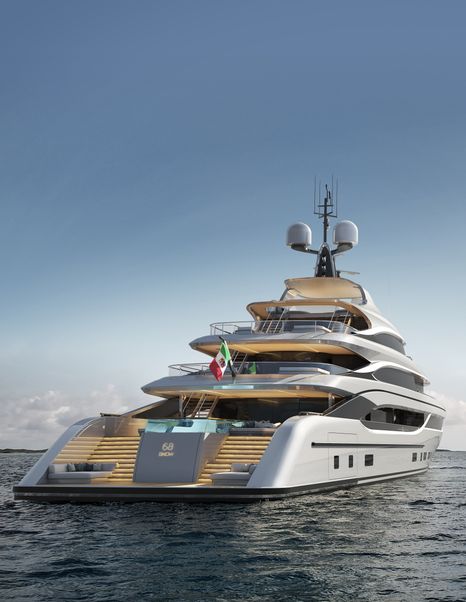

From an operational point of view, superyachts form the foundation of the large-yacht market. As size increases beyond 60m and then 100m, yachts could be described entering megayachts or gigayachts territory.

What is a Megayacht?
The term megayacht is commonly used by the media and industry platforms to describe superyachts in the 60-100m (197-328ft) range, even though it has no formal definition. Some would argue the ladder should be drawn up and megayachts should start at 80m+, considering there are now "off the shelf" 60m+ yachts, as not all are fully custom built anymore.
Megayacht Definition
- Size: ~60-100 meters (~197-328 feet) in length
- Operation: Large professional crew (15-50+ members)
- Purpose: Ultra-luxury lifestyle, global cruising, major entertaining
- Cost Range: $50-500 million purchase, $7.5 million-$75million annual operating. Broadly speaking.
- Regulations: Full commercial vessel compliance, enhanced safety systems
- Typical Features: Multiple decks, helicopter pad, spa, cinema, pool, tender garage
- Market: Ultra-high-net-worth individuals, billionaires
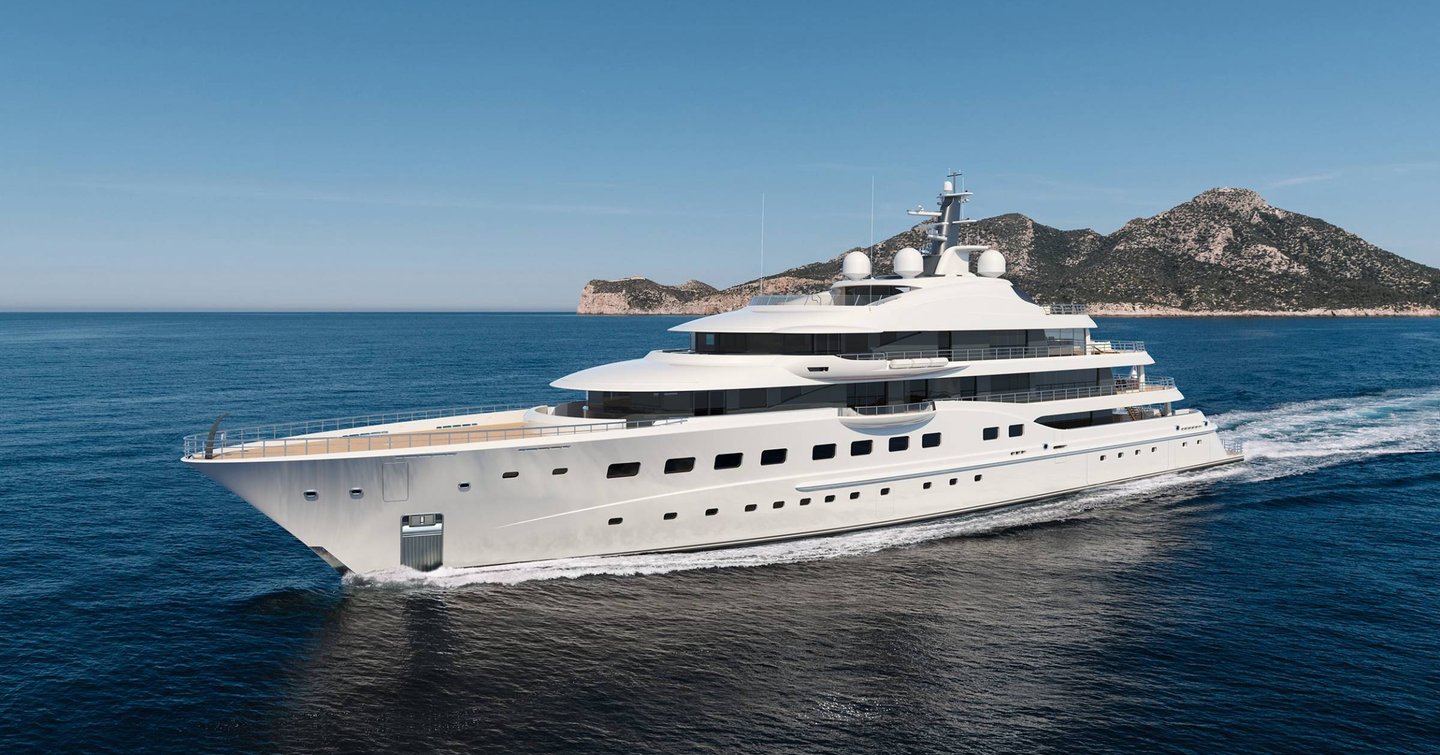
Spacious cabins feature in addition to bespoke interior design, multiple gourmet dining areas and saloons, and amenities like swimming pools, saunas, jacuzzis, and water toys. Some can even feature a helipad (or two). By definitiion, not as large as gigayachts, they are designed to cater to the discerning tastes of their affluent clientele and offer a home-away-from-home experience on the water.
What is a Gigayacht?
Like megayacht, the term "gigayacht" has no regulatory definition, only existing as a way to distinguish yachts at the extreme upper end of the superyacht market.
Gigayacht Definition (industry usage)
- Size: ~100m+(328ft+) in length
- Operation: Extensive crew (50-100+ members)
- Purpose: Ultimate luxury lifestyle, global presence, major events
- Cost Range: $1+ billion purchase, $75 million+ annual operating
- Regulations: Maximum maritime compliance, commercial operations capability
- Typical Features: Multiple pools, submarine bays, multiple helipads, hospitals, theaters
- Market: Billionaire-class ownership, state yachts, royal families
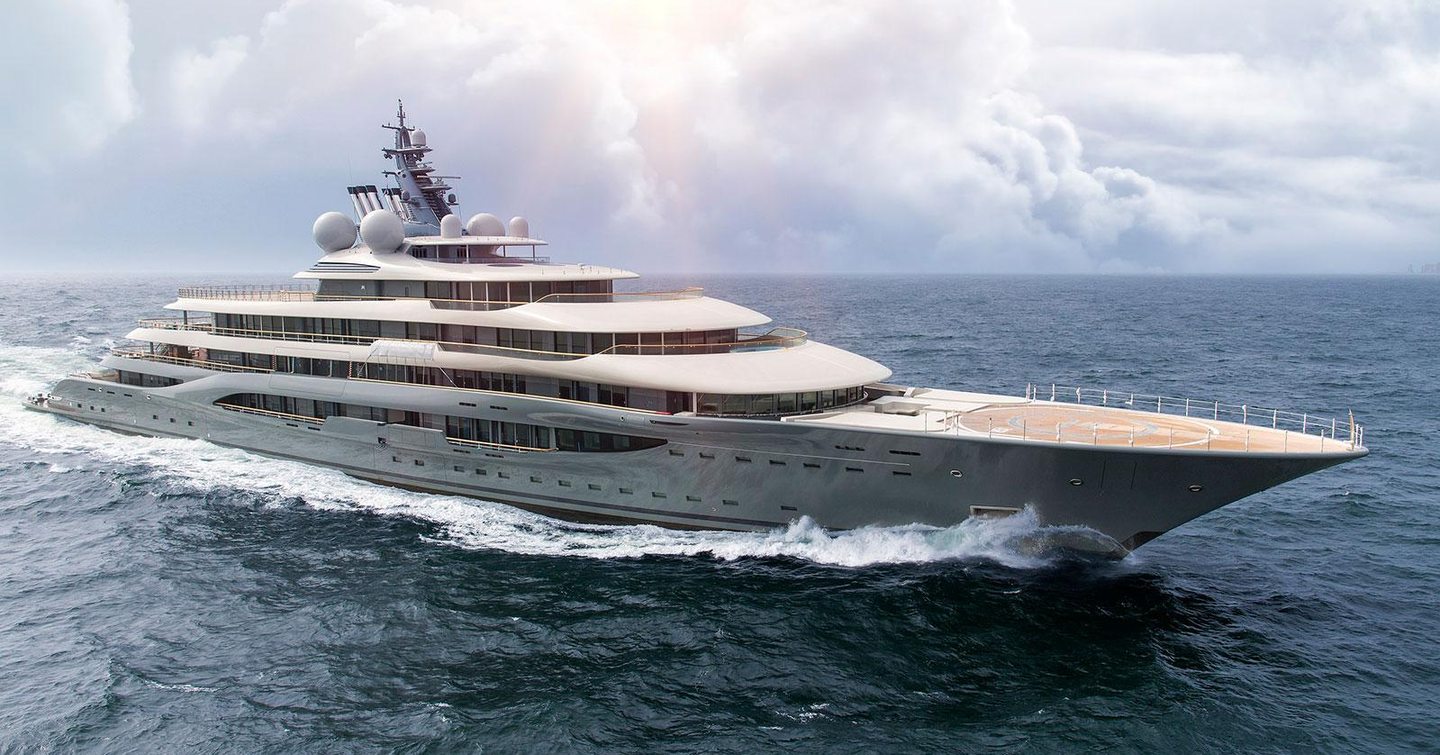
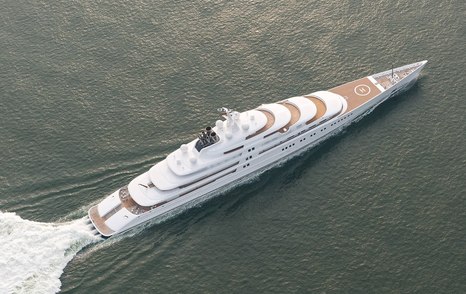
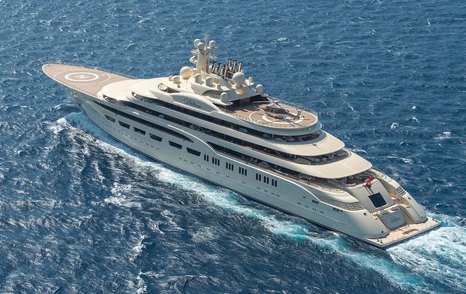
These massive yachts usually operate over 6+ decks, enormous cabins and suites, extravagant dining areas, world-class entertainment systems, spas, swimming pools, helipads, personal submarines and cutting edge tech.
Could Terayachts Already Exist?
If megayacht and gigayacht are only informal size labels, then it’s fair to ask whether the same logic could be extended further. After all, if megayacht is commonly used for yachts around 60-100m (sitting within only a 40m range), and gigayacht for those beyond 100m, what happens once yachts move well past that point?
By a purely numerical reading, the answer is uncomfortable for the terminology. Several of the world’s largest yachts already are far beyond the lower edge of the gigayacht bracket. If size labels continued to scale in neat steps, yachts over roughly 140-150m could easily be pushed into a new category altogether. By that logic, vessels such as the 180m Azzam and the 195m REV Ocean could already qualify for a term like “terayacht” or even "petayacht". But the word is currently just too fantastical for the industry to use in any real way. So currently, the answer is no.
What Yacht Size Really Changes
So as maritime regulation does not recognise terms such as superyacht, megayacht or gigayacht, what is the actual reality?
All in all, the still most important threshold is 24m, which is the point at which professional crewing, formal safety management, and international labour standards begin to apply. Above this size, yachts fall within a growing framework of international conventions and flag-state rules rather than a single yacht-specific law.
The Maritime Labour Convention (MLC) introduced a common baseline for crew working conditions on commercially operated yachts, covering accommodation standards, hours of work and rest, contracts, and welfare. Alongside this, safety and management requirements are applied through established international frameworks adapted for large yachts.
For larger yachts, particularly those operating commercially or carrying more than 12 passengers, additional codes such as the Large Yacht Code (LY3), Passenger Yacht Code (PYC) or SOLAS are used to apply international standards in a form suited to large private vessels. These codes do not create new yacht categories, but they do increase oversight, documentation, and operational structure as size and complexity grow.
How regulatory complexity often scales with yacht size
| Vessel size | Typical regulatory environment | Operational structure |
|---|---|---|
| <24m | National pleasure-craft rules | Owner operated |
| 24–60m | MLC and safety management frameworks | Professionally crewed |
| 60–100m | Large yacht codes with enhanced flag-state oversight | Managed operation |
| 100m+ | Large yacht codes with extensive flag-state involvement | Full professional organisation |
Summary
The terms superyacht, megayacht and gigayacht are informal labels used to describe scale within the large-yacht market. The names are flexible, but the consequences of size are not.
The only widely recognised operational threshold is 24m (79ft), where professional crew and international regulatory frameworks begin to apply. On YachtBuyer, all yachts above this size are treated as superyachts. The terms megayacht and gigayacht are used as descriptive shorthand to indicate increasing size and complexity, commonly applied around 60m (197ft) and 100m (328ft).
At the upper end of the market, gross tonnage often provides a clearer measure of scale than length alone, which is why YachtBuyer tracks and compares the world’s largest yachts by GT through the YB100.
To explore these differences in more detail, YachtBuyer provides verified listings, detailed specifications, and head-to-head comparison tools across the global market.
Inspired by all these fantastic superyacht, megayacht or gigayacht examples? View all available Superyachts For Sale globally, tracked through YachtBuyer Market Watch, with only real listings - no fake options to waste your time. You can also view all megayachts for sale. Alternatively, view all of our other yachts for sale.